About Saxicoloides fulicatus (Linnaeus, 1766)
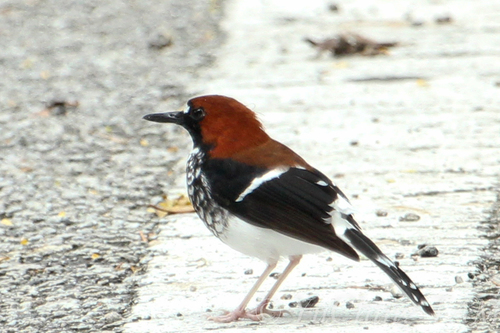
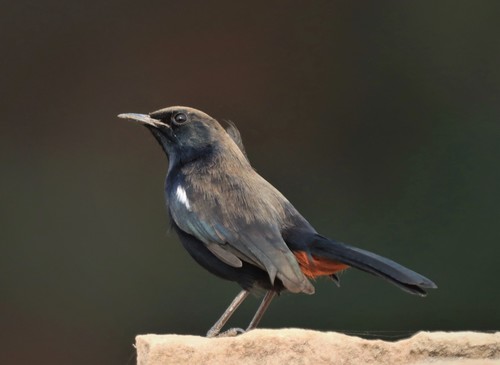
This species, commonly known as the Indian robin, has the scientific name Saxicoloides fulicatus (Linnaeus, 1766). Indian robins show sexual dimorphism in their plumage. Males are mainly black with a white shoulder patch or stripe, whose visible size changes based on the bird's posture. Males from northern populations have brownish upper plumage, while males from southern populations are black on the upper body. All males have chestnut undertail coverts, which are usually visible because the bird typically holds its 6–8 cm long tail raised upright. Females have brownish upper plumage, lack a white shoulder stripe, and are greyish on the underbody; their vent is a paler shade of chestnut than that of males. Individuals from northern populations are larger than those from southern India or Sri Lanka. Juvenile birds closely resemble females, but have a mottled throat. Multiple subspecies are recognized based on plumage differences. The nominate subspecies occurs across southern peninsular India. The subspecies leucopterus is found in Sri Lanka. Males of the two subspecies cambaiensis (from northern and north-western India) and erythrura (=erythrurus, from north-eastern India south to around Sambalpur) have brown backs. The subspecies intermedius includes birds with appearances intermediate between cambaiensis, erythrura and fulicata, with fulicata found in central India and parts of the Deccan region. The subspecies munda was originally described from a Punjab specimen, but is now considered a synonym of cambaiensis. Older classifications classified southern Indian populations as the subspecies ptymatura and listed the type locality as Sri Lanka, but the type locality has since been restricted to Pondicherry. Jerdon recorded multiple local names for this species: Nalanchi in Telugu, Wannatikuruvi in Tamil (meaning Washerman bird), Dayaal in Marathi, Kalchuri in Hindi, and Paan kiriththaa in Sinhala. The former genus name notes that this species resembles Saxicola, the genus of the pied bushchat, which often occupies similar habitats. This bird occurs in open stony, grassy, and scrub forest habitats. It mainly inhabits dry habitats, and is mostly absent from dense forest regions and areas with high rainfall. All populations are resident and non-migratory. The species is often found near human settlements, and frequently perches on rooftops. It was introduced to the New York region, but never became established there. A single vagrant or escaped individual has been recorded from the Maldives. In the campus of Pondicherry University, population densities have been estimated at 193 to 240 individuals per square kilometer. The male-to-female ratio in this population is about 1.5:1. The average territory size for males is estimated at around 6650 square meters. During the breeding season, males can be aggressive toward other males, and will even attack their own reflections. Human activities such as tree felling and firewood removal in forests appear to benefit this species. Indian robins feed mostly on insects, but are known to consume frogs and lizards, especially when feeding nestlings. Individual birds may forage late in the evening to catch insects that are attracted to artificial lights.