About Saussurea pulchella (Fisch.) Fisch. ex Colla
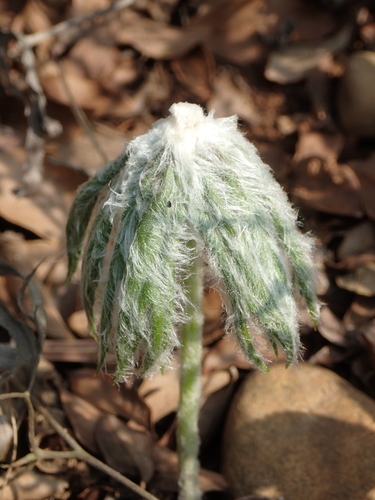
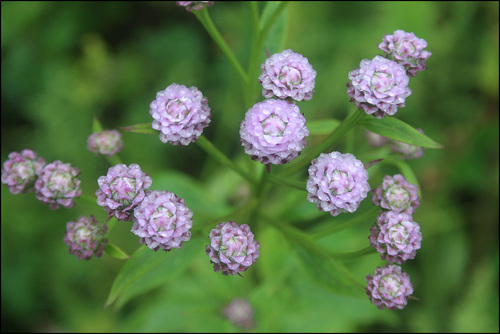
Saussurea is a genus of around 300 species of flowering plants in the tribe Cardueae, within the family Asteraceae. Members of this genus are native to cool temperate and arctic regions of East Asia, Europe, and North America, and the genus shows its highest diversity in alpine habitats of the Himalayas and East Asia. Common names for the genus are saw-wort and snow lotus, with the name snow lotus applied to a number of high altitude species native to East Asia. All Saussurea are perennial herbaceous plants, with heights varying drastically between species: dwarf alpine types grow only 5–10 cm (2–4 in) tall, while the tallest thistle-like species can reach up to 3 m (9.8 ft) tall. Leaves grow first in a dense basal rosette, then in a spiral arrangement up the flowering stem. Flowers form dense clusters of small capitula, which are often surrounded by dense white to purple woolly hairs; individual florets also range in color from white to purple. This woolly covering is thickest in high altitude species, where it aids flower thermoregulation, reduces the risk of nighttime frost damage, and prevents ultraviolet light damage from intense high-altitude sunlight. The genus was named by De Candolle to honor Horace-Bénédict de Saussure (1740–1799) and Nicolas-Théodore de Saussure (1767–1845). A number of high alpine Himalayan Saussurea species are grown as ornamental plants, valued for their decorative dense woolly flowerheads. These plants are considered very challenging to cultivate, as they are adapted to harsh climates at 3,000 to 5,000 m (9,800 to 16,400 ft) altitude. They require cool temperatures, a very long winter rest period of up to 8–10 months, and very well-drained, humus-rich gravel soils. Historically, costi amari radix, or costus root, was an important trade item in Roman trade with India, and it is thought to have been the dried root of Saussurea lappa. Several varieties of snow lotus are used in traditional Tibetan medicine, and Saussurea lappa is an ingredient of the traditional Tibetan medicine preparation Padma 28. Research on Himalayan medicinal plants conducted by C.P. Kala found that Tibetan medicine practitioners living in the Pin Valley of Himachal Pradesh use Saussurea lappa root to cure dysentery and ulcers. In traditional Chinese medicine, the flowers and stems of Saussurea laniceps, Saussurea involucrata, and Saussurea medusa have long been used to treat rheumatoid arthritis, cold-related cough, stomachache, dysmenorrhea, and altitude sickness. Extracts from these species have been found to have anti-inflammatory and analgesic effects, alongside cardiotonic, abortifacient, anticancer, and antifatigue activities. Saussurea laniceps has been shown to be more effective than Saussurea involucrata and Saussurea medusa for these uses. Saussurea obvallata is one of the most sacred plant species in India, and has been used as an offering to the goddess Nanda Devi since time immemorial.