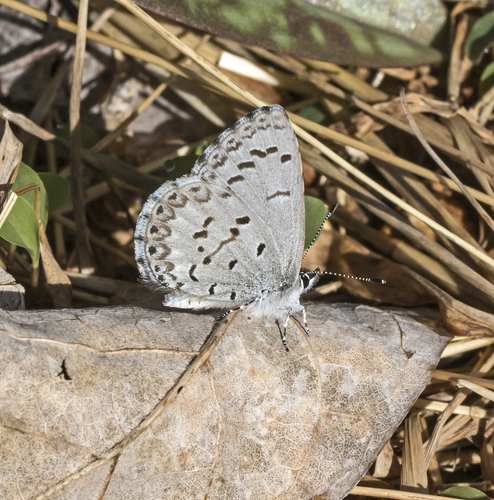
About Satyrium w-album (Knoch, 1782)
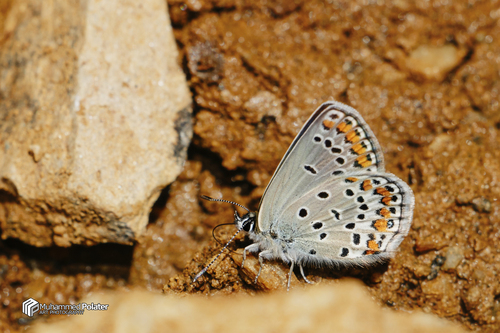
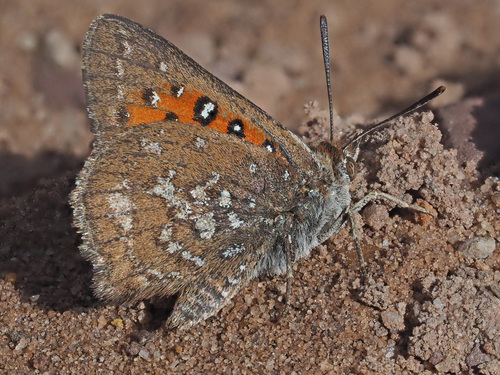
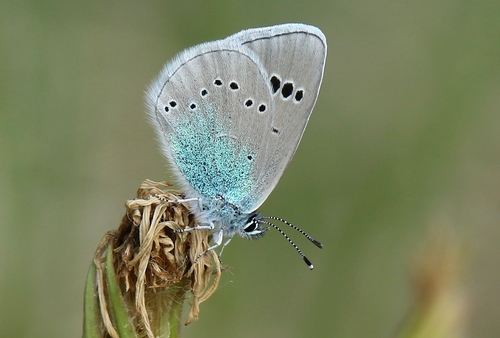
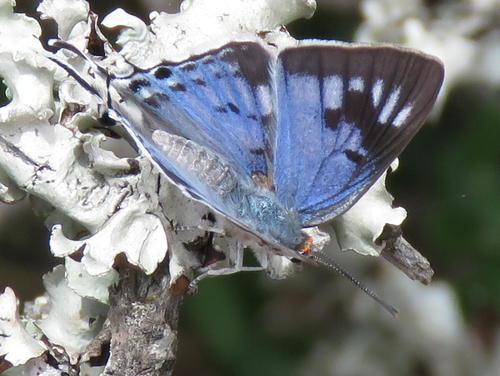
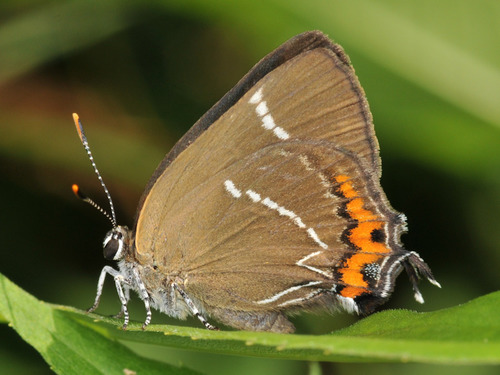
This species is scientifically known as Satyrium w-album (Knoch, 1782). In Seitz's description, it is called T. w-album Knoch (72 h). The upper side of its wings is similar to unicolorous specimens of Satyrium spini. On the underside of the hindwing, the white band starts more proximally, around the middle of the costal margin, and runs straight to the base of the tail, forming a W shape there. A bright red undulate band sits before the margin of the hindwing. The original range cited is Central, Northern and Eastern Europe, and Anterior Asia. Multiple aberrations and subspecies are recorded: In aberration butlerovi Krul., the white band on the underside of the hindwing is obsolete posteriorly, with no white W shape. In contrast, aberration albovirgata Tutt has a much wider white band that reaches the red submarginal band on the hindwing; transitional forms toward this aberration (semialbovirgata) also occur, with the band only widened in parts. Subspecies sutschani Tutt, which occurs near Sutchan, resembles the nominate form, but has a paler grey underside with small white spots variegated at the red band. Subspecies fentoni Btlr., found on Japan's North Island (Hokkaido), matches the coloration of European specimens on the upper wing surface, matches S. spini in size, and has orange rather than red submarginal spots on the underside of the hindwing. The egg is semiglobular, red-brown, with white reticulation; it is usually deposited in pairs on elm according to early records. The larval stage lasts until June; fully grown larvae are light green with thin, small oblique subdorsal stripes and a brownish head. Larvae typically position themselves on the underside of a leaf to resemble a small fresh leaf or a fold between leaf ribs. Pupation occurs on the trunk or close to the ground; often males and females encounter one another already as larvae and pupate near each other, with the male positioned behind the female, as noted by Voelschow. The pupa is yellowish brown, with darker wing cases. Adult butterflies fly in July and August, and are rather localized. On certain days around 11 o'clock, numbers of adults have been observed coming down from tree-tops to roads, where they settle in dust rather than on damp ground. Since they cannot get a firm hold, they frequently tumble over and remain lying sideways in the sun. Otherwise they are found singly near woods and in elm avenues. This species has a widely disjunct distribution across the Northern Hemisphere: it occurs across much of Europe, from Wales to the Urals, and from southern Scandinavia to the Mediterranean. It also occurs again in Siberia, the Russian Far East, Korea, and Japan. It has not been recorded from the Himalaya, even though four species of elm grow there. The species is also absent from North America. Eggs are laid singly, usually on girdle scars near the terminal buds of elm trees. Unlike the eggs of other hairstreaks, white-letter hairstreak eggs are harder to find during winter because they are flatter, turn brown as they age, and are thus much less distinct on twigs. Wych elm is reportedly the preferred host, but field elm and European white elm are also used, as are Asiatic elm species, notably Japanese elm and Siberian elm, along with hybrid cultivars such as Lutèce. Caterpillars hatch in March. Where sexually mature elm trees are present under normal conditions, caterpillars immediately feed on elm flowers, then later feed on seeds, before moving on to newly emergent leaves in April. However, research in the Low Countries has shown that larvae are remarkably able to use non-flowering elm suckers; if they can hydrate after emergence, they can survive dormant for up to six weeks, until leaves flush. The larval stage lasts an average of 57 days, but can range from 37 to 78 days depending on food availability. Pupation takes place underneath a leaf or twig, or in a bark crevice. In the UK, adults are on the wing from late June until mid-August, with one brood per year. Adults occasionally fly down from tree canopies to feed on nectar from flowers when honeydew is unavailable, particularly after heavy rain washes honeydew off leaves. The most preferred flower observed in the UK is creeping thistle, but bramble and other flowers are also used. In France, the butterfly has been observed nectaring on Buddleja davidii, but lime tree flowers appear to be its favourite.