About Satureja montana L.
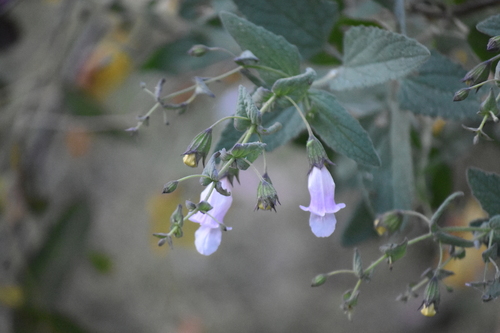
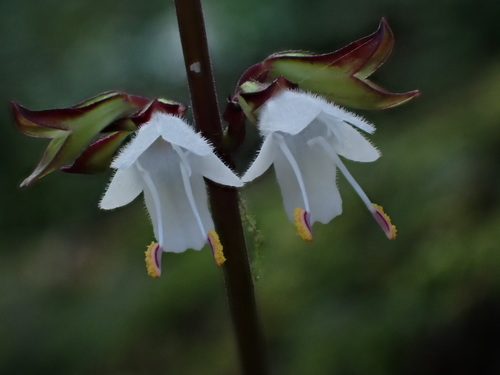
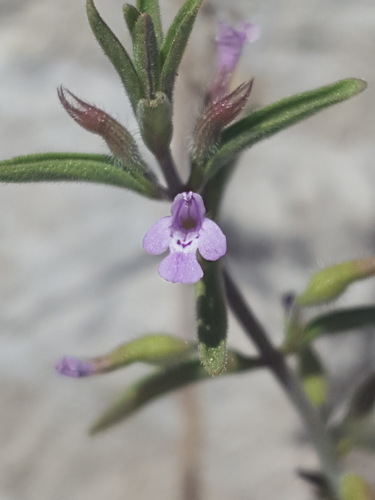
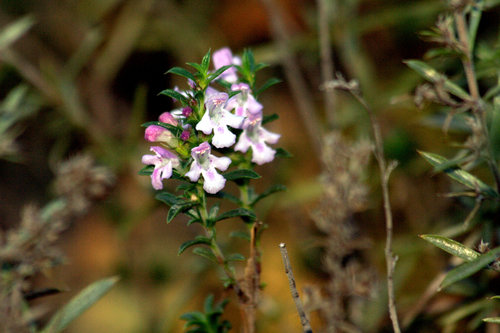
Satureja montana L., commonly called mountain savory, grows 10 to 40 cm (4 to 16 inches) tall. Its leathery, dark green leaves grow in opposite arrangements, and are oval-lanceolate or needle-like, 1–2 cm long and 5 mm broad. Flowers bloom in summer from July to October, and their color ranges from pale lavender or pink to white; these flowers are smaller than the flowers of summer savory. This plant contains carvacrol, a monoterpenoid phenol. Carl Linnaeus first published this species in his 1753 work Species Plantarum, on page 568. Its Latin specific epithet montana refers to mountains or origin from mountains, which gives the species its common name mountain savory. This species is native to temperate regions across Europe, the Mediterranean, and Africa, and has become naturalized in Great Britain. It grows on old walls, dry banks, hillside rocks, and rocky mountain slopes, most often on calcareous or alkaline soils. There is evidence that ancient Romans and Greeks used this herb around 2000 years ago. Also known as winter savory, it is easy to cultivate and can be used as an edging plant in culinary herb gardens. It needs six hours of daily sun and well-draining soil. In temperate climates, it enters dormancy during winter, and produces new leaves on its bare stems in spring. It should not be cut back while dormant, as apparently dead stems will regrow new leaves. Winter savory is hardy, has a low-bunching growth habit, is hardy to USDA Zone 4, and can be propagated from softwood cuttings. It is grown as a companion plant for beans to repel bean weevils, and is also planted alongside roses to reduce mildew and aphids. Two known cultivars are S. montana 'Nana', a dwarf cultivar, and S. montana 'Prostrate White', a small form with white flowers. In cooking, winter savory is widely considered to pair very well with beans and meats, especially lighter meats such as chicken or turkey, and can be added to stuffing. It is also used in soups and sauces. Its flavour is strong when uncooked, stronger than the flavour of summer savory, but loses much of this strength with prolonged cooking. It can be added to breadcrumbs used as a coating for various meats, including trout. Winter savory has been claimed to have antiseptic, aromatic, carminative, and digestive benefits. It has also been used as an expectorant, and a leaf poultice made from the plant has been applied to treat bee stings and insect bites. It has a stronger effect than closely related summer savory. When taken internally, it has been said to treat colic and eliminate flatulence, and is also used to treat gastro-enteritis, cystitis, nausea, diarrhoea, bronchial congestion, sore throat and menstrual disorders. Therapeutic-grade oil from the plant has been found to inhibit the growth of Candida albicans. The plant is harvested when it flowers in summer, and can be used either fresh or dried. Its essential oil is an ingredient in scalp lotions for early-stage baldness. An ointment made from the plant is used externally to relieve discomfort in arthritic joints. In traditional herbal medicine, summer savory was thought to be an aphrodisiac, while winter savory was believed to reduce sexual desire (an anaphrodisiac). French herbalist Maurice Messegue claimed that savory was 'the herb of happiness'.