About Sassafras randaiense (Hayata) Rehder
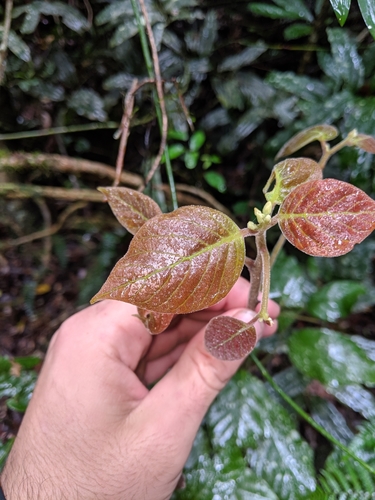
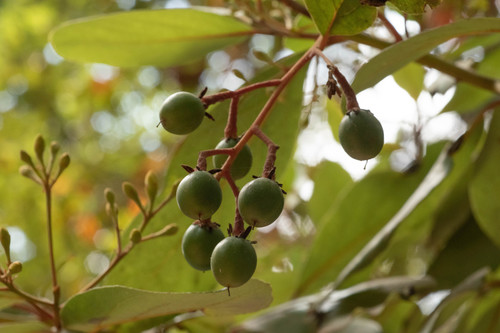
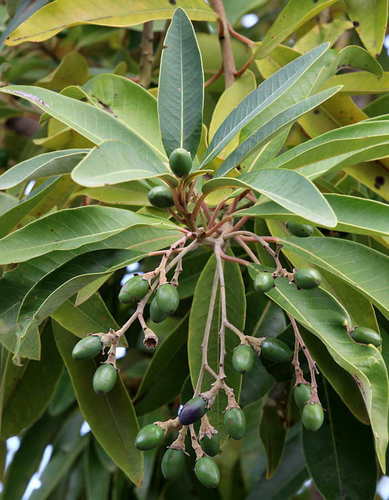
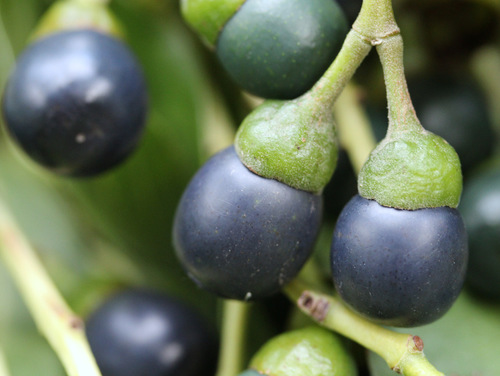
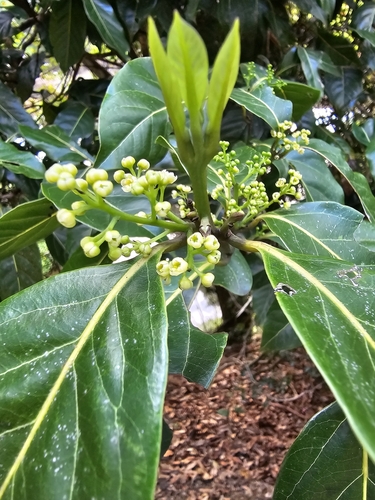
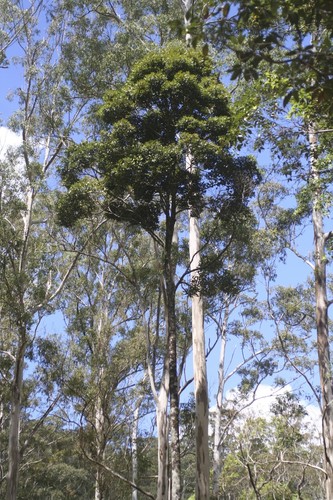
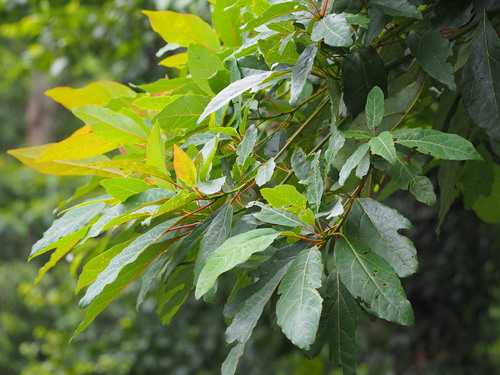
Sassafras randaiense is a medium-sized deciduous tree. Its leaves are alternate and rhomboid-ovate, measuring 10–15 cm long and 5–6 cm broad; the upper leaf surface is glabrous, while the lower leaf surface is glaucous. Leaf shape is variable: most leaves are simple and entire with no lobes, but 2 to 3-lobed leaves can occur on some trees, a trait this species shares with the North American S. albidum and the extinct †S. hesperia. Leaves of S. randaiense have an acute apex, and their base is either acute or obtuse. The hermaphroditic flowers are subterminal, arranged in 3 cm-long panicles. Fruits are globose, 6–7 mm across, and borne on a thickened pedicel 2.5–3 cm long. This species typically flowers in February, and its fruits mature in October. S. randaiense grows in broad-leaved forests at elevations between 900 and 2,400 m across the island of Taiwan. When compared to Sassafras albidum, along with Sassafras tzumu, S. randaiense differs from the North American Sassafras albidum and extinct Sassafras hesperia in key traits. S. randaiense and S. tzumu may produce both male and female flowers on the same tree, while North American Sassafras albidum is dioecious, meaning each individual plant bears only male or only female flowers. Molecular data also confirms genetic differences between Chinese Sassafras species and North American Sassafras species.