About Saposhnikovia divaricata (Turcz.) Schischk.
Growth Form and Rootstock
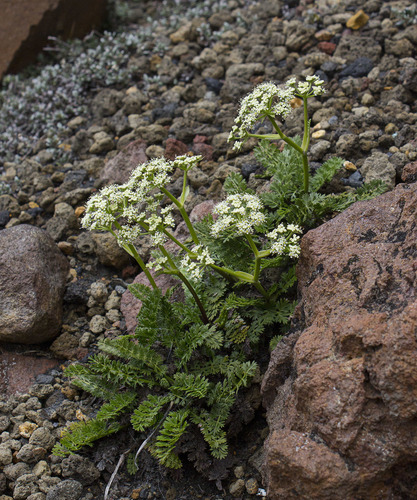
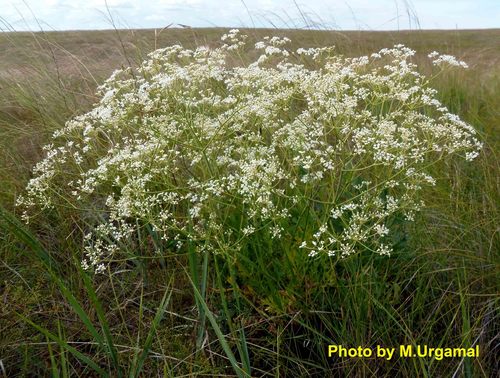
Saposhnikovia divaricata (Turcz.) Schischk. is a glabrous, much-branched perennial herb. It grows from a branched, annular tuberous rootstock that can reach up to 2 cm thick; the crown of the rootstock is surrounded by the fibrous, remnant sheathing bases of old petioles.
Plant Height
Plants reach 30–100 cm in height.
Basal Leaf Petioles
Basal leaves are numerous; their petioles are flattened with ovate sheaths, and measure 2–6.5 cm in length.
Basal Leaf Blades
Leaf blades range from oblong-ovate to broad-ovate, growing up to 35 cm long and 18 cm wide, though they are usually smaller.
Leaf Division
Leaves are bi- to tripinnatifid, with 3–4 pairs of petiolulate pinnae, and terminal lobes are lanceolate with 3-lobed apices.
Upper Stem Leaves
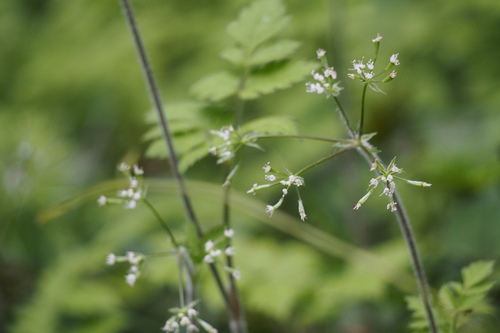
Upper leaves are simpler in structure with sheathing petioles, and reduce in size moving up the stem; they are often absent entirely, resulting in aphyllous branching.
Inflorescence Structure
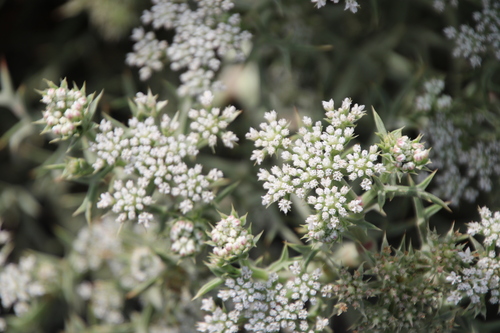
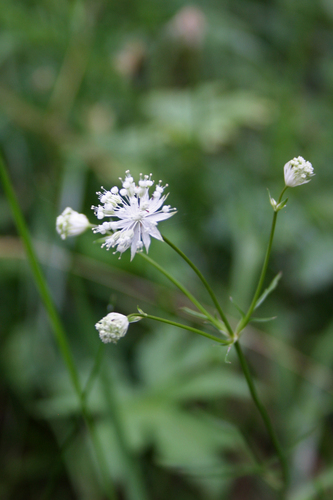
Inflorescences are compound umbels, which lack involucral bracts.
Umbel Components
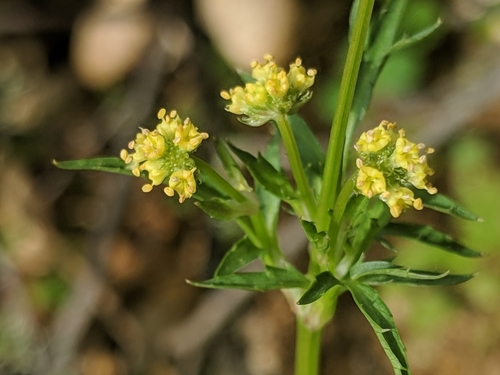
Umbels have 5–9 rays, 4–5 bracteoles, and 4–9 pedicels.
Flower Characteristics
Flowers are white or yellow, with petals approximately 1.5 mm long.
Mature Mericarp Shape
Mature mericarps are broadly ovate to oblong, flat, and grow up to 5 mm long by 3 mm wide.
Mericarp Surface and Ribs
They are tuberculate when young, becoming smooth at maturity, and have winged lateral ribs.
Flowering and Fruiting Periods
This species flowers from August to September, and fruits from September to October.
Domestic Distribution in China
In China, Saposhnikovia divaricata occurs in the provinces of Inner Mongolia, Hebei, Shandong, Henan, Shanxi, Shaanxi, Hunan, Heilongjiang, Jilin, and Liaoning.
International Distribution
It is also found in Russia, Mongolia, Korea, and Japan.
Habitat and Elevation Range
It grows on grassy and stony slopes at elevations between 400 and 800 m (1,300–2,600 ft), as well as at the margins of rice paddies, along roadsides, and in waste places.