About Sanicula epipactis (Scop.) E.H.L.Krause
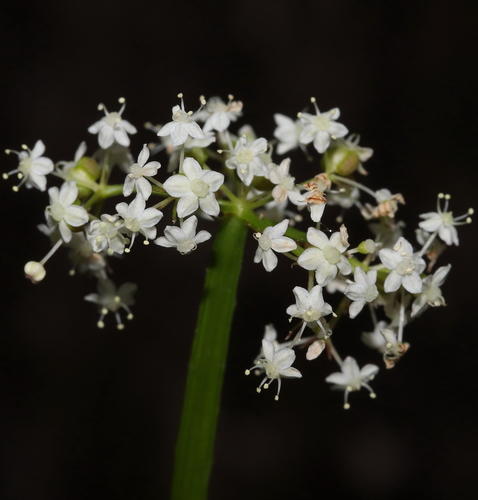
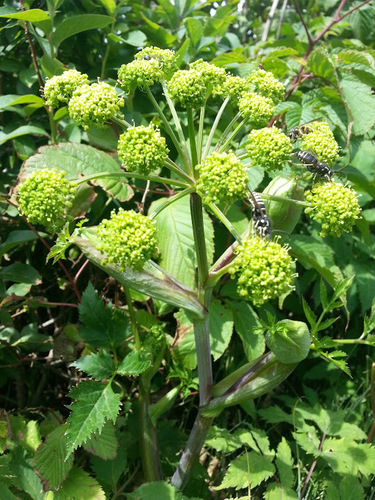
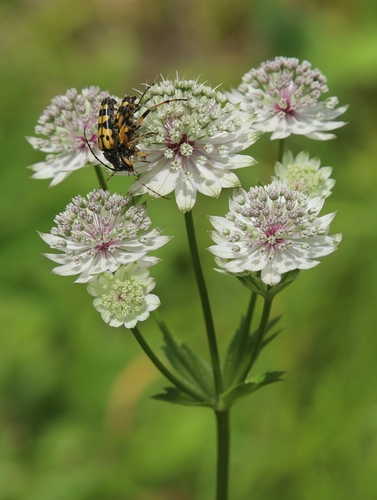
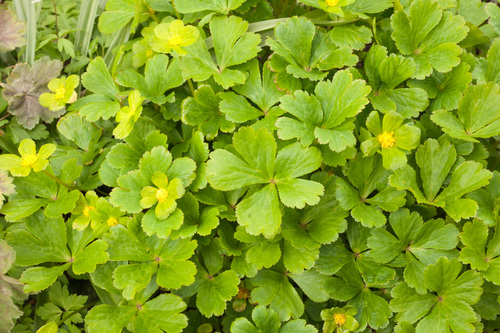
Sanicula epipactis (Scop.) E.H.L.Krause has taxonomic synonyms including Hacquetia epipactis and Dondia epipactis. It is a species of flowering plant in the Apiaceae family, native to Europe. Under its synonym Hacquetia epipactis, it was previously treated as the only species in the monotypic genus Hacquetia. This plant grows naturally in moist, shady woodland habitats. It is a rhizomatous, clump-forming herbaceous perennial that reaches roughly 30 cm in height. Its glossy green leaves only reach full development after flowering finishes. Flowers emerge in late winter and early spring: multiple tiny yellow florets are surrounded by lime green bracts, arranged in dense spherical umbels that measure 4 cm across. Sanicula epipactis is easy to cultivate in United States Department of Agriculture Plant Hardiness Zones 5 to 7, though the plant is actually hardier than this range indicates, and can be grown easily down to at least Zone 3. It displays best when grown in a woodland garden setting that mimics its native habitat. This plant has earned the Royal Horticultural Society's Award of Garden Merit. A known cultivar is the variegated variety 'Thor'. Its specific epithet epipactis derives from a Greek word referring to plants thought to curdle milk.