About Samolus valerandi L.
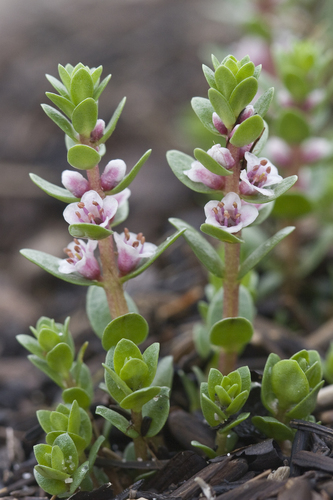
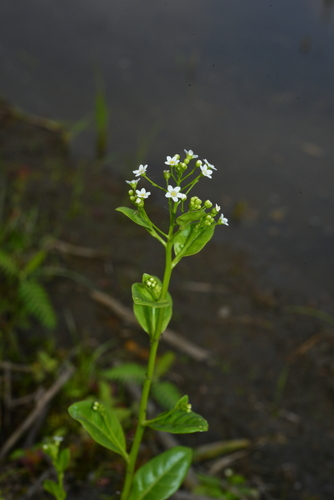
Samolus valerandi L. is a small perennial plant that grows to around 35 cm (13.8 inches) tall. It produces inflorescences in the form of racemes, with small white flowers borne on long stalks. Its corollas each have five lobes, and it can flower from spring through fall, across the entire growing season. Its fruits are green, globose capsules. This species is widely distributed across western and Mediterranean Europe, north Africa, Asia, Japan, Australia, and Central and South America including Cuba. It can be cultivated in ponds, bog gardens, and damp garden areas. It prefers light (sandy), medium (loamy), and heavy (clay) soils, with a preference for neutral or basic (alkaline) soil pH. It tolerates both full sun and shaded positions. It requires moist or wet soil, and can even grow directly in water. It tolerates maritime exposure, and is self-fertile. It is sometimes grown in aquariums, though fully submersed specimens typically only survive for a limited time. When its cut leaves are agitated in water, they produce a lather. For this property, it was formerly used by the local Arab population of Palestine to launder clothes, who called it sabūn 'arab, meaning Arab soap.