About Samea multiplicalis (Guenée, 1854)
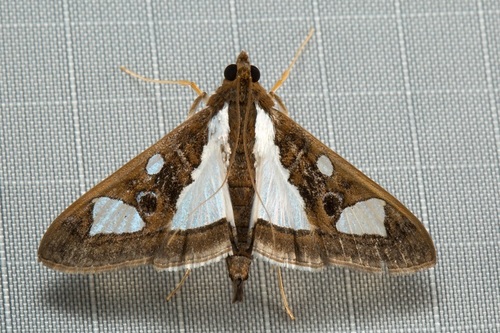
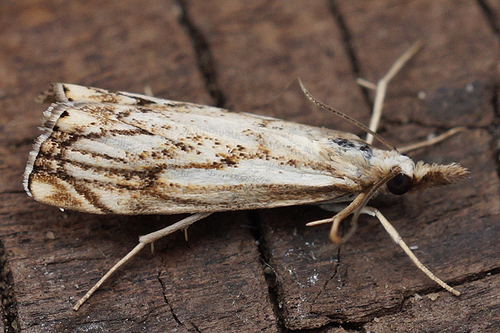
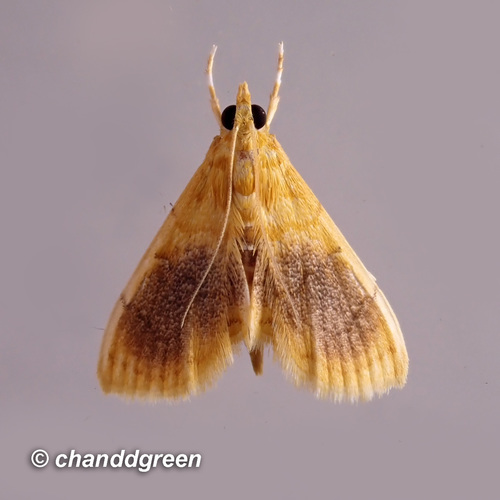
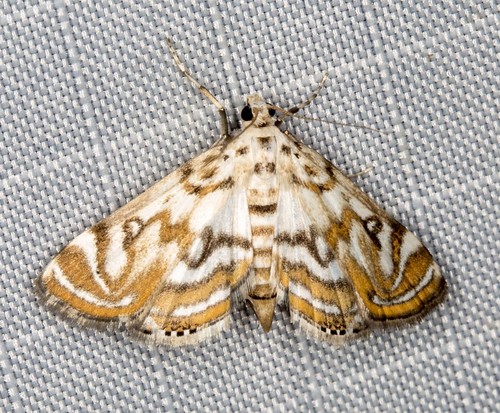
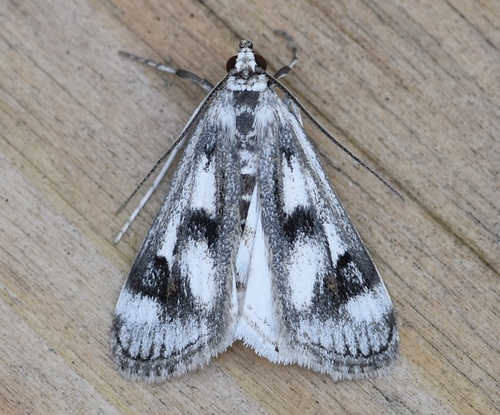
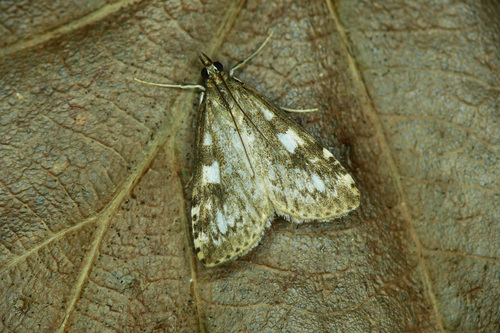
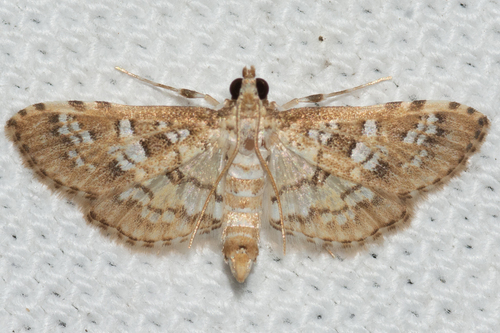
Samea multiplicalis, commonly known as the salvinia stem-borer moth, is an aquatic moth. It is generally found in freshwater habitats ranging from the southern United States to Argentina, and it was introduced to Australia in 1981. The species was first formally described by Achille Guenée in 1854. Its native range spans from the southeastern United States, reaching west to Louisiana, to Argentina, and it was first documented in Brazil in 1854. After being introduced to Australia in 1981 for biological control purposes, it is now common across Queensland and New South Wales, thriving best in Australian tropical climates while growing and dispersing more slowly in temperate regions. Salvinia stem-borer moths lay their eggs on water plants including Azolla caroliniana (water velvet), Pistia stratiotes (water lettuce), and Salvinia rotundifolia (water fern). In its native range, the moth primarily lives on these three host water plants; in Australia, it primarily lives on Salvinia molesta, an invasive water fern. All these host plants grow into floating mats on the surface of calm or still water bodies such as ponds, lakes, and slow-moving rivers. S. multiplicalis can survive in temperatures between 11 °C and 36 °C, and survives best around 30 °C. It requires warm conditions for survival and development, but consistently sustained temperatures above the low 30s cause its populations to crash. Moth populations can survive year-round in habitats where food resources and appropriate temperatures remain available through winter. Caterpillar larvae of this moth have a pale yellow to green color, while adult moths are tan with darker patterning. The full lifespan from egg to the end of adulthood is typically three to four weeks. Caterpillars feed on several aquatic plants: their primary hosts are Azolla caroliniana, Pistia stratiotes, Salvinia rotundifolia, and Salvinia molesta, and they occasionally feed on Eichhornia crassipes (water hyacinth). Larvae feed either by boring into plant stems or eating externally on leaves. Feeding by larval colonies often causes extensive damage, and kills host plants after two to three weeks of feeding. Because larval feeding kills host plants, S. multiplicalis is considered a good candidate for biological control of weedy invasive water plants such as Salvinia molesta in Australia. However, high rates of parasitism in the moth reduce its ability to effectively control these water weeds.