About Sambucus racemosa L.
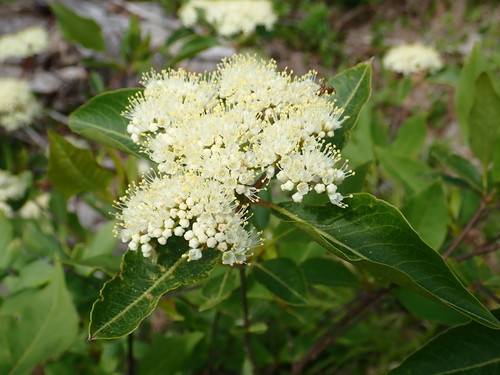
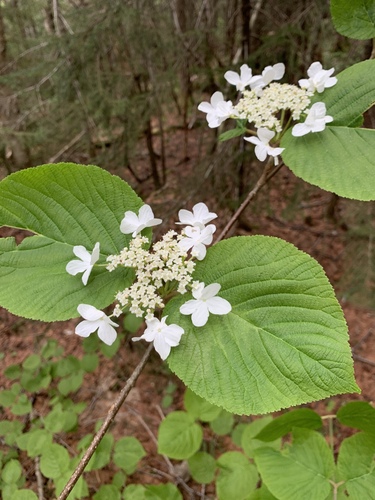
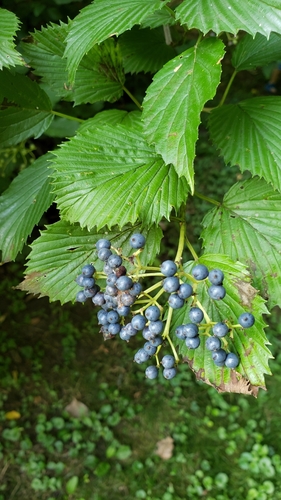
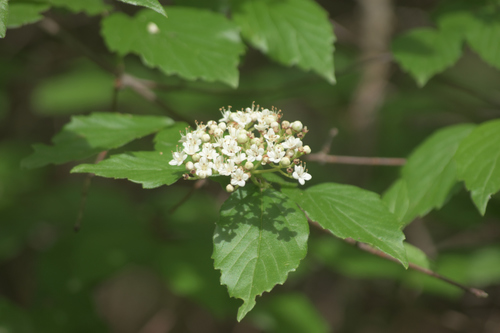
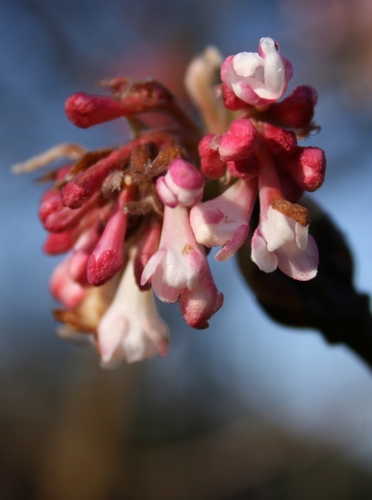
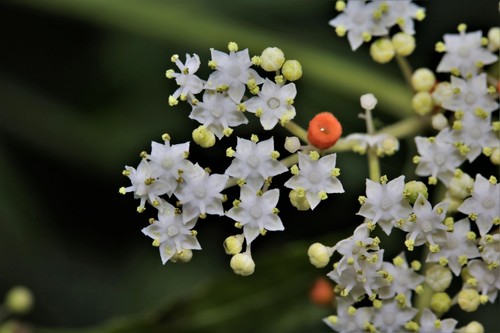
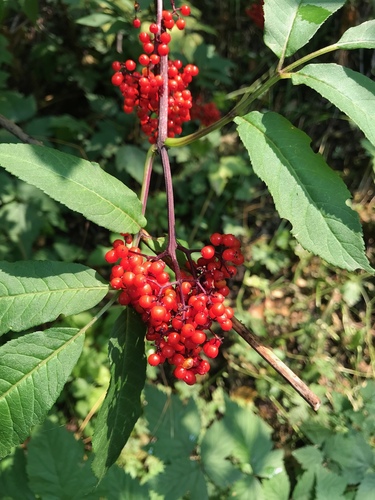
Sambucus racemosa L. is a medium-sized shrub that grows 2 to 4 meters (7 to 13 feet) tall, and rarely reaches 6 meters (20 feet) in height. Its stems are soft and contain a broad pith. Each compound leaf is made up of 5 to 7 leaf-like leaflets. Individual leaflets reach up to 4 to 8 centimeters (1+1⁄2 to 3+1⁄4 inches) long, and rarely grow as long as 16 centimeters (6+1⁄4 inches). They are lance-shaped to narrowly oval, with irregularly serrated edges. Crushed leaflets give off a strong, disagreeable scent. The inflorescence is a vaguely cone-shaped panicle, 3 to 6 centimeters (1+1⁄4 to 2+1⁄4 inches) in diameter. It is made up of several groups of flowers called cymes, and grows at the end of stem branches. Closed flower buds are pink, while open flowers are white, cream, or yellowish. Each flower has small, recurved petals and a star-shaped arrangement of five white stamens, which are tipped with yellow anthers. The fragrant flowers are visited by flies (especially hoverflies), hummingbirds, and butterflies. The fruit is a bright red drupe, which appears purple-black in the variety melanocarpa, and holds 3 to 5 seeds. Birds eat this fruit and disperse the seeds through their droppings. On average, fruit persists for 42.5 days, and each fruit holds an average of 3.0 seeds. Fruits are 88.0% water on average. By dry weight, fruits contain 8.3% carbohydrates and 9.0% lipids, which is one of the highest lipid values recorded among European fleshy fruits. This species is native to Europe, northern temperate Asia, and North America across Canada and the United States. It grows in riparian areas, woodlands, and other habitats, most often in moist locations. The stems, roots, and foliage of Sambucus racemosa are poisonous. Raw fruit may also be toxic or cause nausea if consumed. Sambucus racemosa is cultivated as an ornamental plant, used as a shrub or small tree in traditional gardens, wildlife gardens, and natural landscape design projects. The yellow-foliaged cultivars 'Plumosa Aurea' and 'Sutherland Gold' are widely grown in Britain. Although raw berries are potentially poisonous, they are reportedly safe to eat after cooking. Multiple indigenous North American peoples, including the Apache, Gitxsan, Goshute, Makah, Nuxalk, Ojibwe, Quileute, Skokomish, and Yurok, cooked the berries in a variety of recipes. Various Native American groups, including the Dakelh, Gitxsan, Hesquiaht, Menominee, Nuxalk, Northern Paiute, Ojibwe, Southern Paiute, Potawatomi, Tlingit, and Haida, have used the plant as a traditional medicine. Traditional uses include use as an emetic, antidiarrheal, remedy for colds and coughs, and aid for dermatological and gynecological purposes.