About Salvia rosmarinus Spenn.
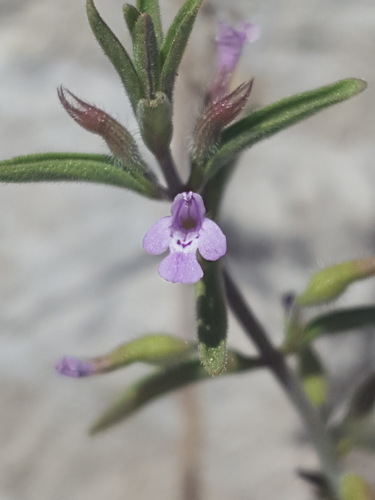
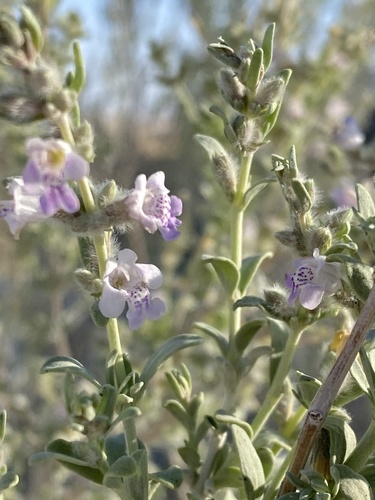
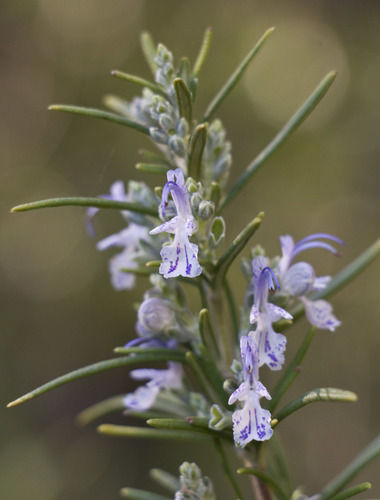
Salvia rosmarinus Spenn., commonly known as rosemary, has a fibrous root system. It grows as an aromatic evergreen shrub, with leaves that resemble Tsuga needles. Growth habits range from upright to trailing; upright forms can reach 1.2 to 1.8 metres (4 to 6 ft) in height. Its evergreen leaves measure 2–4 cm (3⁄4–1+1⁄2 in) long and 2–5 mm (1⁄16–3⁄16 in) broad, are green on the upper surface and white on the lower surface, and are covered in dense, short, woolly hairs. In temperate climates, rosemary flowers in spring and summer, but plants can bloom continuously in warm climates. Flower colors include white, pink, purple, and deep blue. Clusters of 2 to 3 flowers are spaced along the length of the branches. Rosemary often flowers outside its typical blooming season; in the Northern Hemisphere, it has been recorded flowering as late as early December and as early as mid-February. This plant can live up to 35 years. Rosemary is native to the Mediterranean region, as well as Portugal and northwestern Spain. This herb was already naturalized in China as early as 220 CE, during the late Han dynasty. Rosemary was introduced to England at an unknown date, and it is probable the Romans brought it when they invaded Britain in 43 CE. However, there are no surviving credible records of rosemary in Britain until the 8th century CE, when it was mentioned in a document later attributed to Charlemagne. Charlemagne promoted general herb usage and specifically ordered rosemary to be grown in monastic gardens and farms. There are no records of rosemary becoming properly naturalized in Britain until 1338, when Countess Joan of Hainault, mother of Queen Philippa, sent cuttings to the queen. These cuttings were planted in the garden of the old Palace of Westminster. After this point, rosemary appears in most English herbal texts. Rosemary reached the Americas with early European settlers in the early 17th century, and soon spread to South America before being distributed globally. Rosemary is reasonably hardy in cool climates. Special cultivars such as 'Arp' can survive winter temperatures as low as approximately −20 °C (−4 °F). It tolerates drought, and can survive long periods of severe water shortage. It is classified as a potentially invasive species, and its seeds are often difficult to start, with a low germination rate. Because it is attractive and drought-tolerant, rosemary is grown as an ornamental plant in gardens and for xeriscape landscaping, especially in regions with a Mediterranean climate. It is considered easy to grow and resistant to pests. Rosemary can grow quite large, remain attractive for many years, be pruned into formal shapes and low hedges, and has been used for topiary. It grows easily in pots. Groundcover cultivars spread widely and produce a dense, durable texture. To harvest rosemary, the bush should be at least 2–3 years old to ensure it is large enough to tolerate harvesting. No more than 20% of the plant’s growth should be harvested at one time, to preserve the health of the plant.