About Salvia pachyphylla Epling ex Munz
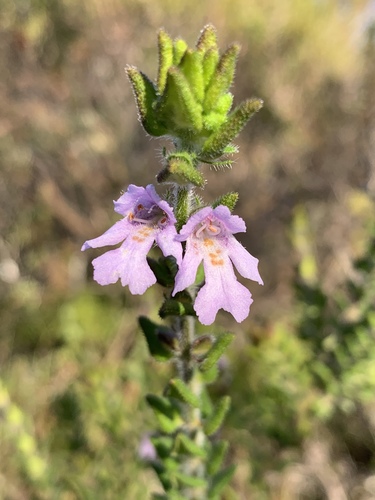
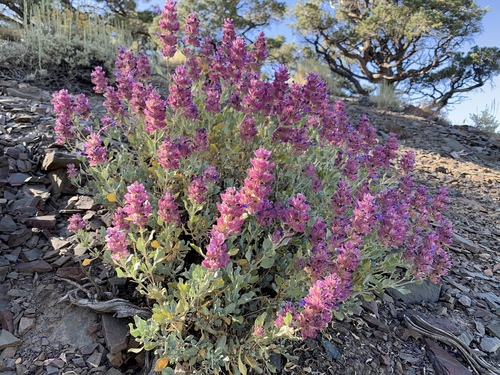
Salvia pachyphylla, commonly called rose sage, blue sage, or mountain desert sage, is a perennial shrub native to California, Nevada, and Arizona. In California, it grows at elevations between 5,000 to 10,000 ft (1,500 to 3,000 m) on dry rocky slopes, and blooms from July to September. It grows 1 to 2 ft (0.30 to 0.61 m) high, and produces blue-violet, more rarely rose, flowers that grow in dense clusters. As part of a study investigating the chemical composition of plants used in Latin American traditional medicine, Ivan C. Guerrero and colleagues conducted phytochemical studies on extracts from the aerial parts of Salvia pachyphylla and Salvia clevelandii. The team isolated major secondary metabolites from these two species, and reported in vitro cytotoxic effects against five human cancer cell lines for eight of the obtained compounds: carnosol, rosmanol, 20-deoxocarnosol, carnosic acid, isorosmanol, 7-methoxyrosmanol, 5,6-didehydro-O-methylsugiol, 8β-hydroxy-9(11),13-abietadien-12-one, 11,12-dioxoabieta-8,13-diene, 11,12-dihydroxy-20-norabieta-5(10),8,11,13-tetraen-1-one, and pachyphyllone.