About Salvia L.
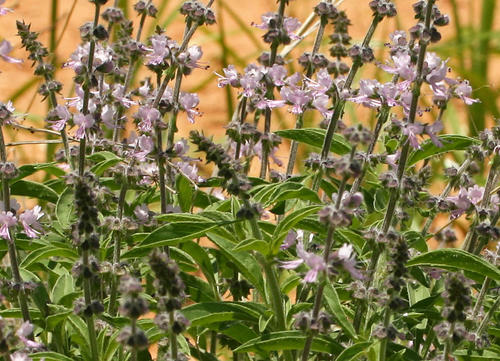
Salvia lyrata forms a basal rosette of leaves that reach up to 8 inches (20 cm) in length, and broaden toward the tip. Its leaves have irregular margins, and are typically pinnately lobed or cut, giving them an appearance somewhat similar to a lyre. The central leaf vein is sometimes dark wine-purple. A square-shaped hairy stem up to 2 feet (0.61 m) tall grows from the rosette, which bears uneven whorls of two-lipped lavender to blue flowers. Flowering is heaviest between April and June, though sparse flowering can occur throughout the year. The leaves of this plant were once thought to act as an external cure for cancer, which gave rise to one of its common names, "Cancerweed". Salvia lyrata grows in full sun or light to medium shade, and native stands occur on roadsides, in fields, and in open woodlands. Salvia lyrata is sometimes grown in gardens for its attractive foliage and flowers. It can produce large numbers of seeds, however, and easily spread into lawns. Its ability to thrive even after being mowed and walked on means it can be used as a turf grass alternative, and it is attractive to bees. Several cultivars have been developed that have purple leaves. 'Burgundy Bliss' and 'Purple Knockout' are two cultivars with burgundy leaves that have a deeper color than the leaves of the original species. Native Americans used the root of this plant as a salve for sores, and made a tea from the whole plant to treat colds and coughs.