About Salvia dentata Aiton
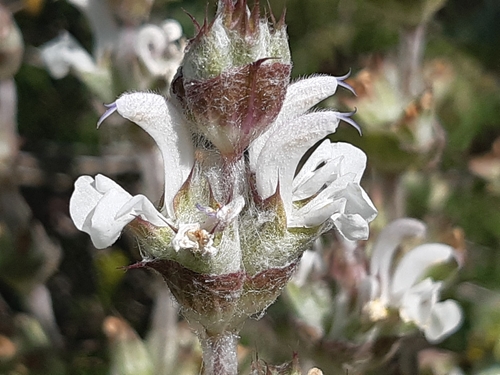
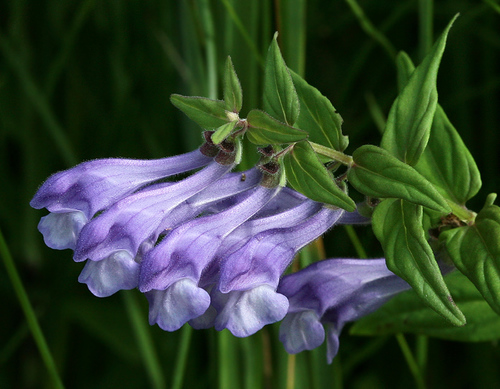
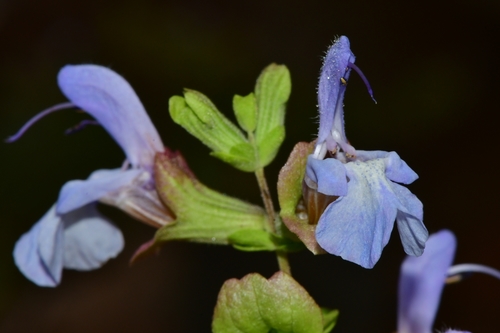
Salvia dentata, commonly known as Namaqua sage, is a perennial shrub with short, twiggy branches. It is native to western South Africa, just north of Cape Town, where it grows at elevations between 610 to 1,520 meters (2,000 to 5,000 ft) on dry hillsides, slopes, and streambeds. This species was first formally described by William Aiton in 1789. In its native habitat, it reaches 1.8 meters (6 ft) in height, and it grows shorter when cultivated. It has round stems, an unusual trait for plants in the Salvia family. Its aromatic gray-green leathery leaves are small, measuring 1.3 cm (0.5 in), and grow tightly packed along stems. Its short inflorescence is 5.1 cm (2 in) long, and is tightly packed with whorls of 2.5 cm (1 in) flowers that range in color from pale blue to light lavender. As the flower calyces age, they expand and turn pink, complementing the color of the flowers.