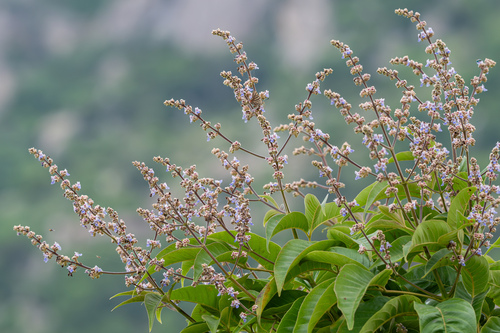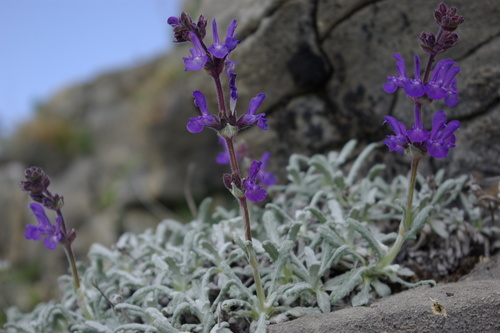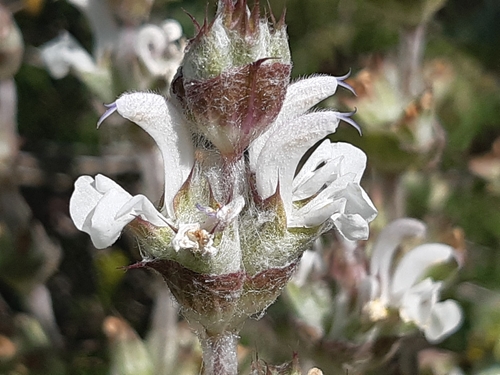
About Salvia aethiopis L.
Salvia aethiopis L. is a perennial plant species with the common names Mediterranean sage and African sage. It is most well known as a noxious weed, especially in the western United States. This species is native to Eurasia, and it was likely introduced to North America as a contaminant in alfalfa seed. It grows as a weed in rangelands and pastures. It is not eaten by livestock, disrupts native plant communities, and acts as a physical nuisance because its persistent dried stems resemble tumbleweed. The weevil Phrydiuchus tau is used as a biological control agent to manage this weed. Boya and Valverde studied a sample of Salvia aethiopis. Acetone extracts from the plant's roots yielded a previously undescribed orthoquinone diterpene called aethiopinone, with the chemical structure 4,5-seco-5,10-friedo-abieta-4(18),5,6,8,13-pentaen-11,12-dione. This compound was isolated at a 0.15% yield from dry roots of the plant.