About Salticus scenicus (Clerck, 1757)
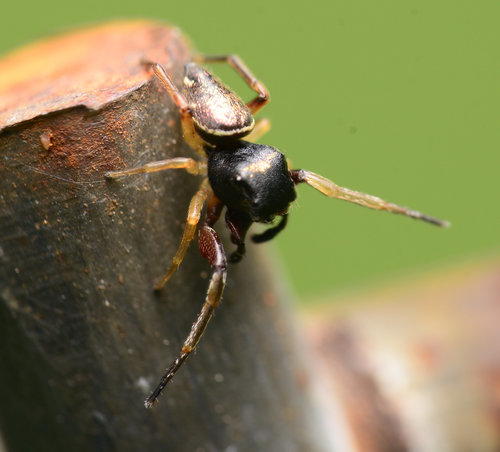
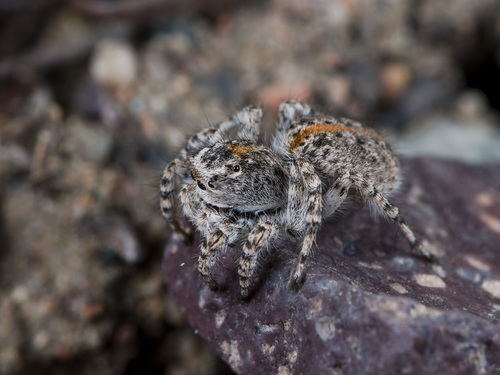
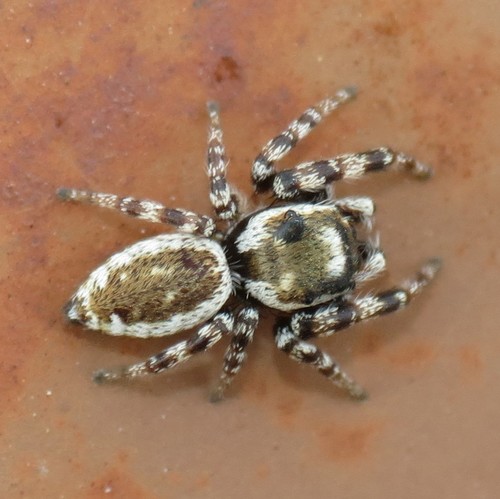
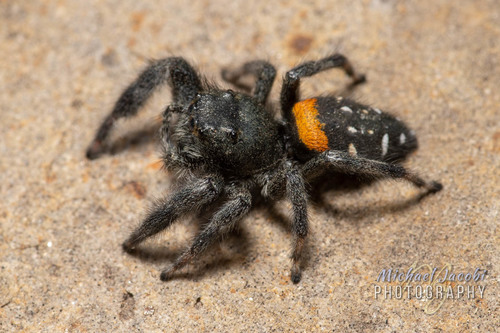
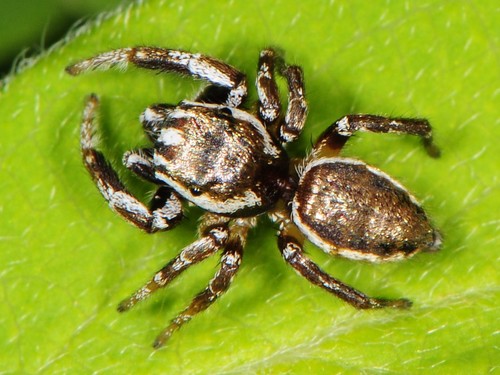
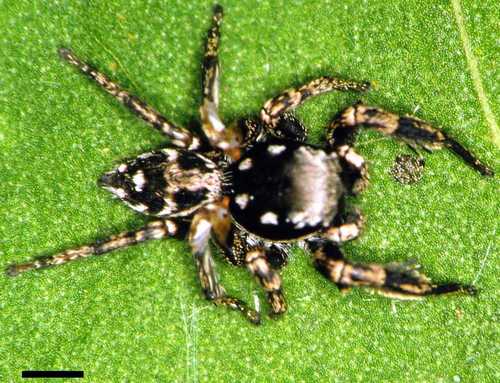
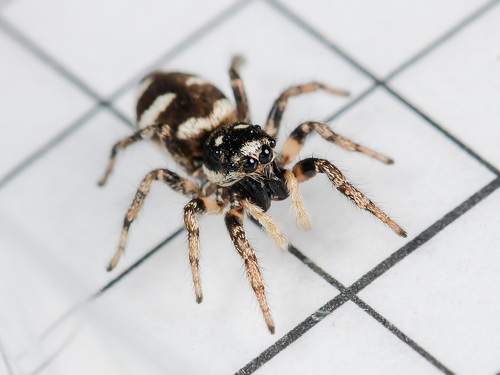
This jumping spider species, commonly called the zebra spider, has a clear sexual size dimorphism: females measure 5–9 mm in body length, while males are 5–6 mm long. Males also have distinctly larger chelicerae than females. Like all members of the Salticidae (jumping spider) family, this species has eight eyes total. The anterior median eyes are especially enlarged, the anterior and posterior lateral eyes are also relatively large, and the posterior median eyes are very small. The large anterior median eyes are primarily responsible for the spider's excellent binocular vision. These small spiders are black, with white hairs that form characteristic stripes. Zebra spiders are widespread across Europe, North America, and North Asia, and occur throughout the Holarctic region. This species is naturally found in open habitats such as rock faces, shingle beaches, and occasionally tree trunks. Because they prefer open, vertical habitats, they often live close to humans in urban areas, where they can be found on garden fences and building walls. They have also been recorded entering human homes, where they most commonly occur on window corners and windowsills. This species breeds during spring and summer. When a male and female encounter each other, the male performs a courtship display that involves waving his front legs and pedipalps, and moving his abdomen up and down. During this display, the male uses his striped markings to signal his mating intent to the female. The entire courtship ritual relies heavily on vision; higher quality displays make the female more likely to accept the male as a mate. Males must approach females cautiously, as they risk being attacked or mistaken for prey. If the female accepts the male after his display, she will allow him to approach, then crouch to let him climb on top of her. Males use a pair of leg-like appendages called pedipalps to transfer sperm to the female during mating. After laying eggs, females remain with their egg sacs to guard them, and continue guarding the young after they hatch. Spiderlings leave their mother to live independently after they complete their second moult.