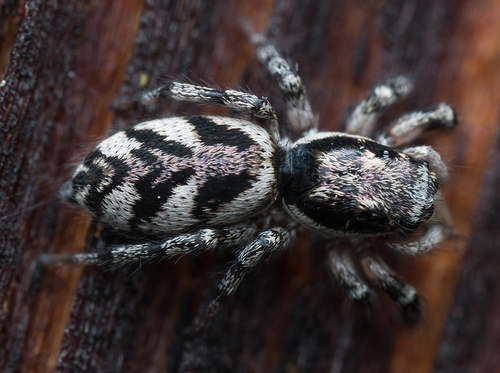
About Salticus cingulatus (Panzer, 1797)
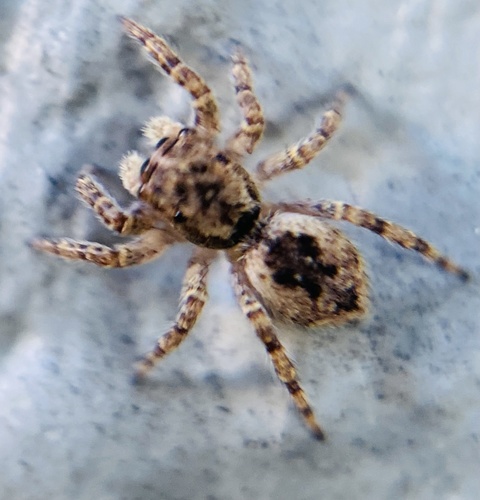
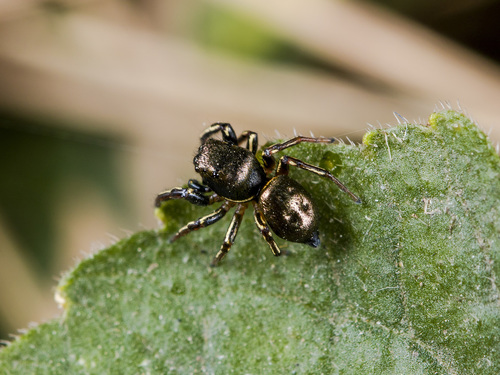
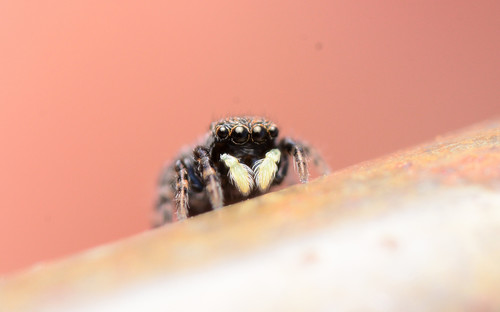
This species is scientifically named Salticus cingulatus (Panzer, 1797). Females have a body length of 5.2–5.5 mm, while males range from 3.4–6 mm in body length. For males, the palpal bulb is distally forked, with a long visible portion. For females, the epigyne is strongly sclerotized, with an opaque anterior section. Both the prosoma and opisthosoma are black; the prosoma has white spots, and the opisthosoma is largely covered in white hairs. Salticus cingulatus is similar to Salticus scenicus, but can usually be distinguished by its much paler appearance, which comes from a greater coverage of white hairs on the prosoma. The species prefers to live on old tree trunks and fence palings located in sunny spots within or near woodland, fens, and heathland. It is found frequently on pines, and only occasionally on buildings. Males are active during May and June. Females are mostly active between May and July, and can occasionally persist into the autumn. Salticus cingulatus has a Palearctic distribution, and occurs across all of Europe except for Iceland. In Great Britain it is widely distributed, but only scattered records exist from the west, south-east, and far north of the region.