About Saltator maximus (P.L.S.Müller, 1776)
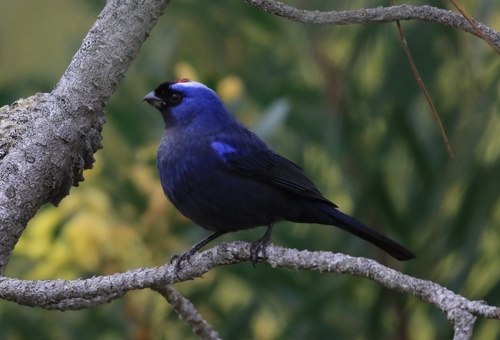
The buff-throated saltator, scientifically named Saltator maximus, is a seed-eating bird that belongs to the tanager family Thraupidae. Its breeding range extends from southeastern Mexico to western Ecuador and northeastern Brazil. On average, this bird measures 20 cm (7.9 in) long and weighs between 42 and 52 g (1.5–1.8 oz). Adult buff-throated saltators have a slate-grey head with a white supercilium and a greenish crown. Their upperparts are olive green, while their underparts are grey, turning buff on the lower belly. The throat is buff and edged with black, and both its thick convex bill and legs are black. Juvenile birds have duller overall plumage, with a blackish throat and breast mottled with white, and brown markings on the lower underparts. The common call of this species is a high-pitched seeeer. Males perform melodious duets, where one produces a warbled cheery cheery, which the other answers with cheery to you. This species lives in dense vegetation. Buff-throated saltators feed on fruit, including fruit from Cymbopetalum mayanum in the Annonaceae family, Trophis racemosa in the Moraceae family, and gumbo-limbo (Bursera simaruba), as well as buds, nectar, and slow-moving insects. It forages at low and mid vegetation levels, and sometimes joins mixed species foraging flocks. A typical clutch contains two pale blue eggs. Each egg measures 22–32 mm (0.87–1.26 in) long by 16.5–21.5 mm (0.65–0.85 in) wide, and weighs 4.8–6.1 g (0.17–0.22 oz); these eggs are large compared to other eggs of birds in the genus Saltator. The eggs are laid in a bulky cup nest built up to 2 m (6.6 ft) high in a tree or bush.