About Salsa fuliginata (L.Koch, 1872)
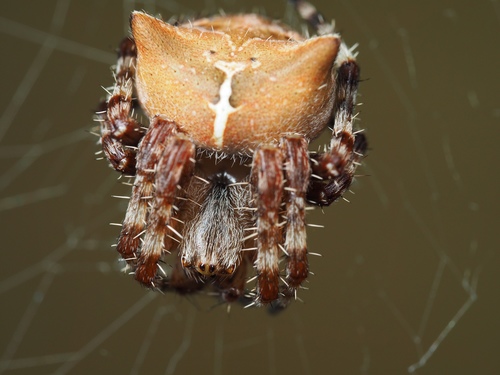
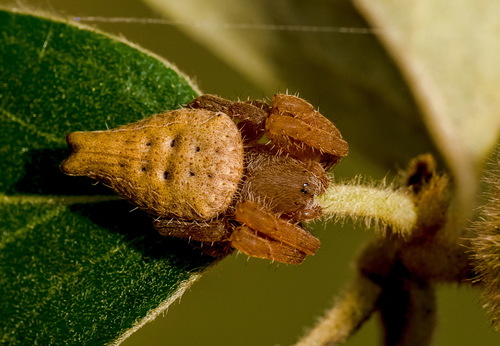
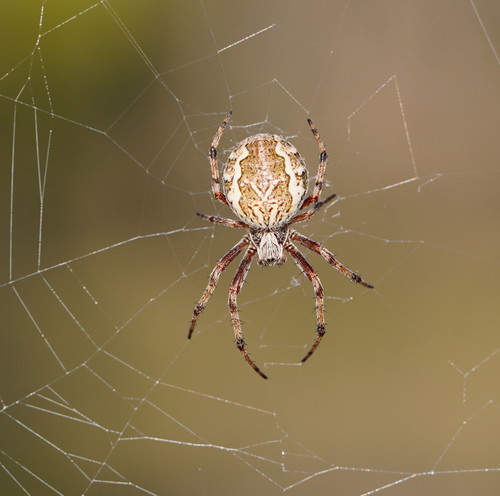
Salsa fuliginata, commonly known as the sooty orbweaver, is an orb-weaver spider belonging to the genus Salsa. This species is distributed across southeastern Australia and New Zealand. It is native to southeastern Australia, where it occurs in New South Wales, Victoria, Tasmania, and South Australia. It was introduced to New Zealand more than 22 years ago, and in New Zealand it can be found in Christchurch, Auckland, Wellington, and near Lake Taupō on the North Island. Salsa fuliginata does not have a single specific preferred habitat. It has been observed in open areas with low-lying vegetation, as well as in various forest types. Collected specimens of this spider have been found in dry sclerophyll forests, open forests, bushes, shrubs, gardens, and swamps. Little specific research has been done on the life cycle of Salsa fuliginata, but it is assumed to follow the same four main life stages shared by most other spiders: eggs, spiderlings, juveniles, and adults. Because Australia and New Zealand have temperate climates, this species mates and lays eggs during spring, and this activity may continue through the summer. After mating, males and females separate; males go on to search for other mates, while females capture prey to support the development of their eggs. A few weeks after mating, female Salsa fuliginata lay their egg sacs and hang them near or within their webs. Eggs inside the sacs take approximately two to four weeks to hatch. Spiderlings go through an average of two moults while still inside the egg sac, before breaking through the sac's tough membrane. Once spiderlings complete their early moults and become independent, they typically disperse quickly via ballooning. Spiderlings become juveniles after several additional moults, and continue moulting until they reach full adult maturity. Most individuals go through up to eight moults total, though some have been recorded moulting nine times, after which they complete the cycle by reproducing themselves. In the temperate regions of Australia and New Zealand, most spiders live only one year, or at most two years. This lifespan is only assumed to apply to Salsa fuliginata, as very few spider species have had their full life cycles studied in detail. According to research by Framenau & Pedro, mature adult Salsa fuliginata are most commonly encountered and collected between October and January. Mature males become much less common in the months around September and February, which suggests that males generally have a low life expectancy. In contrast, females have a relatively higher life expectancy, which matches Framenau & Pedro's finding that more collected specimens of Salsa fuliginata are female than male.