About Salix starkeana Willd.
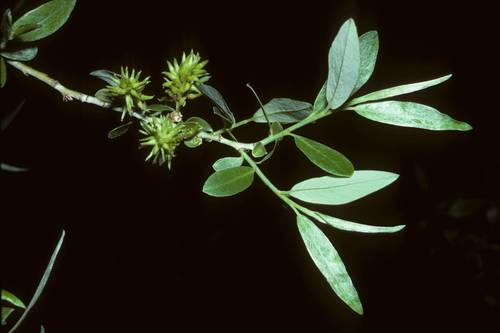
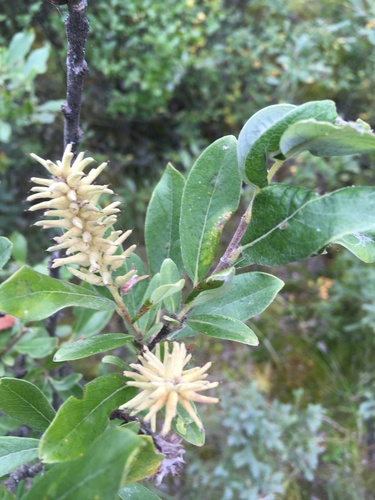
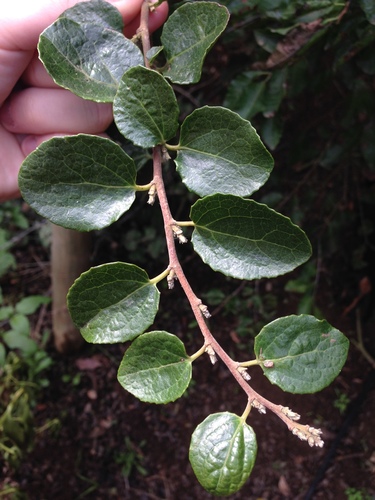
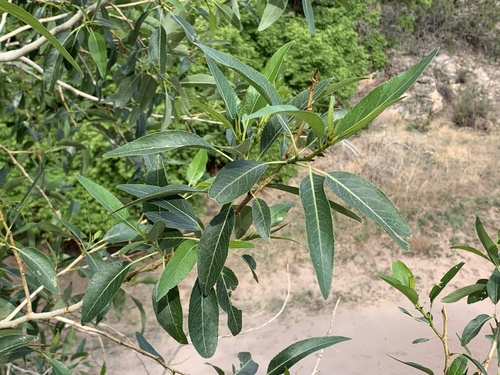
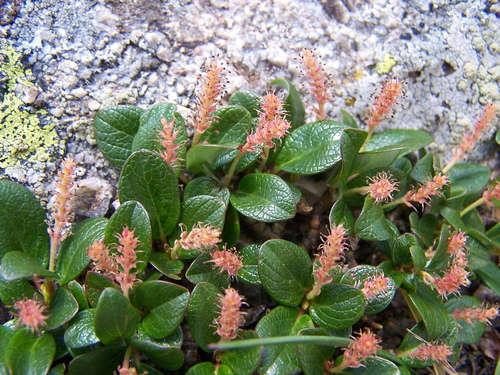
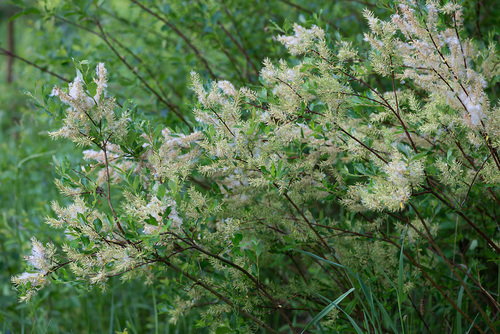
Salix starkeana Willd., commonly known as the pale willow, is a prostrate to arching ascending shrub that grows up to 1 meter high. It has thin, red-brown to purple-red, bare branches. Young shoots are hairy when young, and lose their hair as they mature. This species has broadly elliptic to semi-kidney-shaped stipules. Its petiole is approximately 5 millimeters long. The leaf blade measures 5 to 7 centimeters long and 1.5 to 2 centimeters wide, is shaped broadly lanceolate to ovoid or obovate, ends in a sudden point, has a narrowed base, and has a glandular serrated margin. The upper leaf surface is slightly hairy when young, becomes hairless with age, is weakly shiny, olive-green, and veined. The lower leaf surface is hairless, and colored deep to blue-green. Leaves have 6 to 8 pairs of lateral veins. Its inflorescences are 1 to 3 centimeters long, elliptical catkins that grow on a 1 centimeter long stalk covered in leaves. The bracts are yellowish or brownish, glabrous, and only have long hairs along their edges. Each flower produces one nectar gland. Male flowers have two almost hairless stamens. The ovary of female flowers is long-stalked and densely hairy. It has a distinct stylus, and a forked divided stigma. The pale willow flowers from March to April, at the same time that its new leaves emerge. Its chromosome counts are 2n = 38 or 44.