About Salix pulchra Cham.
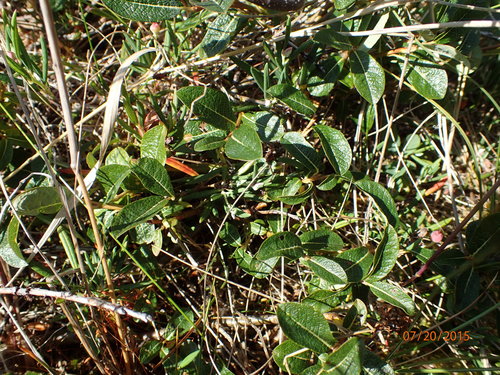
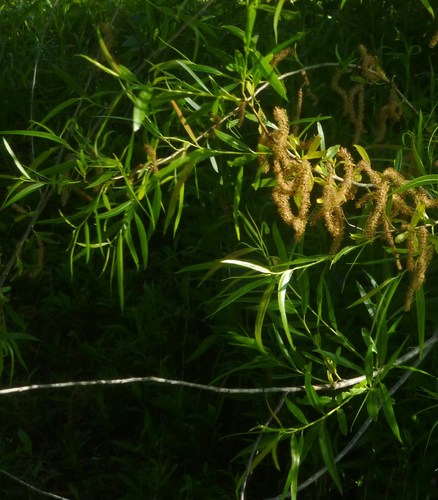
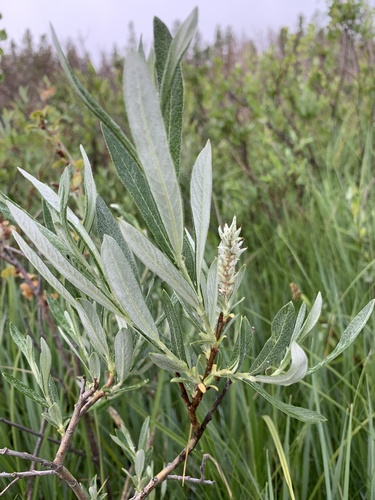
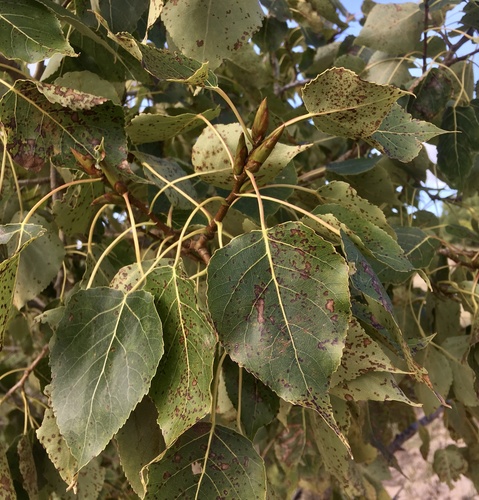
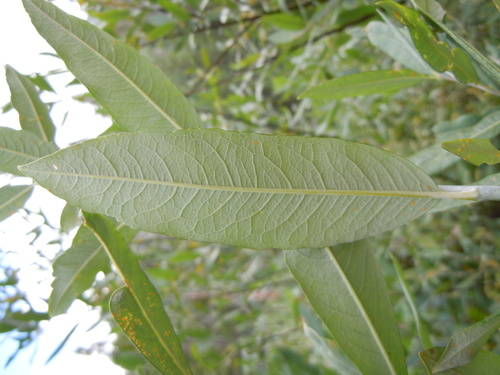
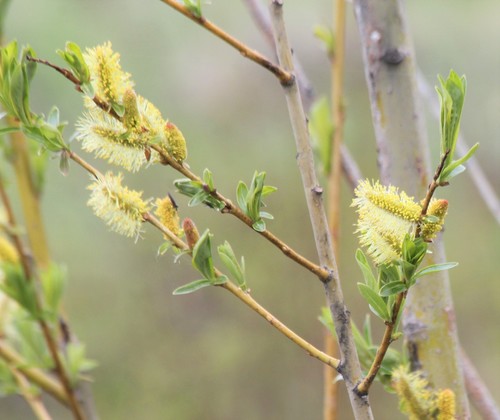
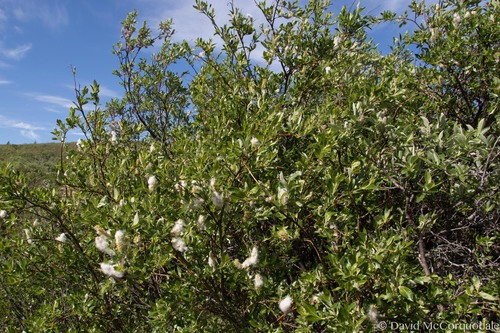
Salix pulchra Cham. is a species of flowering plant in the willow family, with the common names diamondleaf willow, tealeaf willow, and thin red willow. It is native to northern North America, where it occurs in Alaska, Yukon, the Northwest Territories, Nunavut, and northern British Columbia. It is also found in Russia. This willow is an erect, deciduous shrub that grows up to 4.6 m (15 ft) tall, though it usually stays smaller, especially in the Arctic and alpine climates. Alongside Salix richardsonii and Salix alaxensis, it is one of the tallest willow species growing in the Canadian Arctic Archipelago. This species is dioecious, meaning male and female reproductive structures grow on separate individual plants. Its inflorescence is a catkin, which develops before new leaves emerge in spring. The leaves are hairless, green on the upper surface and whitish on the underside. This plant is a dominant species on many areas of tundra, and it commonly grows alongside sedges. It may form thickets with other willow species along waterways and on floodplains. It can also be found growing in spruce woodlands and muskegs. It grows above the timberline in interior Alaska, and at the timberline in northern Alaska. It often sprouts and grows after wildfire, and it persists in open habitat. This species was formerly classified as Salix planifolia subsp. pulchra, a subspecies of Salix planifolia, but is now recognized as a separate distinct species. The two willow species have overlapping ranges and similar appearances, but can be told apart by the longer stipules of S. pulchra. In regions where both species grow, S. pulchra is often found at higher elevations. S. pulchra and S. planifolia also form natural hybrids. Salix pulchra is one of the least bitter-tasting willows in Alaska, and young leaves may be harvested for human consumption in spring. The Inuit ate the leaves and shoots raw, dried, or stored them in seal oil for later use. Leaves of this plant were also used to brew tea and make soup. On Nunivak Island, parts of this plant were chewed to treat conditions including mouth sores and pain. This willow is also a good source of vitamin C. Beyond medicinal uses, Native Americans used parts of willows, including this species, for basket weaving, to make bows and arrows, and to build animal traps.