About Salix polaris Wahlenb.
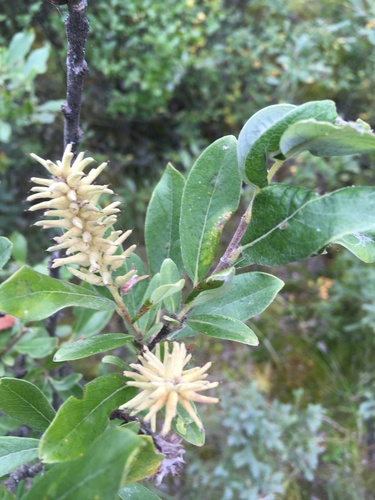
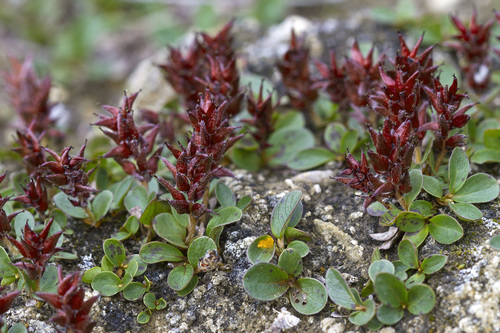
Salix polaris Wahlenb. is one of the smallest willow species in the world. It is a prostrate, creeping dwarf shrub that only reaches 2–9 cm (0.79–3.54 in) in height. It produces underground branches or runners that grow in the uppermost soil layers. Its leaves are rounded-ovate, measuring 5–32 mm long and 8–18 mm broad. The leaves are dark green with smooth, entire margins. This species is dioecious, meaning female and male reproductive structures grow on separate individual plants. Its flowers are arranged in short catkins, and each catkin bears only a small number of flowers. The fruit it produces is a brownish, hairy capsule. Its long runners bear stems that root freely, and creep within mats of mosses and lichens. These moss and lichen mats hold the plant together and protect it from wind. This willow can grow in both open gravel habitats and closed vegetation communities. Fossil remains of Salix polaris dating to the Pleistocene ice ages have been found in Europe, as far south as southern England, the Alps, and the Carpathians. This species has also been reported to occur in Arizona, but the USDA does not accept this record.