About Salix myrtillifolia Andersson
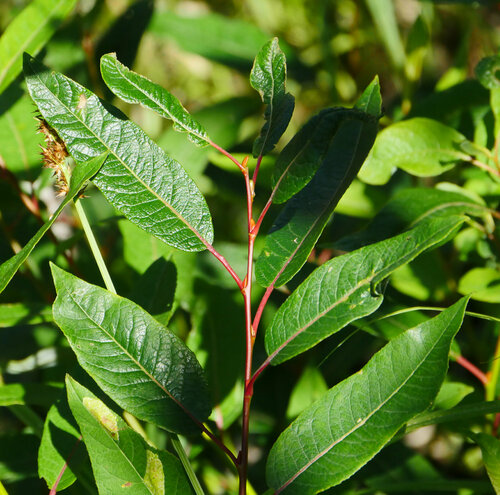
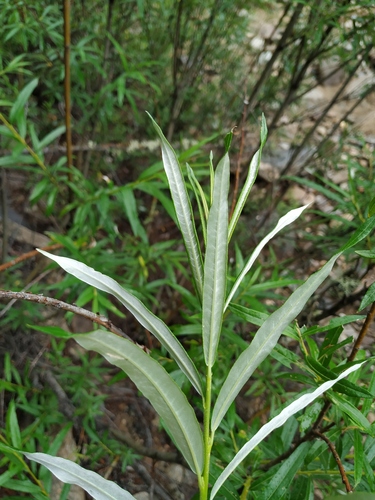
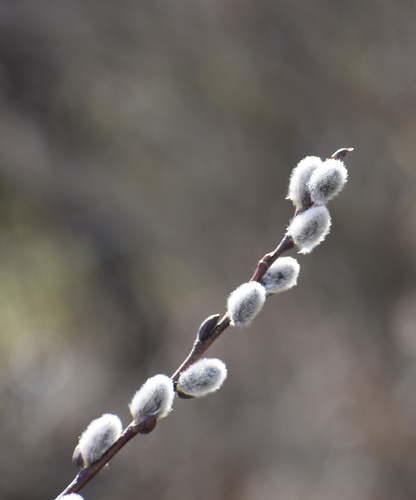
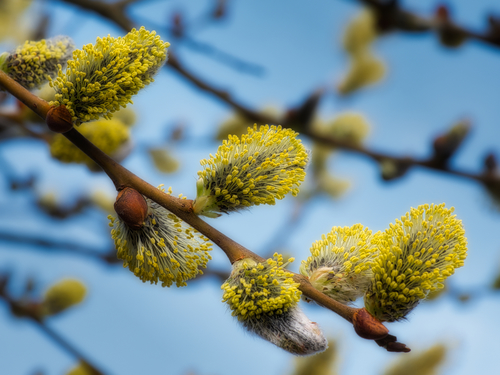
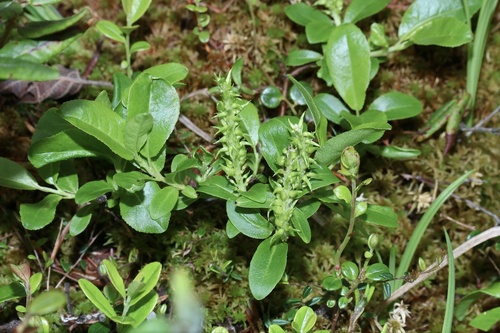
Salix myrtillifolia, commonly known as blueberry willow, is a species of flowering plant in the willow family. It is native to northern North America, where it occurs across Alaska and most of Canada. This willow is a shrub that has two distinct growth varieties. Low blueberry willow (S. m. var. myrtillifolia) is a small shrub that stays under 60 cm (24 in) tall. Tall blueberry willow is a larger, upright-growing shrub that reaches a maximum height of around 3 m (10 ft). This species is dioecious, meaning male and female reproductive structures grow on separate individual plants. Its inflorescence is a catkin that can grow up to 5 cm (2 in) long. This plant grows in coniferous forests located in alpine climates. The smaller low blueberry willow variety grows in swampy areas, including black spruce muskegs. Tall blueberry willow most often grows in riparian habitat, forming dense thickets along waterways. It is particularly common along the Tanana and Yukon Rivers, and it grows alongside many other willow species. It acts as a pioneer species, colonizing areas covered by recently deposited alluvium such as floodplains that have just been scoured by flood waters.