About Salix lucida subsp. lasiandra (Benth.) E.Murray
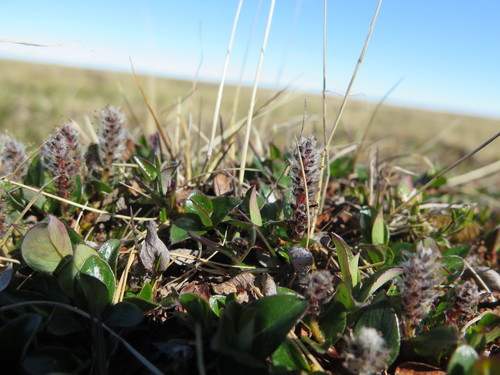
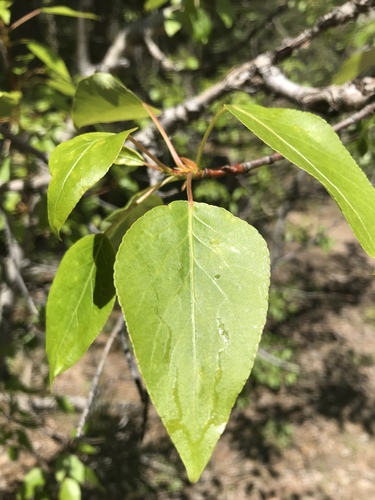
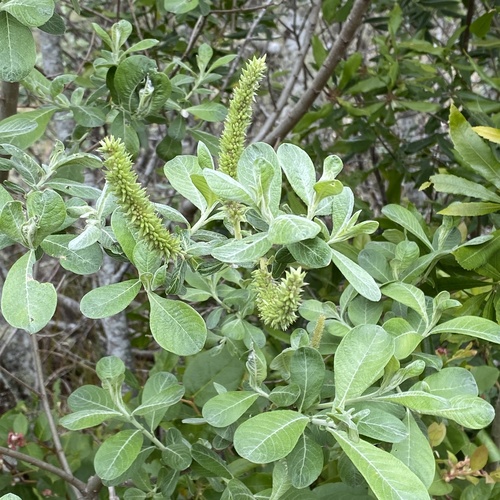
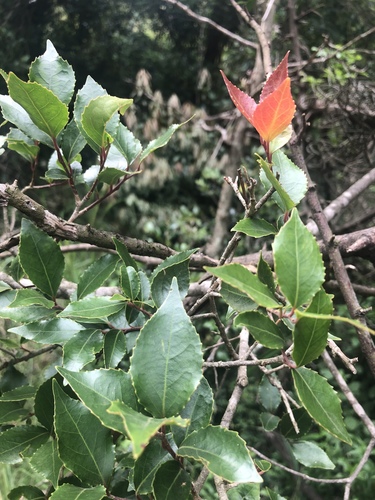
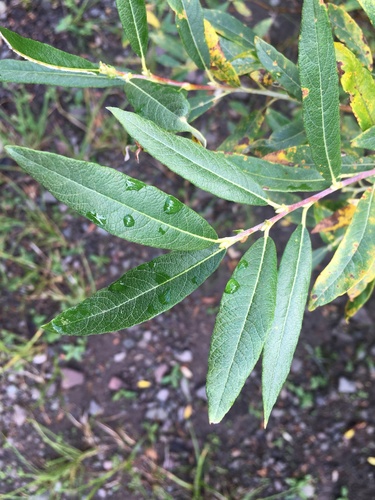
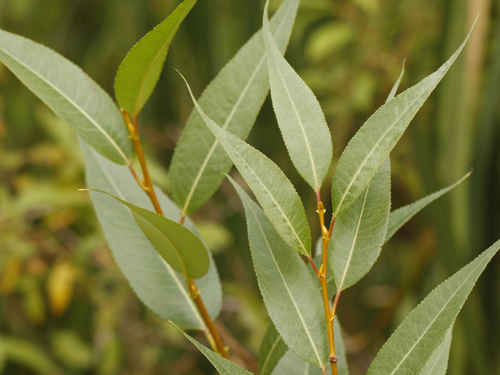
Salix lucida, commonly known as shining willow, Pacific willow, red willow, or whiplash willow, is a willow species native to northern and western North America, where it grows in wetland habitats. It is the largest willow species found in British Columbia. This deciduous plant grows as a large shrub or small tree, reaching heights of 4 to 15 metres (13 to 49 ft). Its shoots range in color from greenish-brown to grey-brown. The leaves are narrow elliptic to lanceolate, measuring 4 to 17 centimetres (1+1⁄2 to 6+1⁄2 in) long and 1 to 3.5 cm (1⁄2 to 1+1⁄2 in) broad. The upper leaf surface is glossy dark green, while the lower surface is usually glaucous green; leaves are hairless or thinly hairy. The flowers are yellow catkins 1 to 9 cm (1⁄2 to 3+1⁄2 in) long, and are produced in late spring after new leaves emerge. Three subspecies are recognized: S. l. lucida, known as shining willow, ranges from Newfoundland west to eastern Saskatchewan, and south to Maryland and South Dakota. S. l. lasiandra (Benth.) E.Murray (synonym S. lasiandra Benth.), known as Pacific willow, ranges from Alaska east to the Northwest Territory, and south to California and New Mexico. S. l. caudata (Nutt.) E.Murray, known as whiplash willow, occurs in interior western North America from eastern British Columbia south to eastern California and Nevada; some authors include this subspecies within S. l. lasiandra. Salix lucida is closely related to Salix pentandra of Europe and Asia.