About Salix lasiolepis Benth.
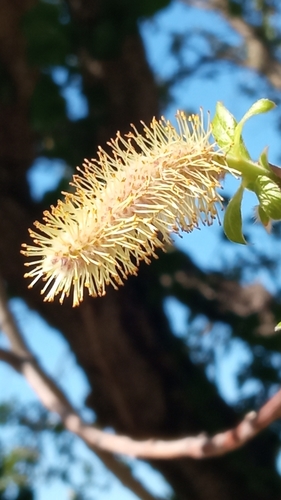
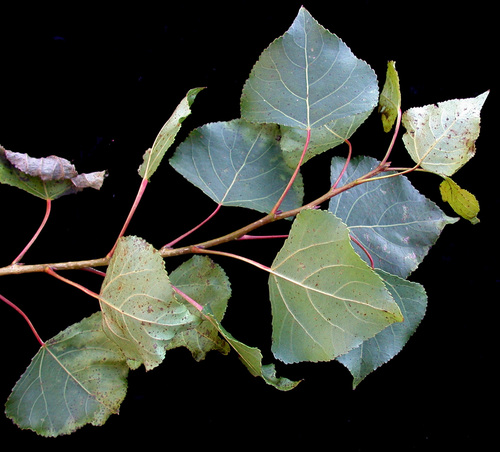
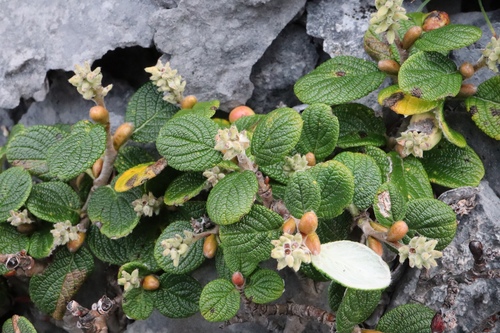
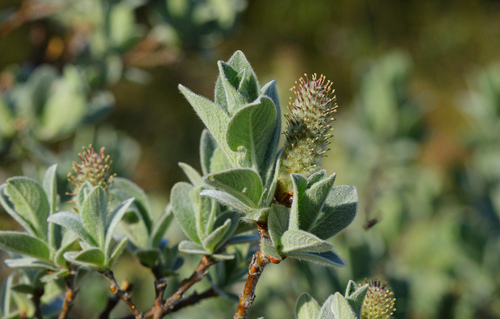
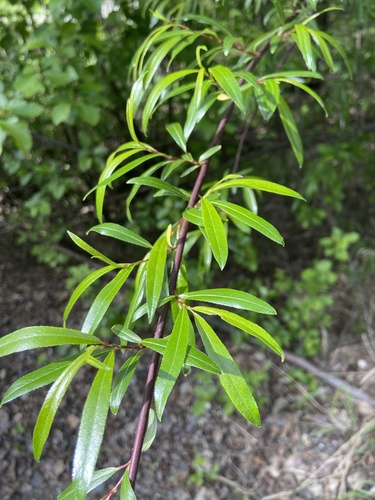
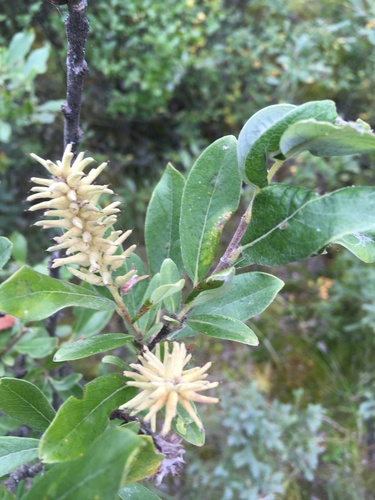
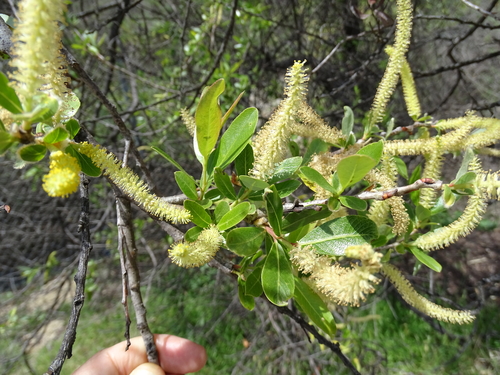
Salix lasiolepis Benth. is a deciduous large shrub or small multi-trunked tree that reaches up to 10 metres (33 ft) in height. Young shoots are yellowish brown and densely covered in hairs. Its leaves are 3.5–12.5 centimetres (1.4–4.9 in) long, broadly lanceolate, green on the upper surface, and glaucous green on the lower surface. Leaf undersides are covered in whitish or rusty hairs that gradually wear off over the summer. Leaf morphology varies widely; mature leaf margins may be revolute, entire, or serrate, and leaf apices range from acute to obtuse. Stipules may be absent or leaf-like, and petioles are covered in hairs. Flowers are unisexual. Male staminate flowers form yellow catkins 1.7–5.5 centimetres (0.67–2.17 in) long, while female pistillate flowers form green catkins 1.5–6 centimetres (0.59–2.36 in) long. Both types of catkins emerge in early spring, with a bloom period from February to May. This species may produce precocious inflorescences, meaning flowers develop before leaves grow in. The core range of this species, commonly called arroyo willow, covers most of California including the California Coast Ranges, Klamath Mountains, Peninsular Ranges, Sierra Nevada, Transverse Ranges, and Arizona. Its range extends north into Washington, south into Baja California, and east into Idaho, Utah, Texas, and Coahuila, Mexico. Arroyo willow commonly grows in riparian zones of canyons and valleys, along pond shores, and in marshes and wetlands. It occurs in a wide range of plant communities, including chaparral, oak woodland, mixed evergreen forest, coast redwood forest, yellow pine forest, red fir forest, lodgepole pine forest, and grasslands. Pollination occurs in spring, with timing varying by latitude and elevation, and is primarily carried out by insects. Salix lasiolepis acts as a host plant for multiple insect species, including Lorquin's admiral, mourning cloak, and western tiger swallowtail butterflies. Its seeds are very small, measuring approximately 1 millimetre (0.039 in), and are dispersed by wind. Indigenous peoples of California used this species for a variety of purposes. As a traditional medicinal plant, infusions made from its leaves, bark, or flowers were used to treat several health conditions. Bark was brewed into tea to relieve pain and reduce fevers. Inner bark was processed to make rope. Shoots were used to make coiled and twined baskets, and branches were used to construct acorn storage baskets. Leaves were used as thatching for ramadas.