About Salix lanata L.
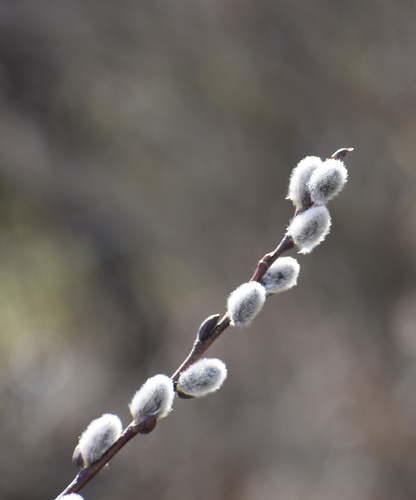
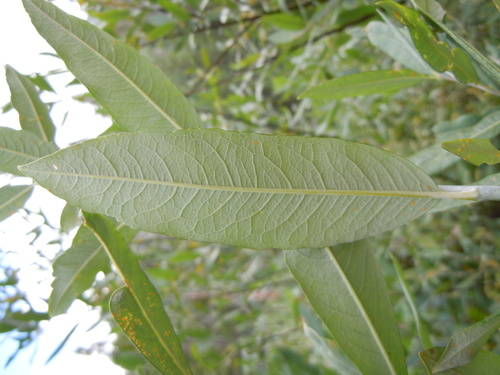
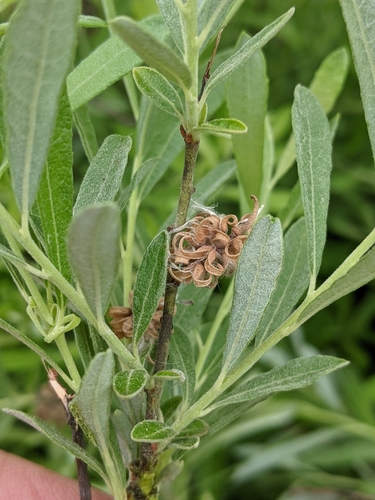
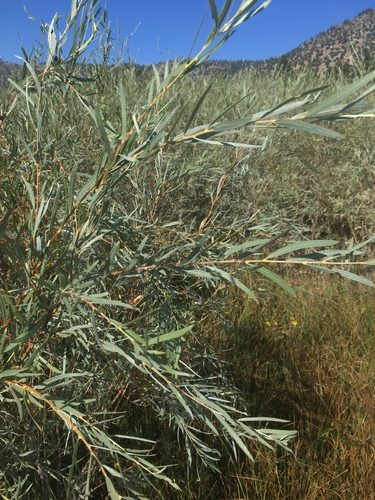
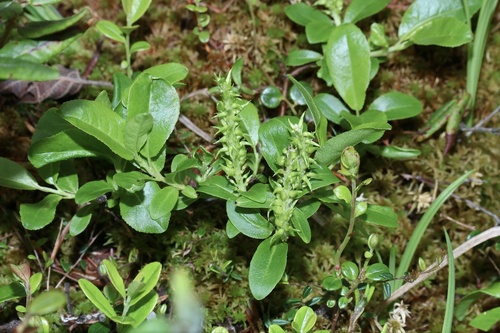
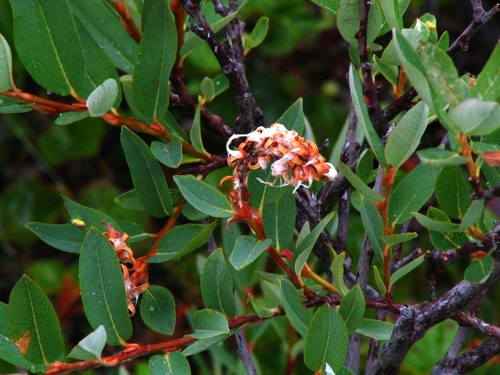
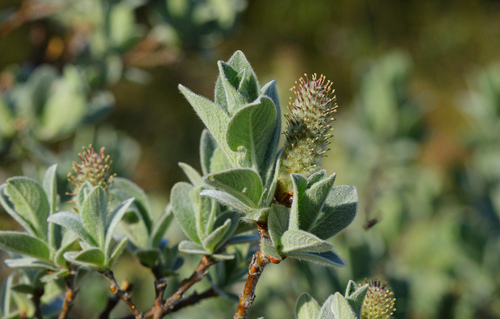
Salix lanata L. is a low-growing, many-branched deciduous shrub. It usually reaches no more than 100 cm (39 in) in height and 150 cm (59 in) in spread. New twigs are hairy when young, then become hairless and turn brown as they mature. Its grey-green leaves have fairly variable shapes, but are typically ovate; they grow up to 7 cm (3 in) long and up to 6.5 cm (3 in) wide. Young leaves are covered in a silvery-grey woolly coating, which becomes less dense as leaves age. Leaf margins are usually smooth and untoothed. This species is dioecious, like all willows, meaning male and female catkins grow on separate individual plants. Catkins emerge in summer, between May and July, and female catkins are densely covered in hairs. Leaf petioles are usually less than 1 cm long, while stipules are typically around 1 cm long and 0.6 cm wide, and remain persistent on the plant. The plant's texture, color, compact growth habit, and exceptional hardiness make it a valuable cultivated plant. It has been awarded the Royal Horticultural Society's Award of Garden Merit.