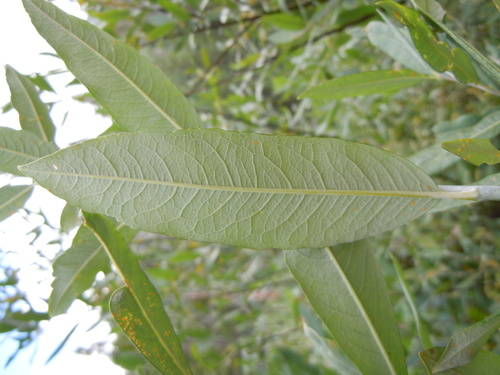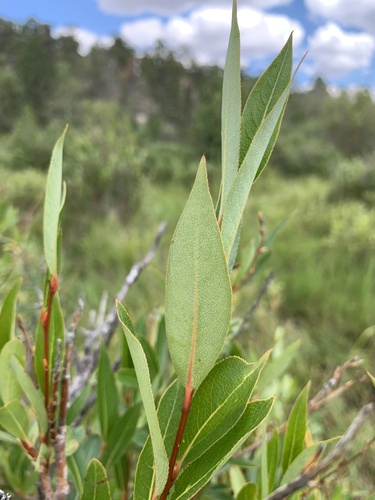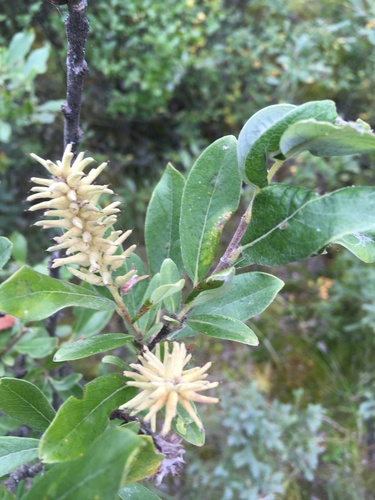
About Salix glauca L.
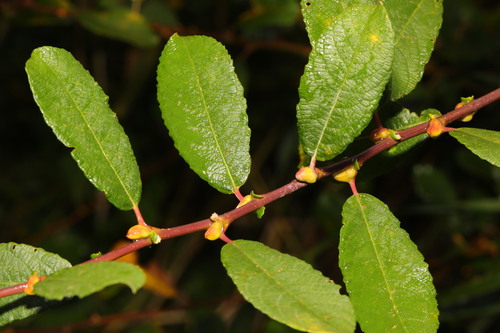
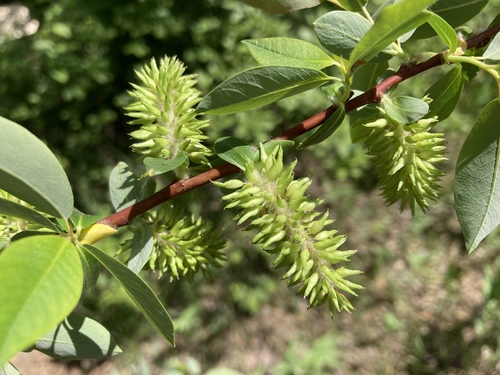
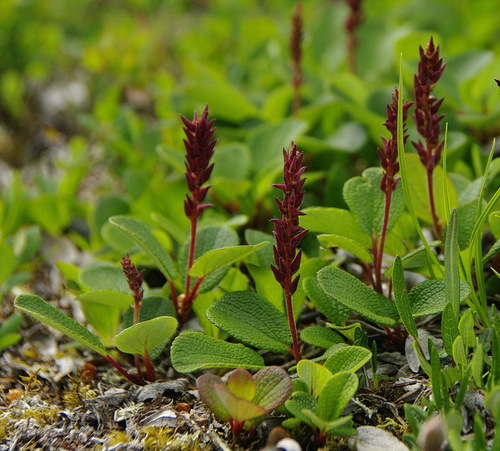
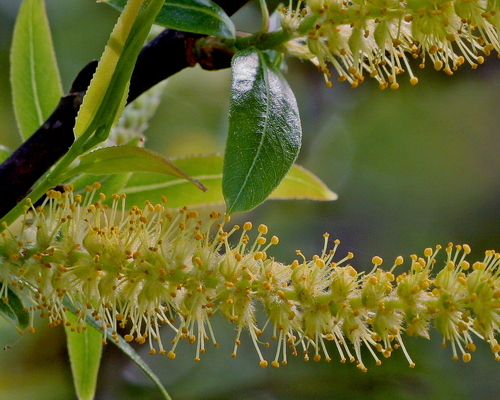
Salix glauca L. is most commonly a shrub that reaches up to 1.2 meters (3.9 feet) tall, but can grow into a tree as tall as 6 meters (20 feet) when growing in suitable habitat. Its smooth gray bark develops furrows as the plant ages. This species is dioecious, meaning male and female reproductive structures grow on separate individual plants. It also exhibits secondary sexual dimorphism, where male and female individuals differ in function or morphology in traits beyond their reproductive structures; for example, female plants are more sensitive to drought conditions. Seeds remain on the plant until fall, when they are dispersed. Each seed is covered in downy fibers that aid dispersal by wind and water. Unlike the seeds of many other willow species, Salix glauca seeds do not germinate immediately when they touch a growing substrate. Instead, they overwinter under snow and sprout the following spring. This overwintering period provides cold stratification for the seeds, and gives them a few additional weeks of development compared to willows that disperse their seeds in summer. In the northern portion of its range, this plant is a codominant species alongside other willows on floodplains, in shrubby riparian areas, and in tundra habitats. It may also grow scattered across coniferous forests and woodlands, which are most often dominated by spruces. In the southern portion of its range, it grows in alpine and subalpine climates. Like many other willows, it colonizes newly cleared habitat, such as recently water-scoured floodplains and recently burned forests. Like other willows, Salix glauca is an important food source for many types of animals, especially wintering ungulates. It provides these animals with a rich source of calcium and phosphorus. It is classified as moderately important as browse for moose, and in winter it makes up much of the diet of snowshoe hares. Native Americans used parts of willows, including this species, for medicinal purposes, basket weaving, to construct bows and arrows, and to build animal traps.