About Salix geyeriana Andersson
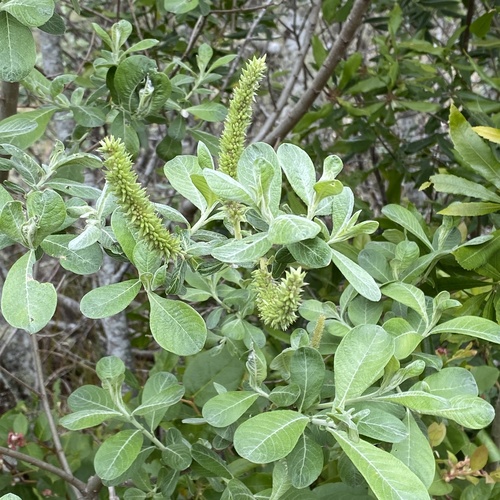
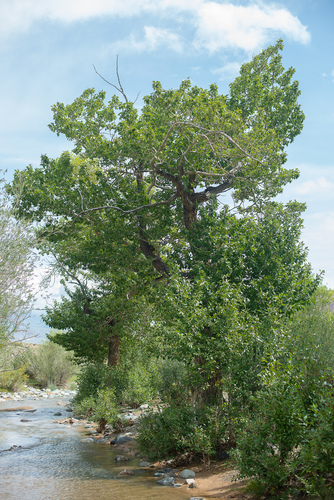
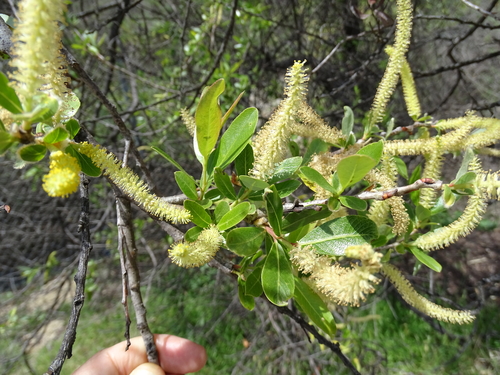
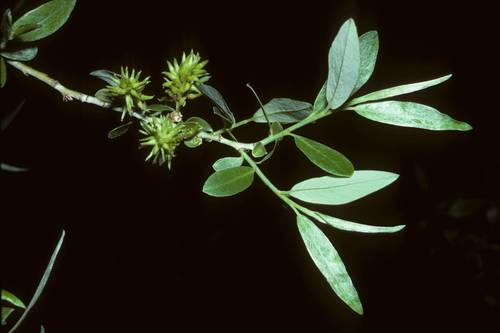
Salix geyeriana is a shrub that reaches up to 5 meters (16 feet) in height, and it sometimes forms dense, colonial thickets. Its leaves are either narrowly or widely lance-shaped, and may grow over 7 centimeters long. Young leaves are covered in white or pale silky hairs, and some adult leaves keep this hairy texture. Most leaves lack stipules entirely, or only have vestigial stipules. Its inflorescence is a spherical or slightly elongated catkin that is usually no more than around 2 centimeters long. This species reproduces both sexually via seed, and vegetatively by sprouting from stems or stem sections. These stem pieces contain early root structures that sprout readily when buried in moist substrate. Salix geyeriana grows in moist and wet habitat types, including lakesides, riverbanks, and bogs. This species is native to western North America. Its range extends from southern British Columbia in western Canada, through Washington, central Idaho, western Montana and Wyoming, eastern Oregon, Nevada, and northern Utah in the United States, to southern and western Colorado, and continues through central California, eastern and central Arizona, to western New Mexico. It occurs in the Great Basin region, as well as in the mountain ranges of the High Cascades, the Rockies, the northern and southern High Sierra Nevada, and the San Bernardino Mountains. Dense populations of this plant are especially common on the Kern Plateau. This plant's distribution depends on it thriving in non-drought regions.