About Salix drummondiana Barratt
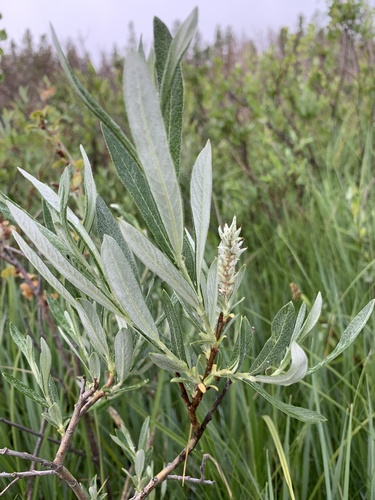
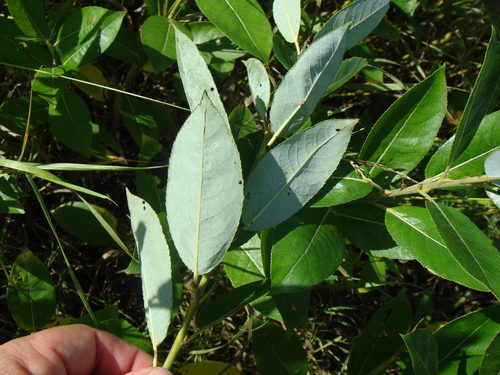
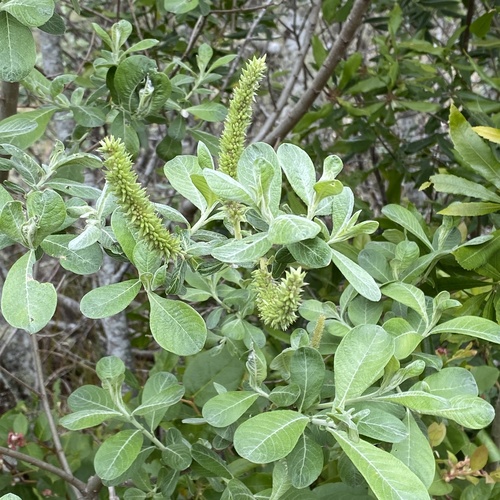
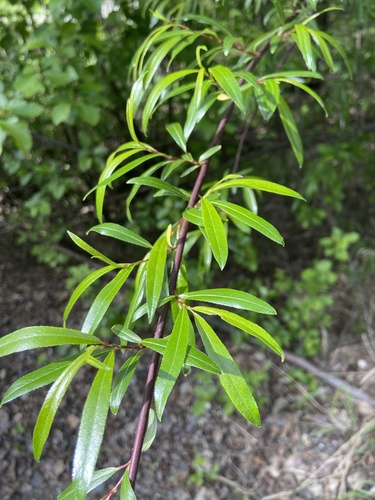
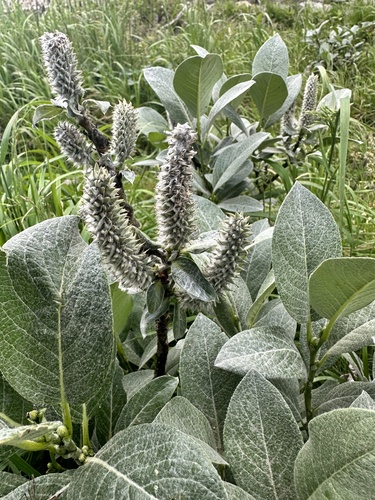
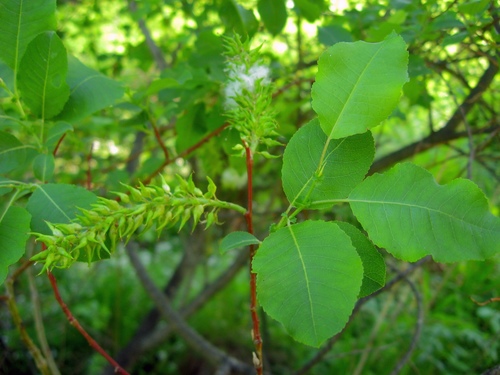
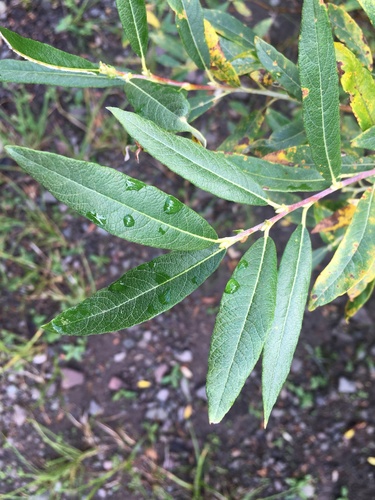
Salix drummondiana is a shrub that reaches between 1 and 5 meters in height. Its new branches are brittle, ranging from hairless to velvety in texture; as branches age, they become waxy and shiny. The leaves are lance-shaped to oval with pointed tips, with smooth or rippled edges that roll slightly under. Leaves can grow up to 8.5 centimeters long, with woolly textures on their undersides and hairless to lightly hairy textures on their upper surfaces. Newly grown leaves are covered in a coating of silky hairs. The plant produces its inflorescences, which take the form of catkins, before its leaves emerge. Male catkins are 2 to 4 centimeters long, while female catkins can reach almost 9 centimeters in length, and lengthen further as fruits develop. This willow primarily reproduces sexually via seed, but it can also reproduce vegetatively from stem fragments. This vegetative reproduction often occurs after floodwaters break apart the shrub, washing stem pieces away and depositing them in new areas. In many regions, this willow is an important source of winter food for moose; beavers also use the species for food and as material to build their dams.