About Salix arbusculoides Andersson
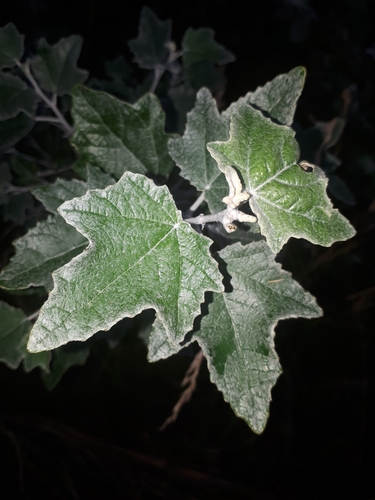
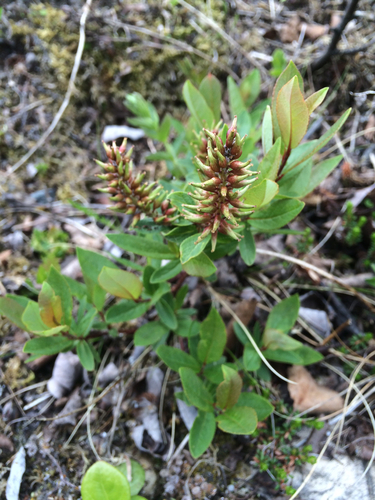
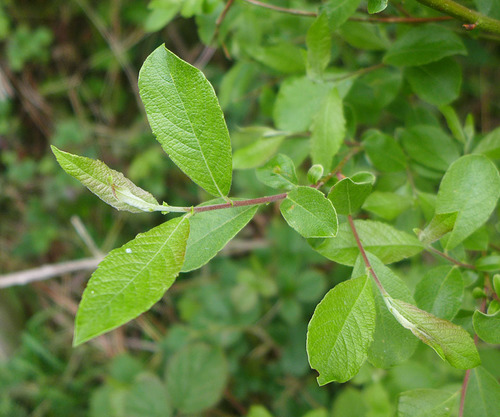
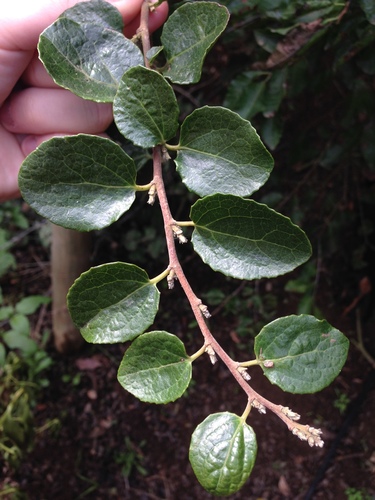
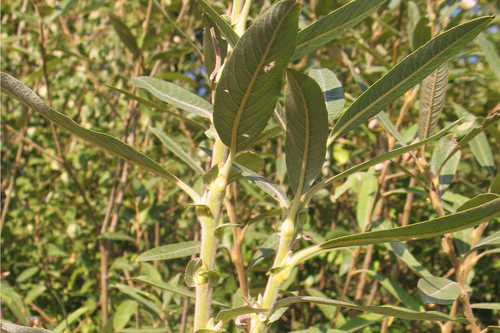
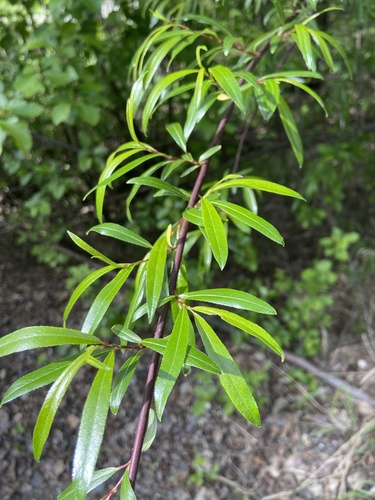
Salix arbusculoides, commonly called little tree willow, is a species of flowering plant in the willow family. It is native to northern North America, with a distribution spanning Alaska and most of Canada. This willow grows as a shrub or tree reaching up to 9 meters in height. It produces many branches with smooth gray or reddish-brown bark. Its leaves grow up to 7.5 centimeters long, and often have a thin layer of hairs on their undersides. Immature leaves have thicker hair coatings, and are paler and yellowish in color. The leaf edges are toothed, and studded with glands that act both as resin glands and hydathodes. This species is dioecious, meaning male and female catkins grow on separate individual plants. Its flowers are pollinated by insects, most especially bees. This plant grows in forests and open meadows. It is the dominant or codominant species in willow communities, particularly in interior Alaska and parts of the Northwest Territories. It can grow on tundra above the timberline, and is often found near rivers, streams, and on floodplains, where it forms dense thickets close to water. It also occurs in spruce woodlands and muskegs. Associated plant and fungal species include black spruce (Picea mariana), white spruce (Picea glauca), paper birch (Betula papyrifera), resin birch (Betula glandulosa), mountain alder (Alnus viridis crispa), thin leaf alder (Alnus incana tenuifolia), Scouler willow (Salix scouleriana), Bebb willow (Salix bebbiana), blue joint reedgrass (Calamagrostis canadensis), Cladonia lichens, sedges, and mosses. This is an early seral species that colonizes newly disturbed habitats, such as floodplains recently scoured by floodwaters. Its seeds germinate immediately after being deposited on moist substrate, and the plant grows best on wet alluvium. It also commonly sprouts in recently burned areas, and can grow in other types of disturbed habitats including roadsides and mine sites. It cannot tolerate shade, and will be shaded out as a habitat transitions to forest when other trees become established. This plant provides food for many animals, including moose, deer, caribou, snowshoe hares, beavers, small mammals, and birds. It is especially palatable and nutritious for moose. When it forms dense thickets, the plant provides shelter for animals. When it grows along waterways, it creates overhangs that fish can hide under. This plant was used medicinally by Eskimo people to treat ailments such as skin sores and watery eyes. Native Americans used parts of willows, including this species, for medicinal purposes, basket weaving, making bows and arrows, and building animal traps. It is a type of diamond willow, and can be used for woodworking.