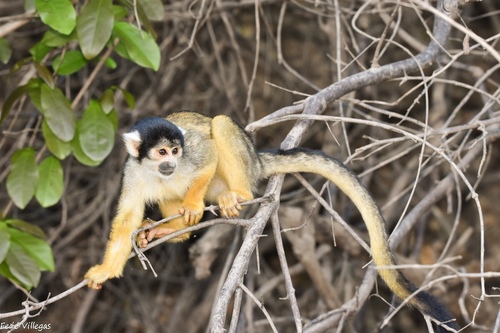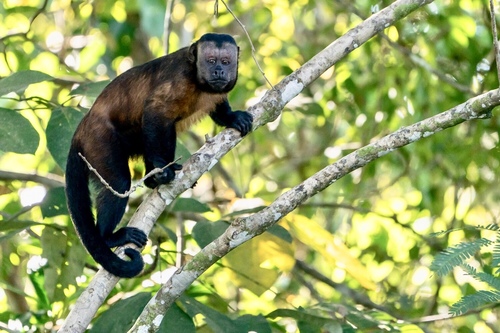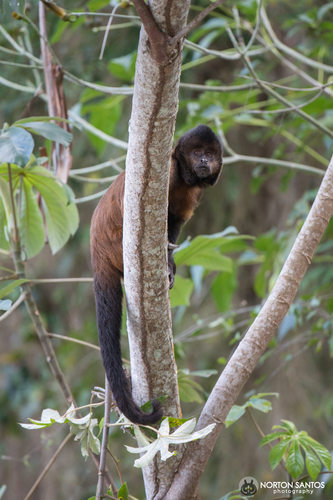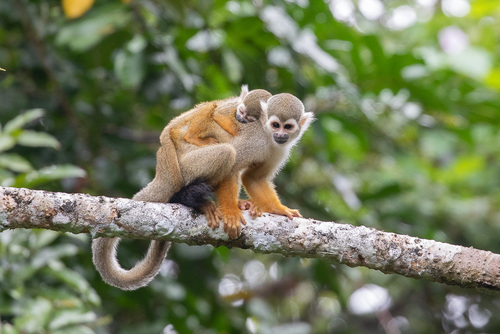
About Saimiri cassiquiarensis (Lesson, 1840)
Scientific Name and Range
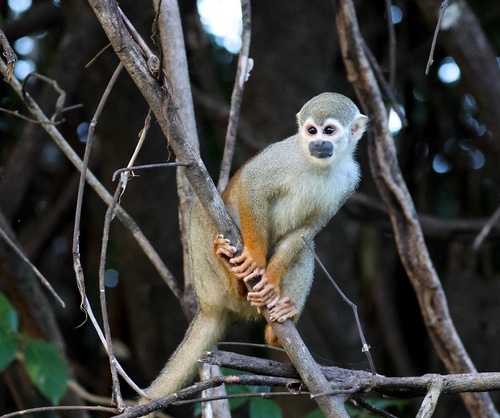
Humboldt's squirrel monkey, scientifically named Saimiri cassiquiarensis, is a species of squirrel monkey that lives in Brazil, Colombia, Ecuador, Peru, and Venezuela.
Previous Taxonomic Classification
Previously, it was classified as a subspecies of the common squirrel monkey, Saimiri sciureus. In 2009, Carretero-Pinzón elevated it to full species status based on a genetic study.
Taxonomic Relationship to Ecuadorian Squirrel Monkey
A later genetic study conducted by Jessica Lynch Alfaro and colleagues suggested that the Ecuadorian squirrel monkey might be the same species as Saimiri cassiquiarensis. As of 2018, the Ecuadorian squirrel monkey is widely recognized as a subspecies of Humboldt's squirrel monkey, with the trinomial name Saimiri cassiquiarensis macrodon.
Body and Tail Length
For Humboldt's squirrel monkey, head and body length ranges from 25 to 37 centimeters (9.8 to 14.6 inches), while tail length ranges from 36 to 45 centimeters (14 to 18 inches).
Coloration
Its overall coloration is similar to that of the Guianan squirrel monkey, but the fur at the base of its crown is golden yellow, whereas the Guianan squirrel monkey has gray fur in this location.
Diet
Humboldt's squirrel monkey eats fruits when they are available, primarily between January and June, and it also feeds on insects.