About Sagittaria platyphylla (Engelm.) J.G.Sm.
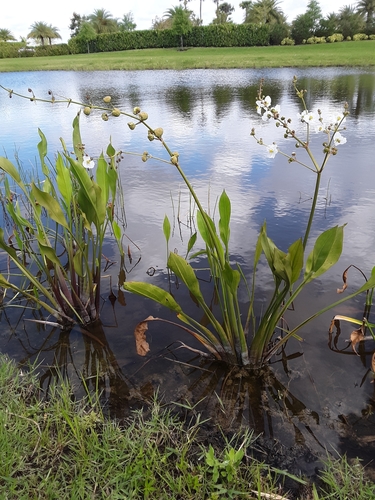
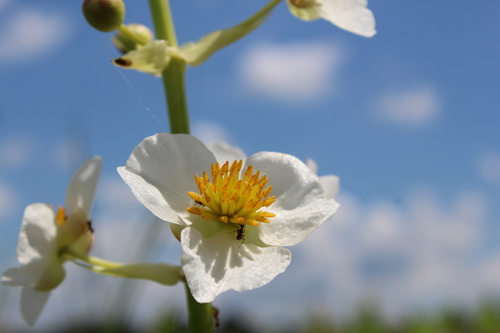
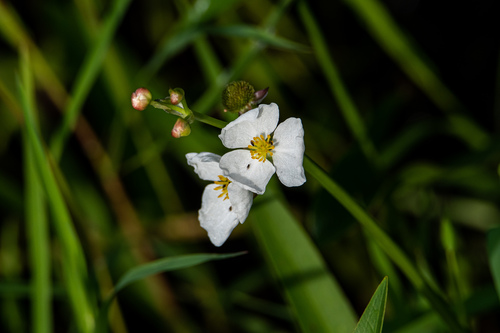
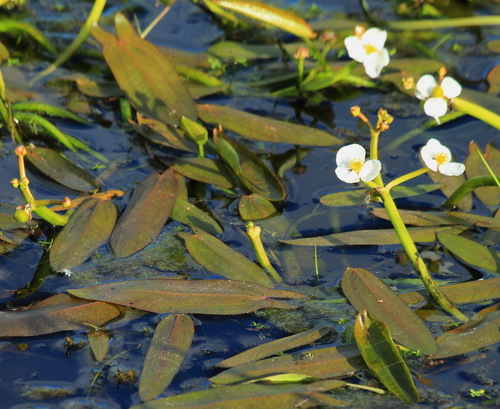
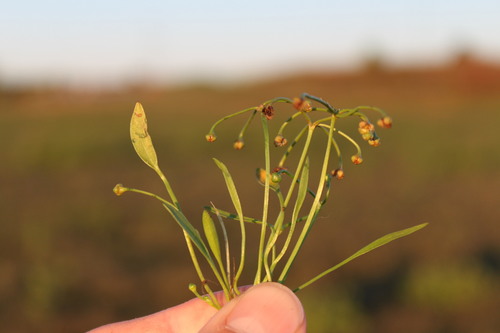
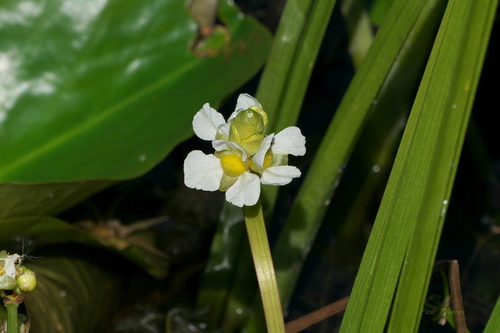
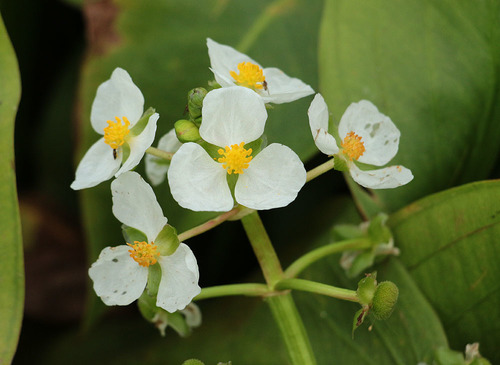
Sagittaria platyphylla, scientifically named (Engelm.) J.G.Sm., is a perennial herb that grows up to 150 centimetres (59 inches) tall and produces underground corms, which are similar to tubers. This plant reproduces both through stolons and seeds. Some of its leaves grow entirely submerged under water, while others are emergent, meaning they rise above the water surface. Submerged leaves have flattened petioles but do not develop true blades. Emergent leaves bear ovate to elliptical blades that can reach up to 17 cm (7 in) in length. Its inflorescence is a raceme that holds 3–9 whorls of flowers; the flowers are white and can grow up to 2 cm (3⁄4 in) in diameter. The core native range of Sagittaria platyphylla stretches from central Texas to the Florida Panhandle, extending north to southern Illinois. It is an emergent aquatic plant that grows in ponds, lakes, and slow-moving streams. It has been spread to additional locations as an ornamental plant. Isolated populations have been recorded in Washington state, Oregon, Missouri, Kansas, Ohio, Kentucky, Pennsylvania, West Virginia, eastern Virginia, North and South Carolina, eastern Georgia, Nuevo León, Michoacán, and Panama. It has also established as a noxious weed in Australia. On August 6, 2015, S. platyphylla was detected in China for the first time, in the Yangtze River Basin at an irrigation ditch in Zhangjiashai, Wuhan, Hubei, PRC. Additional detections were recorded through at least 2019, confirming that the species has become established in provinces along the middle and lower sections of the Yangtze. It poses a significant threat to the ecology and economy of the Yangtze region, particularly to agricultural irrigation.