About Sagittaria cuneata E.Sheld.
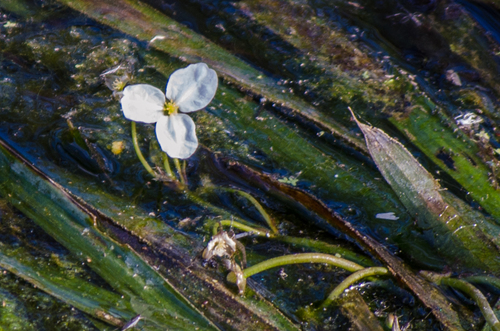
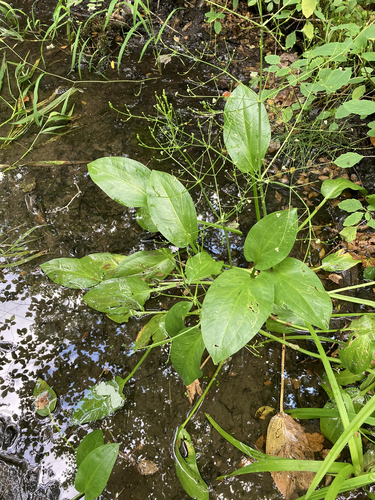
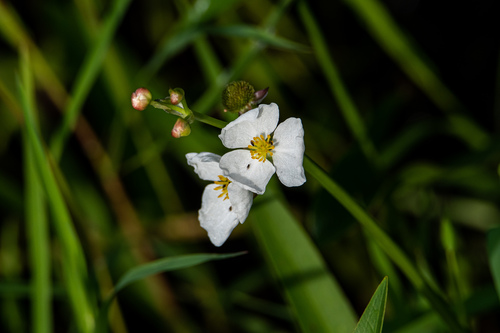
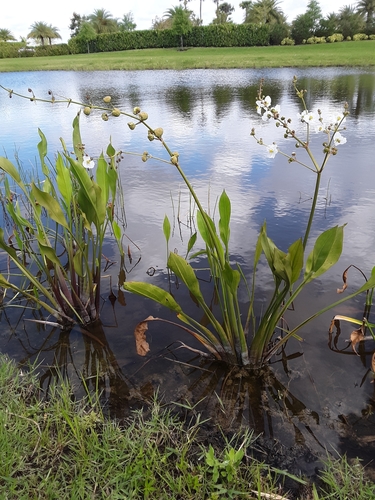
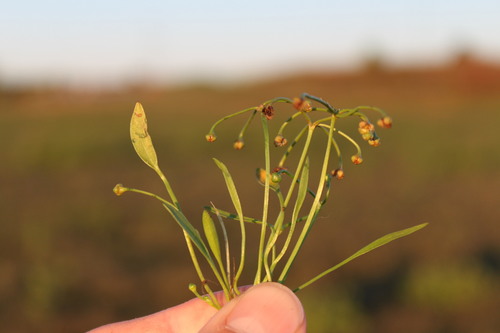
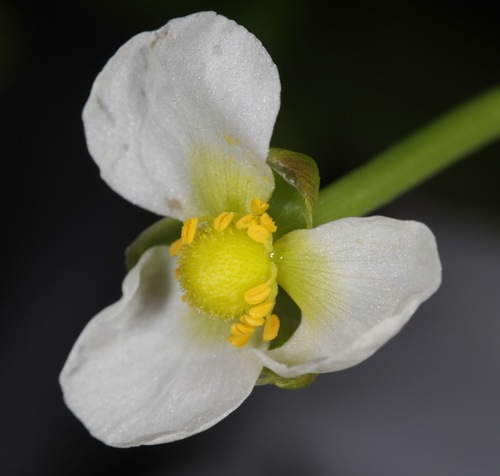
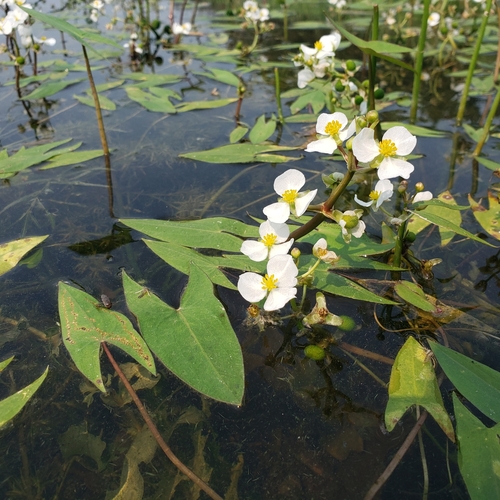
Sagittaria cuneata E.Sheld. is a perennial aquatic herb that grows in slow-moving and stagnant water bodies including ponds and small streams. It is quite variable in appearance, and its submerged parts have a different look than parts growing above the water surface or on land. This species grows from a white or blue-tinged tuber. Its leaves are variable in shape; many are sagittate, or arrow-shaped, with two smaller pointed lobes opposite the leaf tip. Leaf blades are borne on very long petioles. Sagittaria cuneata is monoecious, meaning individual plants bear both male and female flowers. The inflorescence rises above the water surface and is a raceme made of several whorls of flowers, with female flowers growing on the lowest node and male flowers growing on upper nodes. Flowers are up to 2.5 centimetres (1 inch) wide with white petals. Male flowers have rings of yellow stamens at their centers. Each female flower holds a spherical cluster of pistils that develops into a group of tiny fruits. This plant is native to much of North America. It occurs across most of Canada, present in every province and territory except Nunavut, and in the western and northeastern United States, including New England, Great Lakes, Great Plains, Rocky Mountain, Great Basin and Pacific Coast states, as well as Alaska, but not Hawaii. Muskrats and beavers store Sagittaria cuneata in large caches. Multiple Indigenous groups have documented uses for this plant. The Cheyenne give dried leaves of this species to horses to treat urinary troubles and sore mouth. The Klamath use the rootstocks as food. The Menominee string dried, boiled, sliced tubers together for winter use. The Ojibwe eat the corms to treat indigestion, and also consume corms as food, boiled fresh, dried, or candied with maple sugar. The Ojibwe would sometimes collect caches of this plant made by muskrats or beavers for their own use. The Northern Paiute use the roots for food. Indigenous people of Montana eat the tubers both raw and boiled.