About Saccharum officinarum L.
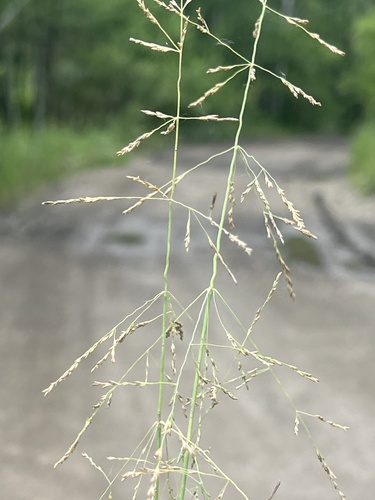
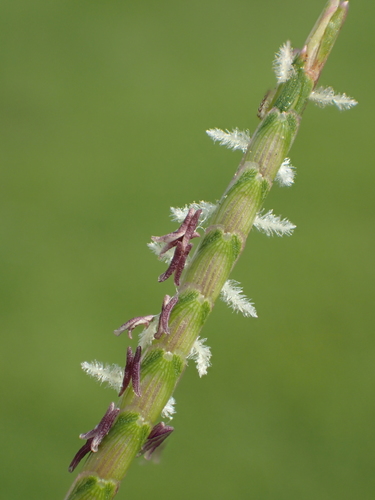
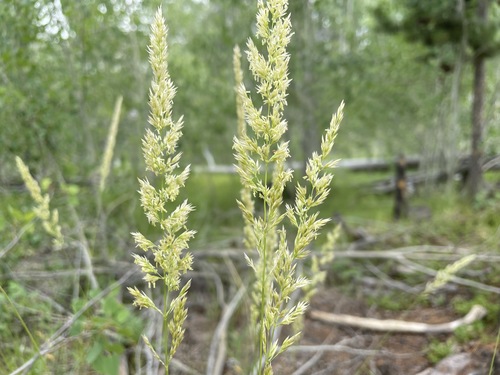
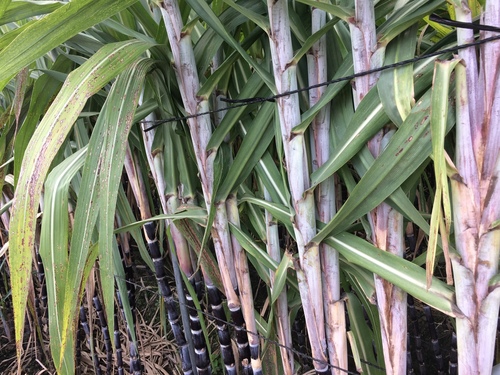
Saccharum officinarum L. is a perennial plant that grows in clumps made up of multiple strong, unbranched stems. Under the soil, a network of rhizomes develops, which sends up secondary shoots close to the parent plant. Stems vary in color, appearing green, pinkish, or purple, and can reach up to 5 metres (16 feet) in height. Stems are jointed, with nodes located at the base of each alternate leaf. The internodes hold fibrous white pith that is soaked in sugary sap. The elongated, linear green leaves have thick midribs and saw-toothed edges; they grow to around 30 to 60 centimetres (12 to 24 inches) long, and 5 centimetres (2 inches) wide. The terminal inflorescence is a panicle up to 60 centimetres (24 inches) long, forming a pinkish plume that is widest at the base and tapers toward the top. Spikelets grow on side branches, measuring around 3 millimetres (1⁄8 inch) long, and are hidden in tufts of long, silky hair. The fruits are dry, and each fruit holds a single seed. Sugarcane harvest usually takes place before the plants flower, because flowering causes a reduction in sugar content. Stems of this species and several other sugarcane species have been used since ancient times for chewing to extract sweet juice. This species was cultivated for this purpose in New Guinea around 8,000 years ago. Extracting the juice and boiling it to concentrate it was likely first done in India more than 2,000 years ago. Saccharum officinarum and its hybrids are grown to produce sugar, ethanol, and for other industrial uses across tropical and subtropical regions worldwide. Stems and byproducts from the sugar industry are used as livestock feed. Pigs fed a diet of sugarcane juice plus a soy-based protein supplement produce stronger piglets that grow faster than piglets from pigs on a more conventional diet. As its specific epithet officinarum, meaning "of dispensaries", suggests, it is also used in traditional medicine, both for internal and external application. Approximately 70% of the sugar produced globally comes from S. officinarum and hybrids developed from this species.