About Sabal causiarum (O.F.Cook) Becc.
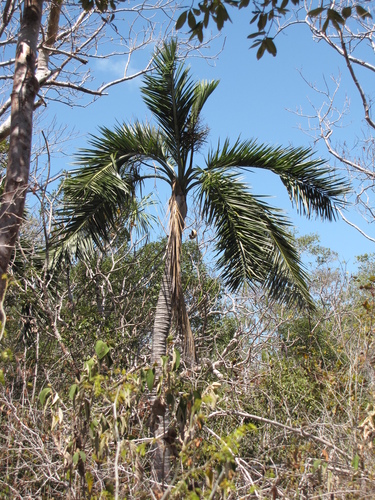
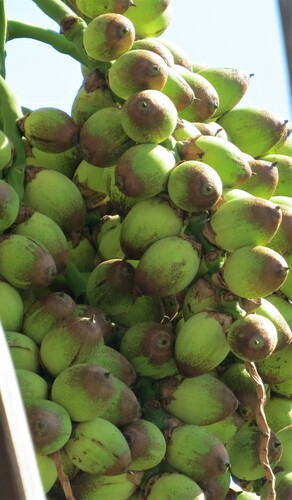
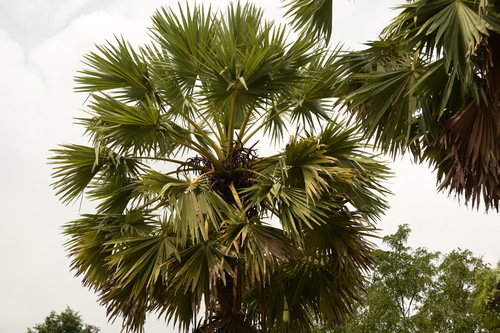
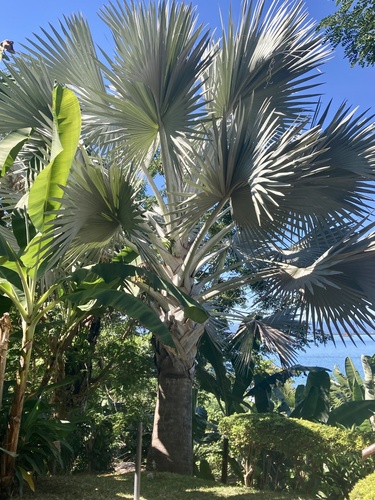
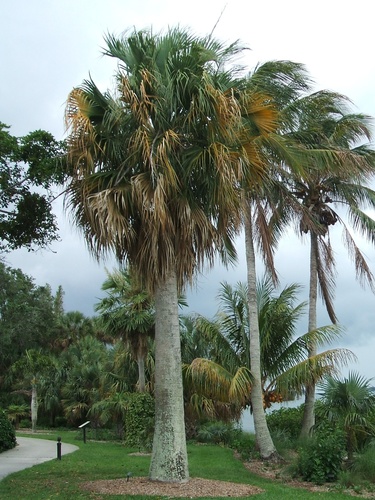
Sabal causiarum (O.F.Cook) Becc. is a fan palm with single, very thick stems that reach up to 10 metres (33 ft) tall and 35–70 centimetres (14–28 in) in diameter. Each mature plant grows 20–30 leaves, with each leaf containing 60–120 leaflets. Its branched inflorescences are arching or pendulous, and longer than the leaves. The inflorescences produce round, black fruit that measure 0.7–1.1 centimetres (0.3–0.4 in) in diameter. Fruit size and shape are the primary traits that distinguish this species from Sabal domingensis.
This palm occurs between sea level and 100 metres (328 ft) above sea level on Hispaniola (in southwestern Haiti and eastern Dominican Republic), Puerto Rico (including the islands of Mona and Culebra), and the British Virgin Islands of Anegada, Tortola, and Guana. American botanist George Proctor recorded a sighting of the species on Saint Croix in the United States Virgin Islands, and collected specimens from Saint John; these records are now recognized to represent introduced populations rather than native occurrences.
As reflected in both the common and scientific names of the species, the leaves of Sabal causiarum are used to manufacture hats. In 1901, Orator F. Cook documented a hat-making industry centered in the village of Joyuda in Cabo Rojo that produced large quantities of hats from this species' leaves. According to Andrew Henderson, this industry had declined significantly by the 1980s. The leaves are also used to make baskets, mats, and hammocks, while older leaves are used for thatch. It is also planted as an ornamental tree or street tree, valued for its massive, stately appearance.