About Ruta graveolens L.
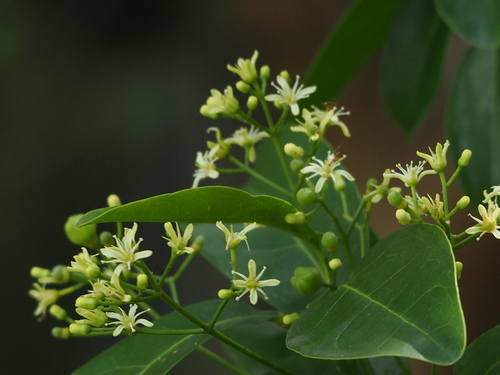
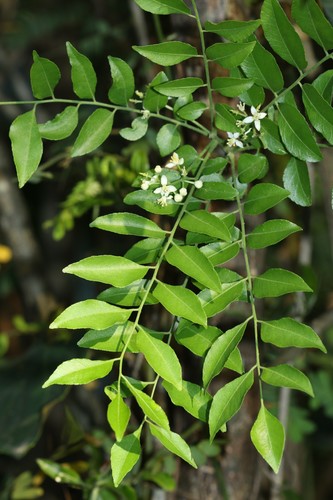
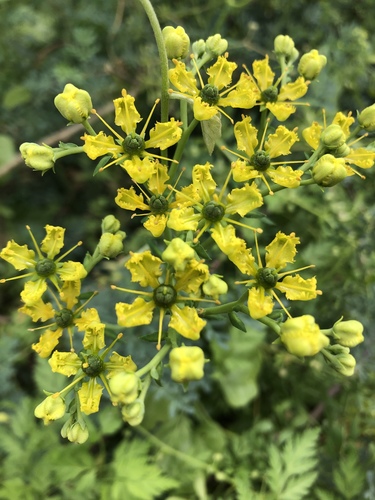
Ruta graveolens L., commonly known as rue, is a woody perennial shrub. Its leaves are oblong, blue-green, arranged in a bipinnate pattern with rounded leaflets, and release a strong aroma when bruised. The small dull yellow flowers grow in cymes, with 4 to 5 petals per flower. The first flower in each cyme is pentamerous, meaning it has five sepals, five petals, five stamens, and five carpels, while all other flowers in the cyme are tetramerous, with four of each structural part. After pollination, the plant produces brown seed capsules.
Rue is generally considered safe for consumption in small amounts as a flavoring herb for food. However, rue extracts are mutagenic and hepatotoxic. Large doses can cause violent gastric pain, vomiting, liver damage, and even death, due to a range of toxic compounds found in the plant's sap. It is recommended that rue only be used in small quantities in food, and never consumed excessively. Pregnant women should strictly avoid rue, as it acts as an abortifacient and teratogen. Toxicity from large ingestion can cause multiorgan failure, significant electrolyte imbalances, and hemodynamic instability that requires hemodialysis. While the exact mechanism of this toxicity is not confirmed, the coumarin-like compound chalepesin is suspected to be responsible. Rue contains psoralen, a furanocoumarin that intercalates into the DNA of dermal cells, and can cause photodermatitis on skin exposed to ultraviolet light. Exposure to common rue, or herbal preparations made from it, can cause severe phytophotodermatitis that leads to burn-like blisters on the skin; the mechanism of this reaction is currently unknown.
In the ancient Roman world, naturalists Pedanius Dioscorides and Pliny the Elder recommended that rue be combined with the poisonous shrub oleander and drunk as an antidote for venomous snake bites. Refined rue oil acts as an emmenagogue, and both Roman historian Pliny the Elder and Soranus cited it as an abortifacient that can induce abortion.
Rue has culinary uses, but it is bitter and may cause gastric discomfort in some people, so it is used sparingly. Though it was used more widely as a culinary herb in the past, it is not common in modern cuisine. Because it contains small amounts of toxins, it must be used in very small quantities, and should be avoided by pregnant women or people with liver issues. Rue was used extensively in ancient Near Eastern and Roman cuisine, according to records by Ibn Sayyar al-Warraq and Apicius. It is still used as a traditional flavoring in Greece and other Mediterranean countries. In Istria, a region spanning Croatia and Slovenia, and in northern Italy, rue is added to give a distinctive flavor to grappa and rakia, and a small branch of the plant is often left inside the bottle; this preparation is called grappa alla ruta. Rue seeds can be used for porridge. The bitter leaves can be added to eggs, cheese, or fish, or mixed with damson plums and wine to make a meat sauce. In the Friuli-Venezia Giulia region of Italy, young branches of rue are dipped in batter, deep-fried in oil, and eaten with salt or sugar. They are also used on their own to add aroma to a specific type of omelette. Rue was also used as a flavor ingredient in Old World beers. Note that the rue widespread in Ethiopian culture is a different species, Ruta chalepensis.
There is a purported traditional use of Ruta for protection against evil. In Brazil, the Ruta plant, called arruda locally, is believed to have protective properties against malevolent forces, especially the evil eye. The same tradition exists among Sephardic Jews, who often place rue near vulnerable people such as newborns, children, and new mothers to ward off evil. Beyond its symbolic meaning, Sephardic Jews value rue for its perceived medicinal properties: when combined with sugar, it is traditionally used to soothe eye discomfort and relieve symptoms of mild colds, and inhaling rue is thought to lessen the effects of shock. Ruta also holds a place in Sephardic Jewish religious practices: during the Yom Kippur fast, Sephardic synagogues often pass rue among congregants to revitalize them. Outside of Sephardic tradition, Hasidic Judaism also recognizes rue's purported protective qualities. Hasidic Jews have been taught to place rue in amulets to protect against epidemics and plagues. Other Hasidim follow the work of famous Baghdadi Kabbalist Yaakov Chaim Sofer, who mentions the plant ruda (רודה) as an effective protection against both black magic and the evil eye.