About Russula heterophylla (Fr.) Fr.
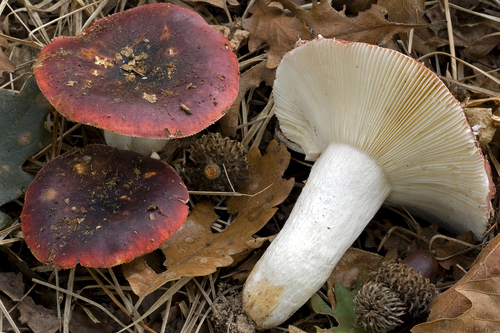
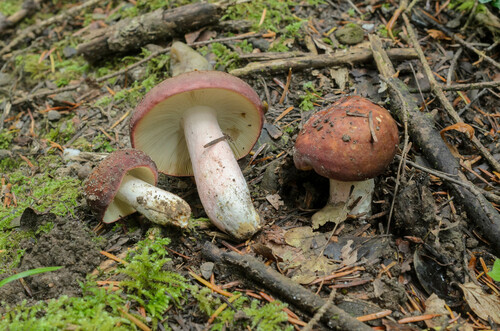
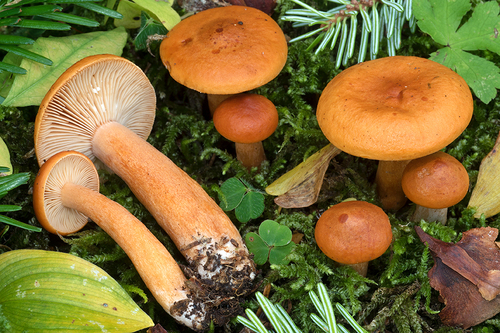
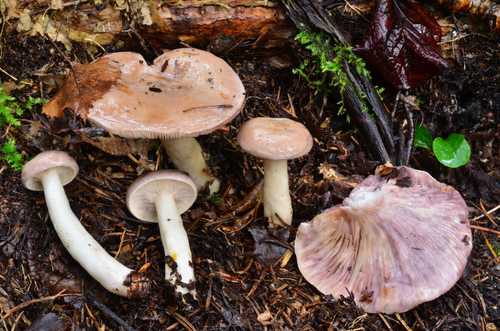
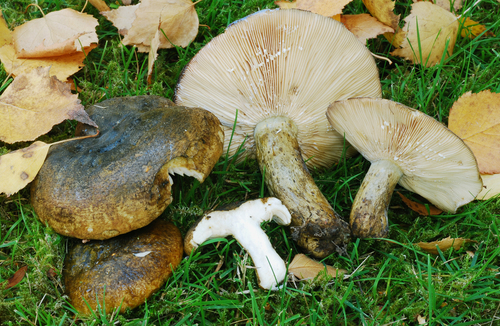
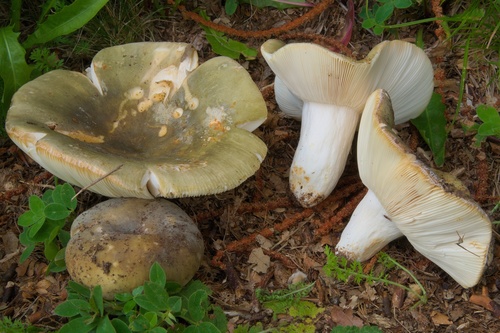
The scientific name of this fungus is Russula heterophylla (Fr.) Fr. The cap measures 5 to 10 centimetres (2.0 to 3.9 in) in diameter. Cap colour varies widely, and may be any of several shades of green, brown, or ochre. The cap is initially rounded, becomes flatter as it ages, and eventually develops a depressed centre. The firm white stem turns brown with age, and produces a salmon-coloured reaction when rubbed with ferrous sulfate. The gills are adnexed and white, producing a spore print that is also white. For microscopic characteristics, the spores of this species are the smallest in the genus Russula. They measure 5–7 by 4–6 μm, and range in shape from spherical to elliptical, or pear-shaped. Their surface warts are 0.2–0.6 μm high, and are mostly isolated. Occasionally, two or three warts will join together, or connect via a thin line. In distribution and habitat, Russula heterophylla fruits from summer to early autumn, and usually grows in small groups. It occurs occasionally in Britain, Europe, and Scandinavia. It forms ectomycorrhizae on the roots of multiple species of broad-leaved trees, and grows in association with these trees.