About Ruscus aculeatus L.
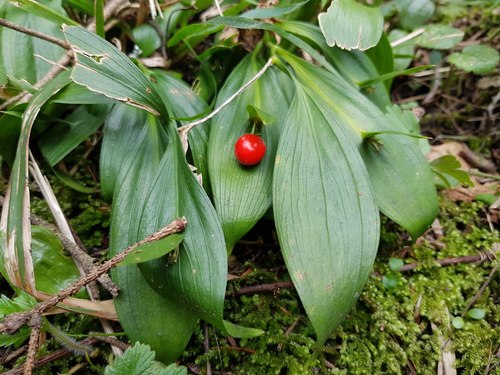
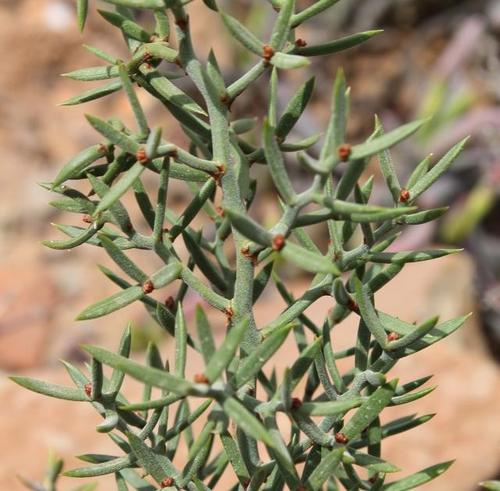
Ruscus aculeatus L., commonly known as butcher's broom, grows up to 80 cm in length. It produces stiff branches that bear cladodes – stems modified to resemble leaves – while its true leaves measure less than 5 mm. Cladodes can grow up to 4 cm long. Flowers develop in the axils of bracts, emerging from the axils of leaves on the adaxial side of cladodes. This species is dioecious; it has six pale green tepals, and either the ovary or the stamens are violet. Its fruit is approximately 1 cm wide, red, thick and rigid. In Great Britain, this species has been recorded from southern England to north Wales. In north-eastern Ireland, wild-growing Ruscus aculeatus is extremely rare, but it has been recorded in Counties Down and Antrim. The Milan Poison Control Centre managed 107 poisoning cases involving R. aculeatus between 1995 and 2007. Four additional acute poisoning cases were recorded in the 2010–2011 season in Lombardy. Most of these cases involved children who had eaten the species' attractive berries. Butcher's broom has been used by many different groups to treat a wide range of ailments. A traditional European remedy states that the plant's rhizomes can be used as a diuretic. In ancient Greece, butcher's broom was used as a laxative or diuretic, and it was thought to remove kidney stones when added to wine. It was also used to reduce swelling and speed fracture recovery.