About Rupornis magnirostris (Gmelin, 1788)
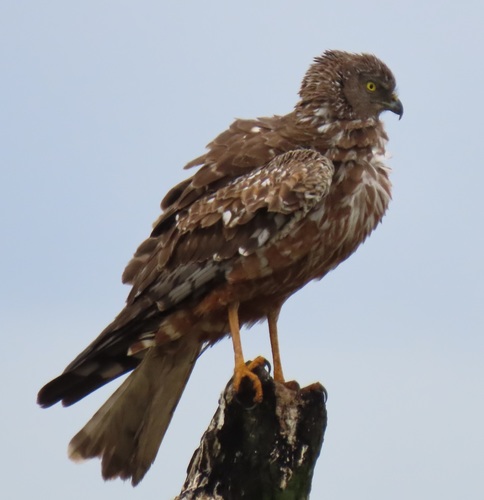
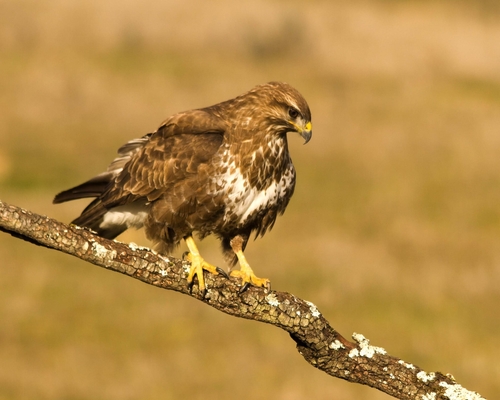
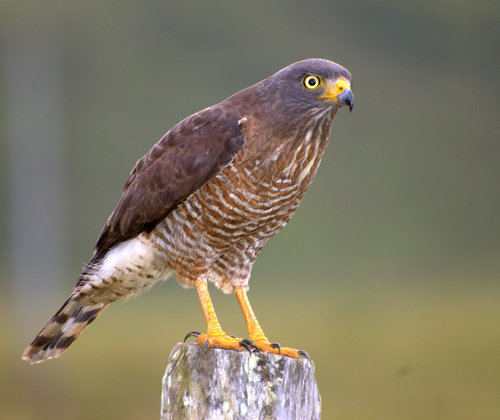
The roadside hawk (Rupornis magnirostris) is 31–41 cm (12–16 in) long and weighs 250–300 g (8.8–10.6 oz). Males are around 20% smaller than females, with no other consistent differences between the sexes. For most of its twelve recognized subspecies, the lower breast and all underparts are barred in brown and white, and the tail holds four or five grey bars. There is significant plumage variation across subspecies; overall, the species is mainly brown or grey, depending on the subspecies. A small patch of rufous (light reddish-brown) is fairly commonly seen on the wings, especially when the bird is in flight. Adult roadside hawks have whitish or yellow eyes. As indicated by its specific scientific epithet magnirostris, its beak is relatively large. This is the smallest hawk in the widespread genus Buteo; Ridgway's hawk and the white-rumped hawk are only barely larger. In flight, the species can be identified by its distinctive relatively long tail and disproportionately short wings. It soars frequently, but does not hover. The roadside hawk is common across its full range, which extends from Mexico through Central America to most of South America east of the Andes Cordillera. Vagrants are occasionally recorded in Texas, United States. Its range reaches from the northern Caribbean coast of South America south to the northeastern parts of Argentina. With the possible exception of dense rainforests, the roadside hawk is well adapted to most ecosystems within its range. It is also an urban bird, and is possibly the most common hawk species seen in many cities across its range, or may simply be the most conspicuous. It becomes aggressive when nesting, and there are records of it attacking humans that pass near its nest. The roadside hawk's diet is made up mainly of insects, squamates, and small mammals. It often hunts and eats young common marmosets and similar small monkeys. It will also catch small birds, but does so far less often than generalist raptors like the related larger white-tailed hawk, or bird-specialist raptors like the more distantly related aplomado falcon. In open cerrado habitat, mixed-species feeding flocks that the roadside hawk encounters while hunting are not particularly wary of it. They will watch to make sure the hawk does not come too close, but they see it as barely more of a threat than the small American kestrel.