About Rumex fueginus Phil.
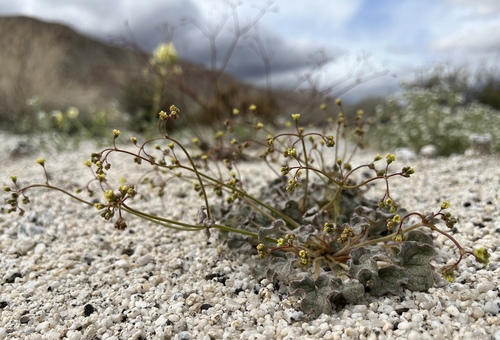
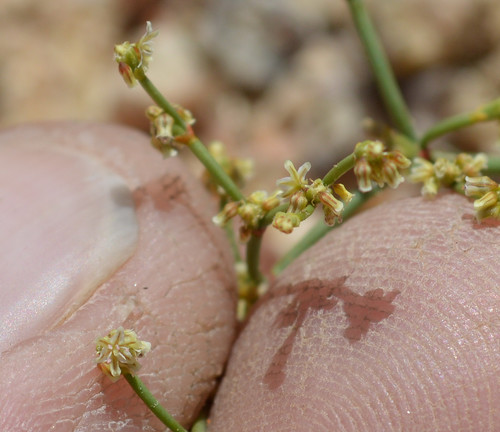
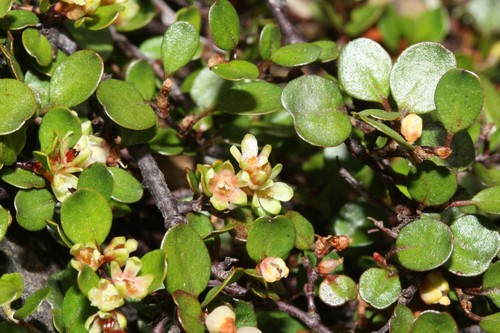
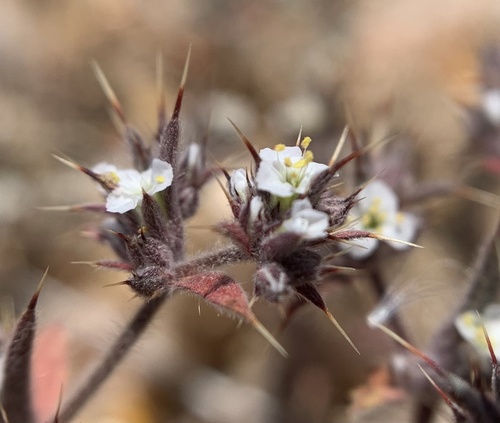
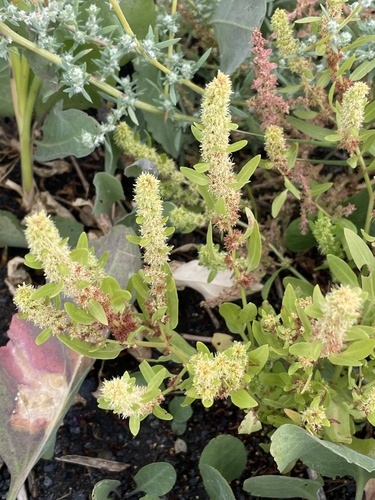
Rumex fueginus Phil. is an annual, biennial, or perennial herb that grows up to 60 cm (24 inches) tall. It produces branching stems, with long, cylindrical, spike-like flower clusters growing at stem tips. Flowers are arranged in whorls on 15 to 30 slender stalks. Each individual flower is less than 1/8 of an inch long, three-sided, and has two series of tepals. The flowers are minutely hairy, and range in color from green to yellow. Each inner tepal has a small projection called a grain at its base. Tepals are slightly open when the plant is flowering, but close after pollination occurs. Its leaves grow in an alternate arrangement, and measure between 2 and 10 inches long and 1/2 to 1 inch wide. Leaf margins can be slightly wavy or crinkly. The plant develops elongated shoots during mid-summer. During flood seasons, its shoots grow much smaller to aid water transportation through plant tissues. Seeds are three-sided, egg-shaped with a pointed tip, light brown, and less than 1.5 mm long. This species is native to most of North and South America, and is absent from the southeastern United States. It grows in sunny, moist environments including wet meadows, bogs, streambeds, ponds, and disturbed areas, and can also tolerate saline habitats such as barrier beaches and the edges of saltwater ponds. Within the last 100 years, Rumex fueginus populations have declined significantly in New York, caused by exotic invasive species and direct disturbance to its salt marsh habitats. Thirteen populations of this species have been recorded in New York since the late 1800s.