About Rumex britannica L.
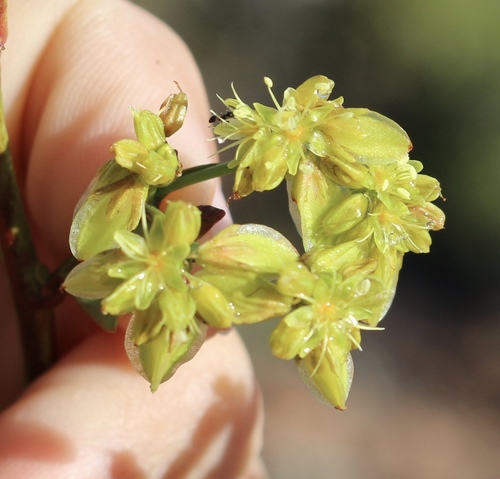
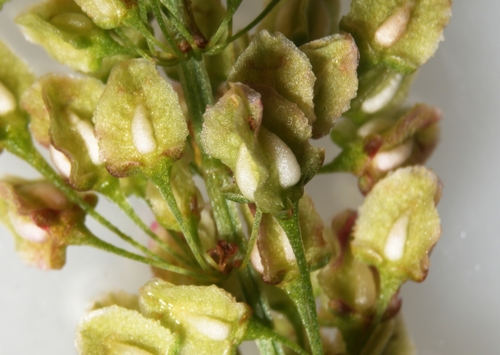
Rumex britannica L. is a perennial flowering plant species belonging to the buckwheat family, Polygonaceae. This species blooms from late spring through summer, and reaches an approximate height of three to six feet. It is native to the Northeast and northern Midwest of North America, and it is also classified as a native species in California. It thrives in wetland habitats, including areas alongside rivers, lakes, and swamps. Native Americans used this plant for medicinal purposes, specifically to treat skin-related diseases. Its seeds are eaten by a variety of birds, including swamp sparrows, song sparrows, bobolinks, and red-winged blackbirds, as well as small mammals such as meadow voles and muskrats. Many different insect species depend on the plant's foliage, seeds, and roots. In terms of conservation status, Rumex britannica is considered secure within the United States, with no current signs of population decline. It is not listed under the US Endangered Species Act, nor is it assessed by the Committee on the Status of Endangered Wildlife in Canada (COSEWIC).