About Rumex alpinus L.
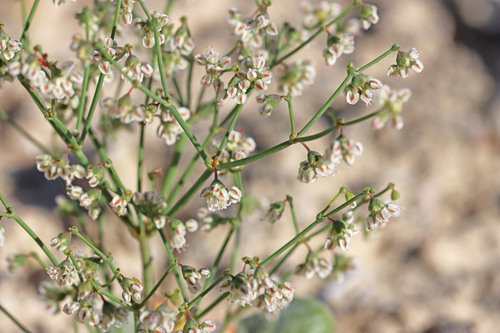
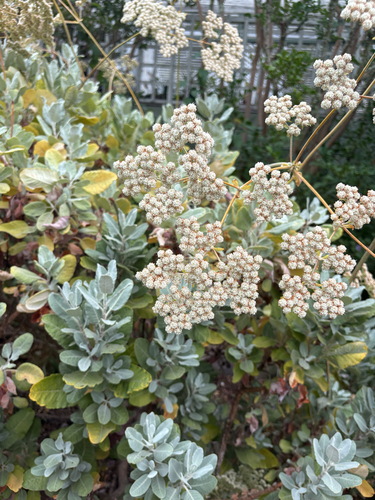
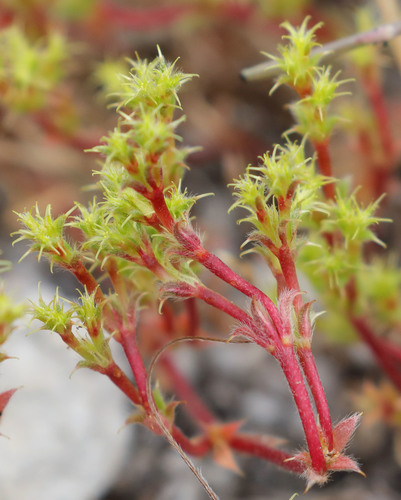
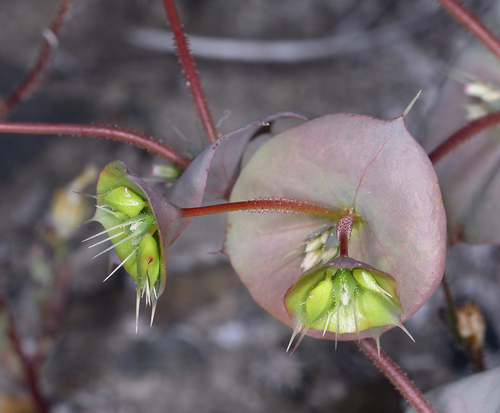
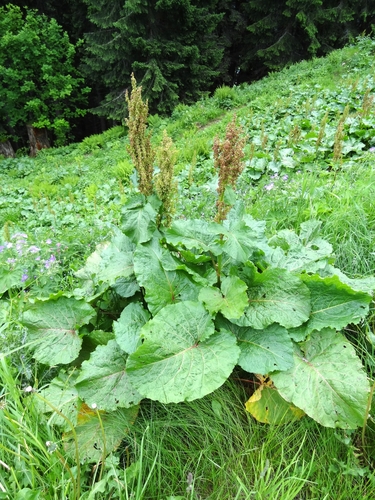
Rumex alpinus L., commonly called monk's-rhubarb, is a perennial plant with a creeping rhizome. It grows to between 60 and 200 centimetres (24 to 79 inches) tall. Its stem is erect, striated, and unbranched until just below the inflorescence. The leaves are very large and ovate-round, with long, stout leaf stalks and irregular margins. Basal leaves have a hairless upper surface, but bear some hairs alongside the veins on the lower surface. Upper leaves are alternate, smaller, and more elongated than basal leaves. A membranous ochrea forms where leaf stalks meet the stem; this structure is created by the fusion of two stipules into a sheath that surrounds the stem, and has a ragged upper margin. Flowers are arranged in much-branched, dense terminal compound panicles. They are dioecious and anemophilous. Perianth segments are arranged in two whorls of three segments each. The outer perianth segments are recurved, while the inner segments form fruit valves that are wider than they are long, have rounded shapes, cordate bases, and entire margins. This species has six stamens, a pistil made of three fused carpels, and three styles. Fruits are brown, three-sided achenes. Flowering occurs from June to August. Monk's-rhubarb is native to Central and Southern Europe, and to Western Asia. It is naturalized in Britain. This species prefers high-altitude, nitrate-rich environments, growing at elevations up to 2,000 to 2,400 metres (6,600 to 7,900 feet) above sea level. It can be found growing in arable land, fields, yards, rubbish dumps, roadsides, and shores.