About Rugathodes sexpunctatus (Emerton, 1882)
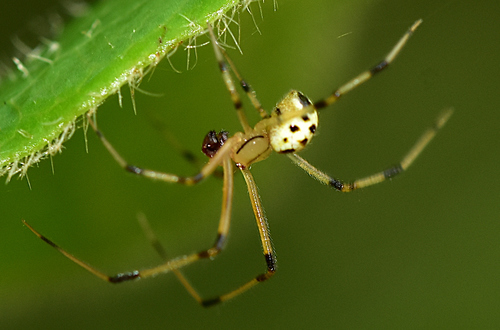
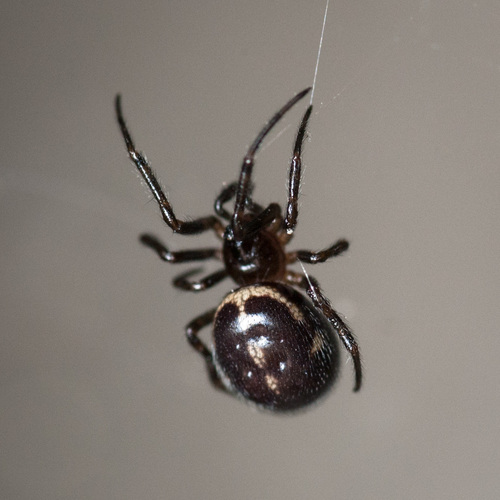
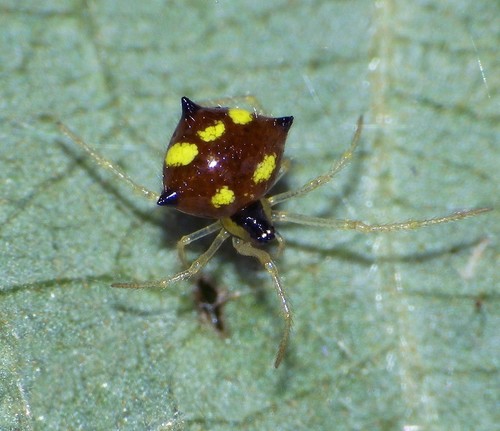
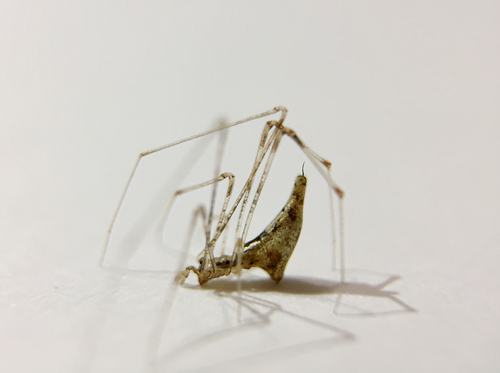
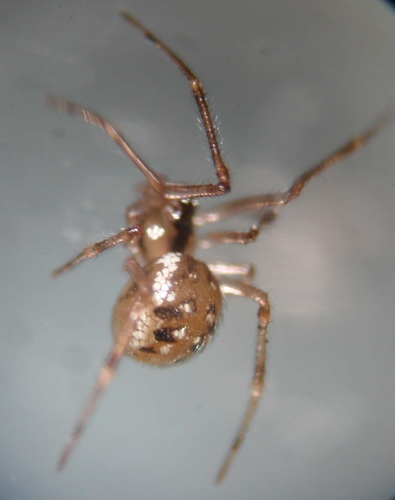
Rugathodes sexpunctatus (Emerton, 1882) has a total body length (excluding legs) of 1.5-2.5 mm. The cephalothorax is typically pale yellow-brown with a dark or blackish median band. This band usually extends the full length of the carapace, is widest at the posterior eye row, and surrounds the eyes. The margins of the cephalothorax are dusky. The abdomen is pale yellow-brown with a variable pattern of three pairs of black and white spots, which gives the species its name: the Latin "sex" means "six" and "punctum" means "spot". A broken white band often borders the rows of spots. The sides of the abdomen are dusky, and the ventral surface is pale. There is considerable intraspecific variation. East coast specimens usually have distinct spots, while west coast specimens can have a completely black abdominal dorsum. Alaska specimens tend to have intermediate coloration, but are still variable; their overall color ranges from the typical pale yellow-brown to dark brown or greenish-gray, and occasionally have pinkish areas on the dorsum between spots. Darker individuals can be very hard to distinguish from the closely related species Rugathodes aurantius. For females, the paired openings of the epigynum (epigyne) are nearly merged into a single oval opening, with a variable median divider extending inward from the anterior side. This gives the structure the appearance of a rounded 'B' lying on its back. For males, the chelicerae (fangs) are enlarged with a very distinctive shape, as shown in the referenced photograph. This species is widespread across the United States, southern Canada, and Russia. In North America, it has been recorded from the far Aleutians (Kanaga Island) to Newfoundland, and south to central California, northern Arizona, and North Carolina. It is most commonly found in coniferous forests, living both in trees and understory vegetation. Individuals have been observed overwintering in leaf litter. It is classified as a boreal species, and occurs at higher elevations in the southern parts of its range.