About Ruellia strepens L.
Growth Habit and Stem Characteristics
Ruellia strepens L. grows up to 1 meter (3 feet) tall, with occasional branching. Its green stems are either smooth or sparsely hairy.
Leaf Arrangement and Shape
Leaves grow in opposite arrangements along the stem, have short petioles, and are lanceolate or ovate in shape, tapering to a sharp point at the tip.
Leaf Size and Margin Features
Leaves can reach up to 13 cm (5 in) long and 8 cm (3 in) wide, with margins that are smooth or slightly wavy.
Flower Color and Growth Position
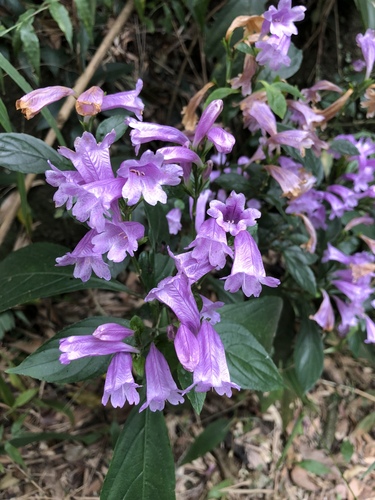
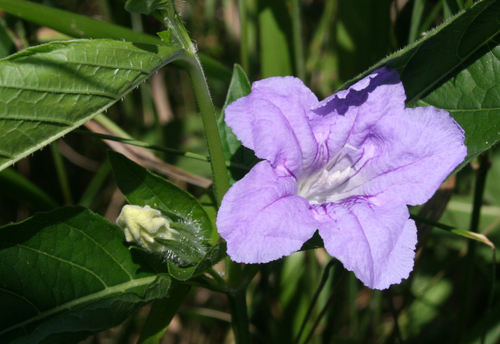
Flowers are lavender to bluish in color, and grow from nodes near the middle of stems.
Flower Structure and Size
Flowers are tubular with 5 flaring lobes, and measure up to 5 cm (2 in) long.
Post-Blooming Growth Pattern
Unlike many herbaceous plants that stop growing or die back after blooming, Ruellia strepens continues to grow as its fruits mature.
Late Season Plant Height
This means fully mature plants late in the growing season can be twice as tall as they were when they started flowering.
Native Range
Ruellia strepens is native to the United States, ranging west to Nebraska, south to Texas and Florida, north to Michigan and Pennsylvania, and east to the east coast.
Conservation Status
It is listed as endangered in Michigan and North Carolina, and critically imperiled in South Carolina.
Primary Habitat Types
Its habitats include bottomland forests, rich upland forests, river and stream banks, and the edges of ponds and lakes.
Secondary Habitat Types
It can also occasionally be found in bottomland prairies and fens, pastures, moist roadsides, and railroads.