About Ruellia caroliniensis (J.F.Gmel.) Steud.
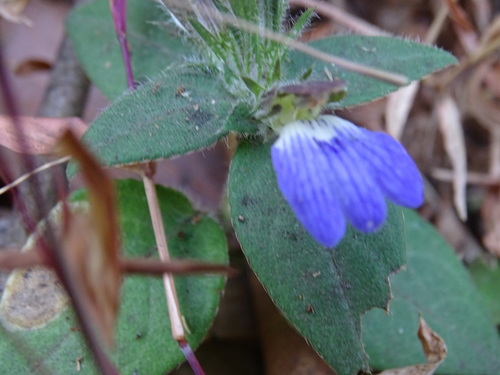
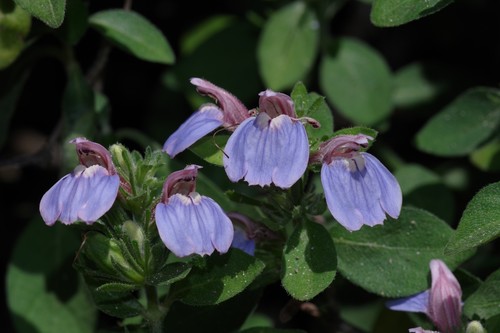
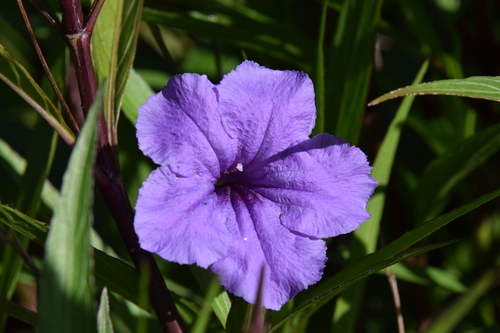
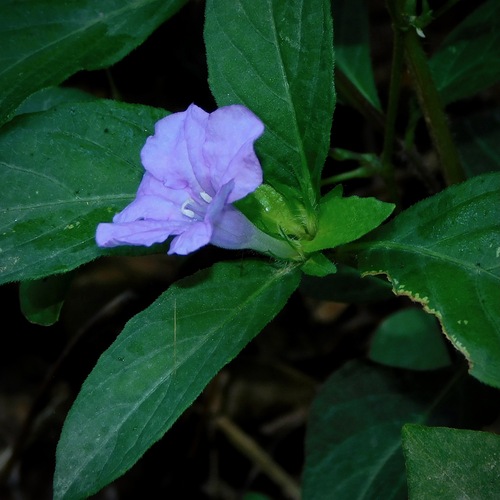
Ruellia caroliniensis (J.F.Gmel.) Steud. is a herbaceous perennial plant. It grows up to 3 feet tall, with a thick, fibrous root system. Its leaves are crowded, grow in opposite arrangements, and range in shape from lanceolate to elliptic. Its flowers can be purple or pinkish, and vary in shade. They grow in axillary clusters of 2 to 4, and have long, funnelform corollas with five distinct lobes. Blooming begins in spring and continues through summer, with each individual bloom lasting around one day; typically, not all flowers in a single cluster open at the same time. This species can be distinguished from other members of the Ruellia genus by its long, pointed calyx lobes and bracts that remain on the plant as flowers wilt. After pollination, a seed capsule develops in the leaf axil where the original flower grew. Seeds of Ruellia caroliniensis are dispersed via explosive dehiscence. When seed capsules reach maturity, approximately two months after forming, they burst open to propel seeds away from the parent plant. Ruellia caroliniensis attracts a wide range of pollinators, particularly lepidopterans. It acts as a larval host plant for two butterfly species: the common buckeye (Junonia coenia) and the white peacock (Anartia jatrophae). Its strong, woody root system gives the plant resilience to frost and wildfire.