About Ruellia californica (Rose) I.M.Johnst.
Scientific Name and Growth Form
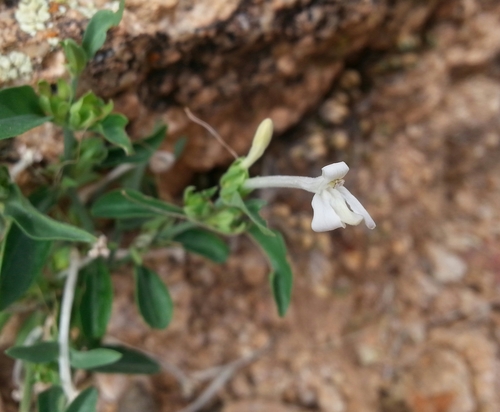
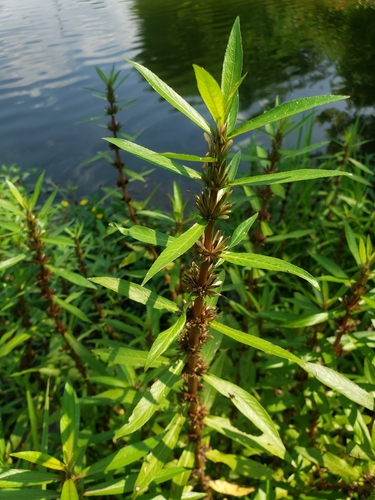
Ruellia californica (Rose) I.M.Johnst. is a perennial shrub that grows up to 1.5 m (4.9 ft) tall. Its leaves range from ovate to lanceolate to elliptic in shape, with leaf bases that are cuneate to rounded.
Subspecies californica Leaf Characteristics
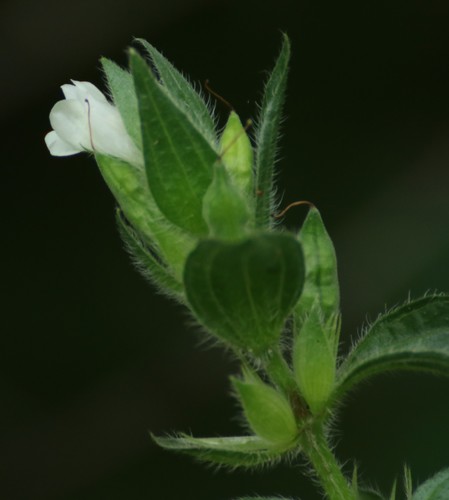
For subspecies californica, leaves are mostly covered in glandular trichomes.
Subspecies peninsularis Leaf Characteristics
For subspecies peninsularis, trichomes are absent; the leaves are glossy, smooth, and sticky.
Flower Structure and Size
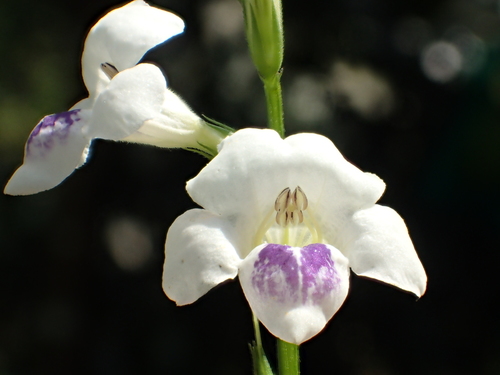
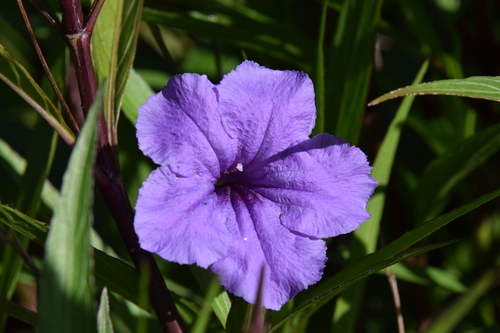
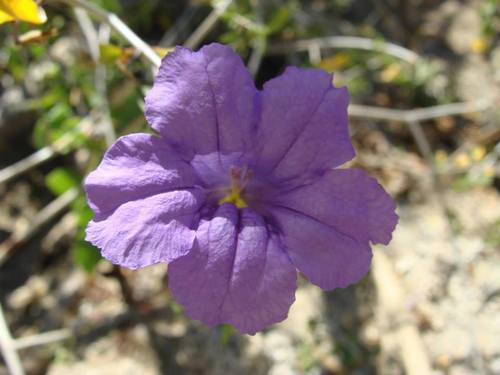
The flowers are funnelform, 3–5 cm (1.2–2.0 in) long, with a calyx split into five parts. The blue-purple corolla has yellow markings in its throat, and each flower has 4 stamens.
Fruit Dispersal Mechanism
When mature fruits become wet, they rapidly explode to eject and disperse their seeds.
Species Native Range
This species is native to the Baja California peninsula and neighboring coastal Sonora, Mexico.
Subspecies californica Distribution
Subspecies californica has the widest distribution, ranging from Bahía de los Ángeles in Baja California to the southern Cape region of Baja California Sur, and also grows on neighboring Gulf of California islands and in western central Sonora.
Subspecies peninsularis Distribution
Subspecies peninsularis is endemic to Baja California Sur, found from the Sierra de la Giganta and Comondú south to the Cape region.
Habitat
Both subspecies typically grow on dry, gravelly slopes, and along bajadas, hillsides, rocky washes, arroyos, and canyons.
Blooming Pattern
They are often the only plants in bloom during dry parts of the year.