About Rubus hirtus Waldst. & Kit.
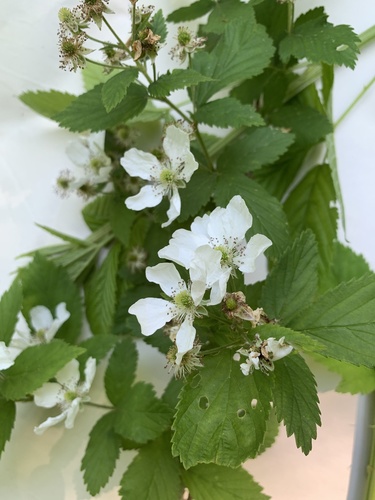
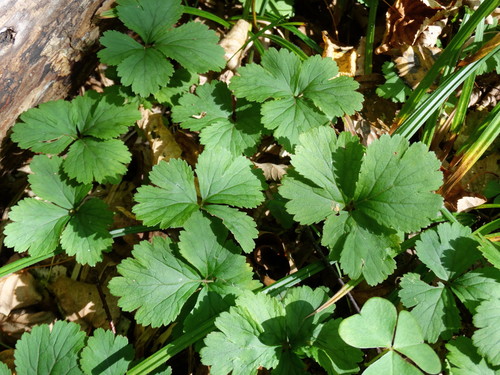
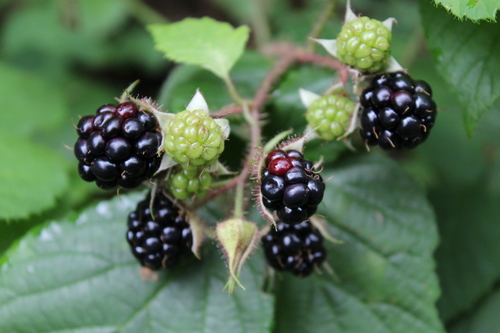
Rubus hirtus is a species of flowering plant belonging to the blackberry section (Rubus section) of the genus Rubus, in the rose family Rosaceae. It is native to most of southern and central Europe, as well as Belarus, Ukraine, the Caucasus, and Turkey. This is a woodland species, and its distribution largely matches the range of the beeches Fagus sylvatica and its close relative Fagus orientalis. In the Western Carpathians, Rubus hirtus is one of the most common understory plants in deciduous and mixed forests, and can make up as much as 90% of the plant cover on the forest floor in canopy gaps. The species has notable shade tolerance, which lets it survive under closed canopy conditions with very little mortality, while also growing opportunistically when light levels increase. It typically grows as a clonal plant, producing long, leafy first-year stems called primocanes. These primocanes grow erect for several weeks in spring, before becoming procumbent. Stem density ranges from 0.003 per square meter in dense forests to 24 per square meter in canopy gaps. The species reproduces mainly through vegetative propagation by tip-rooting: primocane tips form new rooting points in early fall, between September and October, and become independent new plants after one year. This reproductive strategy allows Rubus hirtus to rapidly colonize newly formed canopy gaps; studies have recorded an almost seven-fold increase in stem density over 7 to 8 years after a gap forms. Sexual reproduction does occur, but it plays a minor ecological role, because seedlings rarely live longer than two years. When expanding into canopy gaps, primocanes spread equally often in all directions, creating a pattern that matches random diffusion models. The species' response to canopy gaps follows a distinct pattern: average shoot size and the share of tip-rooting canes reach their peak in the second year after gap formation, then gradually decline. Individual plants do not contribute equally to gap colonization: a small fraction of plants produce abundant offspring, while around 25% of individuals do not reproduce vegetatively at all. Unlike many forest herbs that have a time lag in their response to canopy disturbance, R. hirtus responds quickly, and usually reaches full ground coverage within five years after a gap forms. Its continued dominance in forest communities depends on repeated canopy openings. If closed canopy conditions are maintained for a long time, the abundance of R. hirtus gradually declines, but this decline happens very slowly due to the species' shade tolerance.