About Rubus gunnianus Hook.
Rubus gunnianus Hook. is the smallest species in the plant family Rosaceae. It grows as a small, prostrate herb in alpine habitats across Tasmania. When mature, it spreads both by sending out runners and by producing seed. Unlike other Rubus genus species, this plant has no thorns or spines.
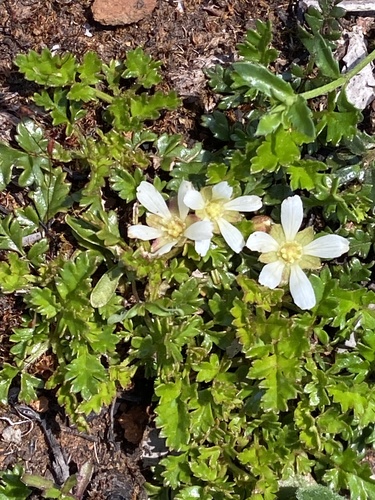
Its leaves grow in small clusters from the stem, are triangular and glossy green. They are palmately compound, made up of three pinnatipartite leaflets: one larger main leaflet flanked by two smaller leaflets on either side, and attached to very long petioles. Rubus gunnianus is monoecious, meaning each flower holds both male and female reproductive organs. Its flowers are small, white, and have five petals.
Like many other Rosaceae species, Rubus gunnianus produces edible fruit suitable for bush tucker. Its fruit is red, resembles a raspberry, and is made up of a small number of drupes. Purple dye can be produced from the juice of this fruit. Members of the Rubus genus are widely known for their nutritional benefits: they are high in vitamins and nutrients including vitamin C, potassium, magnesium, iron and copper, and low in sugar.
This species can be grown in domestic cultivation. Its small size makes it a good choice for people with limited growing space, and it can also be grown in pots. For cultivation, it requires well-drained moist soil, and grows well in part shade to full sun. It adapts to a variety of soil types in alpine and subalpine areas.
In the wild, Rubus gunnianus is found across Tasmania in mountainous habitats including alpine moorlands and subalpine woodlands, with recorded locations including the Central Coast, Derwent Valley, Hobart, Huon Valley and the West Coast. It is frost hardy, an important trait for surviving the harsh, exposed weather conditions of high-altitude alpine environments. It prefers moist, sheltered spots among mosses and leaf litter, but can also grow in semi-exposed areas.