About Rubus caesius L.
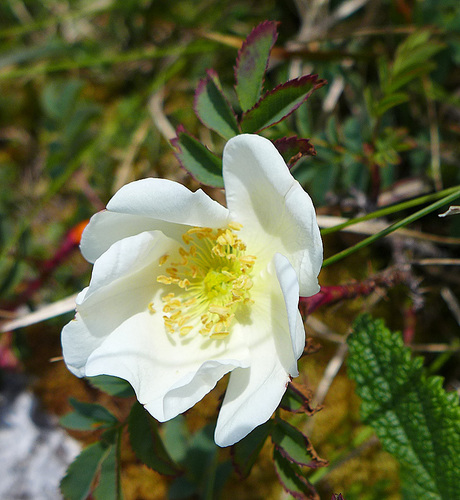
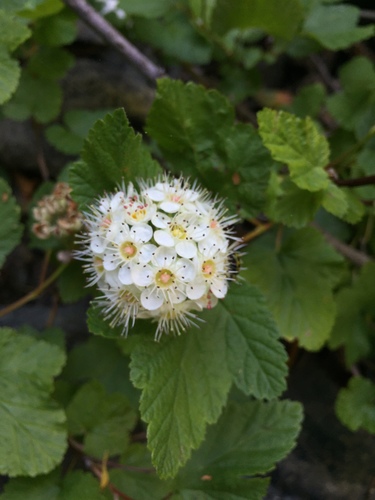
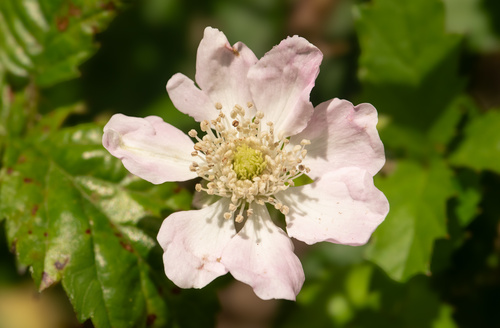
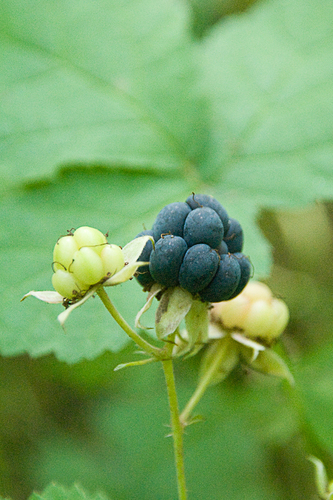
Rubus caesius is similar to, and often confused with, forms of Rubus fruticosus. It is a small shrub that grows up to 2 meters (6 feet 7 inches) tall, with biennial stems that die after fruiting in their second year. It produces long runners that root at the tip to form new individual plants. Its stems are bluish-grey and sometimes prickly. The alternate leaves are hairy on both their upper and lower surfaces, borne on stalks, and have palmate leaf blades. Leaves are either made up of three oval leaflets with serrated margins and acute tips, or are just three-lobed. The inflorescence is a loose cluster of several white flowers, each about 2.5 cm (1 inch) in diameter. The calyx holds five sepals, and the corolla is made up of five spreading petals with finely toothed margins. A cluster of stamens sits in the center of the flower, and there are several pistils. The fruit is an aggregate of several black, fleshy drupes covered in a bluish waxy bloom. This dewberry species flowers from June to September. Rubus caesius is widely distributed across much of Europe and Asia, ranging from Ireland and Portugal as far east as Xinjiang Province in western China. It has also become sparingly naturalized in scattered locations across Argentina, Canada, and the United States. It most commonly grows in areas with rocky, basic soil and light shade. It is often found at forest margins, in coppices, rocky broadleaf woods, and waterside thickets. This dewberry can hybridise with the raspberry (R. idaeus) and the stone bramble (R. saxatilis).