About Rubia cordifolia L.
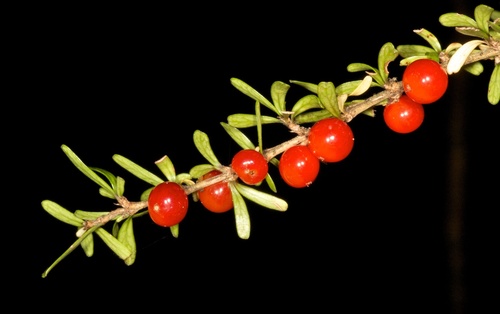
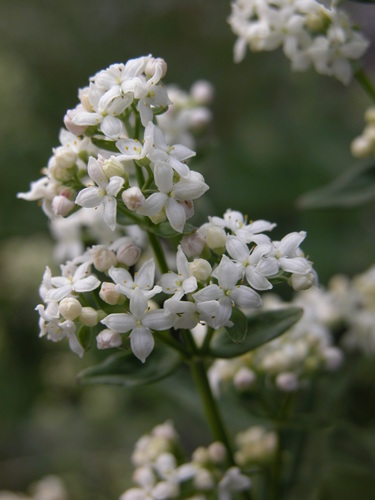
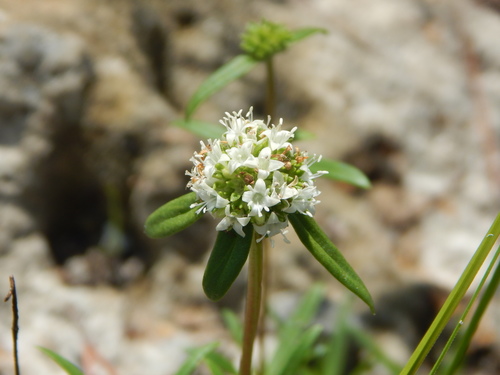
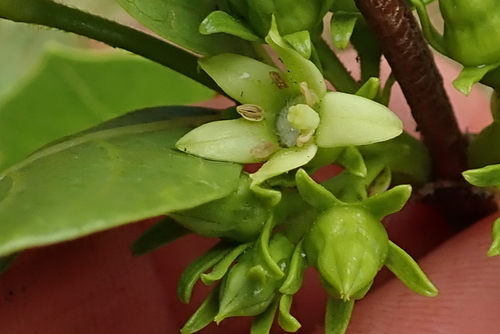
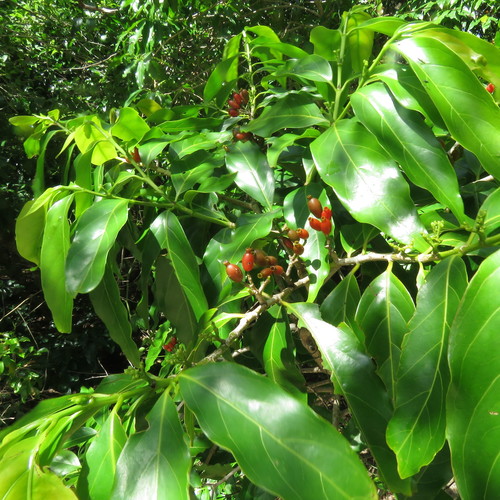
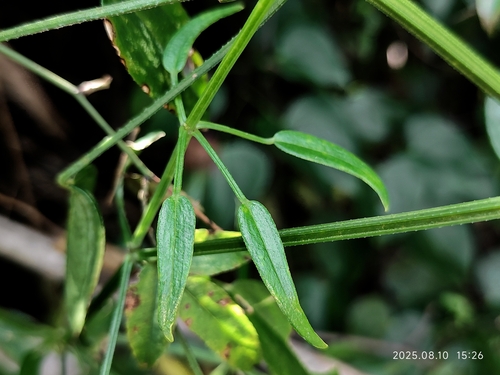
Rubia cordifolia L. can reach up to 3.5 meters in height. It bears evergreen leaves, typically lanceolate or ovate in shape, that measure 1.5–4 cm long and 0.5–1.5 cm wide. These leaves grow in star-like whorls of 4 to 8 arranged around the central stem. The plant climbs using tiny hooks present on its leaves and stems. Its small flowers, 3–5 mm across, have five pale yellow petals. The flowers grow in dense racemes that form a panicle, holding several to many individual flowers, and are located both at the ends of branches and in leaf axils. Flowering occurs from August to September, after which small red to black berries 4–6 mm in diameter develop between October and November. The roots of this plant can grow over 1 m long and up to 12 mm thick. It grows best in loamy soils with consistent moisture levels. As a member of the madder group, it serves as a food source for the larvae of some Lepidoptera species, including the hummingbird hawk moth.
Historically, Rubia cordifolia was the source of an economically important red pigment across many regions of Asia, Europe, and Africa. It was widely cultivated from ancient times through the mid-nineteenth century. The plant's roots contain an anthraquinone compound called purpurin (1,2,4-Trihydroxyanthraquinone), which produces the red color when the plant is used as a textile dye. This red colorant was also used in paint, where it is known as madder lake. This natural red colorant was also obtained from other cultivated species: Rubia tinctorum, and the Asian species Rubia argyi (H. Léveillé & Vaniot) H. Hara ex Lauener, which has the synonym Rubia akane Nakai, named from the Japanese words aka meaning red and ne meaning root. Demand for the natural dye dropped greatly after the invention of synthetic alizarin, an anthracene compound that duplicates the natural pigment.
The roots of Rubia cordifolia are also used to make a medicine in Ayurveda. In Ayurvedic Sanskrit, this medicine is commonly called Manjistha (alternatively spelled Manjista or Manjishta), and the commercial product is known as Manjith in Hindi. In Traditional Tibetan Medicine it is called btsod (Tibetan: བཙོད་, Wylie: btsod, THL: tsö), and is used to treat blood disorders, spread heat (Tibetan: འགྲམས་ཚད་, Wylie: 'grams tshad, THL: dram tshe), excess heat in the lungs, kidneys, and intestines, and to reduce swelling. It is also one component of the three reds (Tibetan: དམར་གསུམ་, Wylie: dmar gsum, THL: mar sum), a subcompound added to many Tibetan preparations to remove excess heat from the blood.